Chapters (102)
- Front Cover
- Title Page
- Copyright
- Contents
- 1942
- Chapter 1
- Chapter 2
- Chapter 3
- Chapter 4
- Chapter 5
- Chapter 6
- Chapter 7
- 1928
- Chapter 8
- Chapter 9
- Chapter 10
- Chapter 11
- Chapter 12
- Chapter 13
- Chapter 14
- Chapter 15
- Chapter 16
- Chapter 17
- Chapter 18
- Chapter 19
- Chapter 20
- Chapter 21
- Chapter 22
- Chapter 23
- Chapter 24
- Chapter 25
- Chapter 26
- 1943
- Chapter 27
- Chapter 28
- Chapter 29
- Chapter 30
- Chapter 31
- Chapter 32
- Chapter 33
- Chapter 34
- Chapter 35
- Chapter 36
- Chapter 37
- Chapter 38
- Chapter 39
- Chapter 40
- Chapter 41
- Chapter 42
- Chapter 43
- Chapter 44
- Chapter 45
- Chapter 46
- Chapter 47
- Chapter 48
- Chapter 49
- Chapter 50
- Chapter 51
- Chapter 52
- Chapter 53
- Chapter 54
- Chapter 55
- Chapter 56
- Chapter 57
- Chapter 58
- Chapter 59
- Chapter 60
- Chapter 61
- Chapter 62
- Chapter 63
- Chapter 64
- Chapter 65
- Chapter 66
- Chapter 67
- Chapter 68
- Chapter 69
- Chapter 70
- Chapter 71
- Chapter 72
- Chapter 73
- Chapter 74
- Chapter 75
- Chapter 76
- Chapter 77
- Chapter 78
- Chapter 79
- Chapter 80
- Chapter 81
- Chapter 82
- Chapter 83
- Chapter 84
- Chapter 85
- Chapter 86
- Epilogue
- Author’s Note
- Recipes from Fenna
- Reading Group Guide
- Images from Fenna’s Journey
- Further Reading
- Acknowledgments
- About the Author
- Back Cover
For immense help with all things culturally and linguistically Dutch, my heartfelt gratitude goes to dear author friends Kimberly Belle and Jean Kwok—and, by default, Jean’s poor husband, Erwin Kluwer—as well as to Janet Lee Berg. Similarly, I thank Stephanie Cale for her assistance with my Ukrainian phrases; Claire Organ (as always) with my Gaelic and Irish brogue; and Marina Kruckmeyer and Nick Burger for additional help with my German dialogue.
For their valuable input on the Bethnal Green Tube Disaster, I’m tremendously thankful to survivor of the tragedy Babette Clark and to Sandra Scotting, Hon. Secretary of the Stairway to Heaven Memorial Trust. For feedback on illusions and escapes, I thank professional magician Brent Allan and John Ragone, a member of the Society of American Magicians Assembly 77, Long Island Mystics. I’m also grateful to the FB page “You Know You’re in Copper Country When…” and to Keweenaw historian Lynette Webber, who even enlightened me on panking, chooks, and choppers.
Then, of course, there are you, the readers. Thank you for allowing my words into your imaginations and hearts. And to the booksellers, book clubs, librarians, and other book champions who continue to support and spread word about my stories, please know it truly means the world to me. Finally, above all, to my family: for the daily hugs and laughs, for keeping me fed through countless writing marathons, and for your infinite love throughout this journey.
About the Author

© Holland Studios
Kristina McMorris is a New York Times bestselling author of two novellas and six novels, including the runaway bestseller Sold on a Monday. Initially inspired by her grandparents’ World War II courtship letters, her works of fiction have garnered more than twenty national literary awards. Prior to her writing career, she owned a wedding-and-event planning company until she had far surpassed her limit of “Y.M.C.A.” and chicken dances. She also worked as a weekly TV-show host for Warner Bros. and an ABC affiliate, beginning at age nine with an Emmy Award-winning program. A graduate of Pepperdine University, she lives near Portland, Oregon, where she somehow manages to be fully deficient of a green thumb and not own a single umbrella.
Sold on a Monday
2 Children for Sale
The sign is a last resort. It sits on a farmhouse porch in 1931 but could be found anywhere in an era of breadlines, bank runs, and broken dreams. It could have been written by any mother facing impossible choices.
For struggling reporter Ellis Reed, the gut-wrenching scene evokes memories of his family’s dark past. He snaps a photograph of the children, not meant for publication. But when it leads to his big break, the consequences are more devastating than he ever imagined.
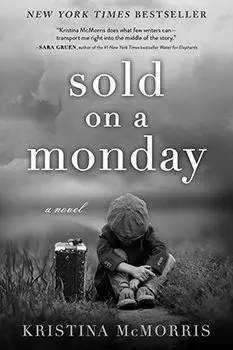
Inspired by an actual newspaper photograph that stunned the nation, Sold on a Monday is a powerful novel of love, redemption, and the unexpected paths that bring us home.