Chapters (89)
- Also by Alexander McCall Smith
- COPYRIGHT
- Contents
- Preface
- 1. Nothing But Tenderness
- 2. A Very Considerate Husband
- 3. At Big Lou’s
- 4. Auden and Burns, and Bertie
- 5. Pre-Natal Classroom – for Babies
- 6. The Ways of Ulysses
- 7. Anthropological Issues
- 8. Domenica Has Coffee With Dilly
- 9. The Grosseto Road
- 10. The Return of Pat Macgregor
- 11. Pat’s Flat
- 12. The Green Hotel
- 13. On the 23 Bus
- 14. Regurgitation Issues
- 15. Edinburgh People
- 16. For Love or Money
- 17. The News from Arbroath
- 18. Ten Years with the Pygmies
- 19. The Question of Cosmetic Surgery
- 20. The Aphrodite of Dundas Street
- 21. Impressionists and Post-Impressionists
- 22. More About Baden-Powell
- 23. The Insouciance of Tofu
- 24. Some Sophisticated Colours
- 25. 100 Things for a Boy to Do: Part 1
- 26. 100 Things for a Boy to Do: Part 2
- 27. Forgery Exposed
- 28. A Game of Bridge
- 29. Underneath the Lamplight
- 30. Trust and Revelation
- 31. Pregnancy Plans
- 32. Dramatic, Life-Enhancing News
- 33. The Implications of Boys
- 34. Carnoustie Shortbread
- 35. Édouard Vuillard and the Interior Vision
- 36. Fear a’ Bhata
- 37. Political Crisis
- 38. Show and Tell
- 39. Which World Am I Living In?
- 40. A Moment on Queen Street
- 41. Psychotherapeutic Matters
- 42. Life and Chance
- 43. A Scotsman, His Life and Marriage
- 44. A Move to Moray Place
- 45. In Moray Place
- 46. What We Really Are
- 47. The Symbolism of Birds
- 48. The Breaking of the Heart
- 49. Chinoiserie
- 50. Matthew is Decisive
- 51. A Letter of Comfort
- 52. The Meaning of Always
- 53. An Offer is Made
- 54. The Therapeutic Hour
- 55. Men Can Cry
- 56. From Scotland With Love
- 57. Bonnie Irene’s Noo Awa
- 58. Painful Questions
- 59. Regret on Corstorphine Road
- 60. The Comfort of Friends
- 61. Big Lou on Art and Fashion
- 62. Unwelcome Thoughts
- 63. Italy At Last
- 64. Services to the Republic
- 65. The Impact of Italy
- 66. Pacta Sunt Servanda
- 67. An Outing Begins
- 68. The Need for Evidence
- 69. On Subsidence
- 70. Supporting Walls
- 71. Arrival at the Villa
- 72. Mistah Kurtz, He Dead
- 73. The Possibilities of Florence
- 74. In Proper Boots
- 75. The Haar Rolls In
- 76. A Real Boy’s Room
- 77. Bertie’s Dream
- 78. An Incident in a Café
- 79. Unbearable Beauty
- 80. Antonia’s Condition Explained
- 81. A Terrible Mistake
- 82. Shocking Developments
- 83. A Hinterland of Regret
- 84. Icarus, Cyril, a Ducati
- 85. The Timetable of Happiness
I have dedicated this book to one of our greatest broadcasters, James Naughtie. James is a central pillar of the national conversation that we have with each other in Britain. I can imagine him engaging with any of the characters in this book – interviewing Angus Lordie, perhaps, on some artistic project, talking to Domenica Macdonald about her latest anthropological essay, or simply chatting to Big Lou about Arbroath and her years in Aberdeen. But he could also talk to Bertie, I think, and Bertie would be comforted by the conversation. James would make Bertie feel seven, even if he is still six, and that, I think, is a great art. Thank you, James, for everything you have done for me, for the cause of rational debate, and for the millions of people to whom you have brought enlightenment, amusement and comfort.
Alexander McCall Smith
Edinburgh, 2010
1. Nothing But Tenderness
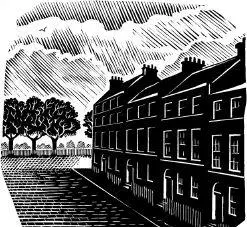
If there was one thing about marriage that surprised Matthew, it was just how quickly he became accustomed to it. There is always the danger that a single person becomes so used to the bachelor or spinster routine that a sudden change in circumstances proves difficult to accommodate. Or so the folk wisdom goes. There is a similar piece of folk wisdom that claims that parents, on launching the last of their children, feel the loss acutely, rapidly declining into the empty nest syndrome. Both these beliefs are largely false. Married couples – or those choosing to live together as bidies-in (and there is no more appropriate term to express that notion than this couthy Scots expression) – both adjust remarkably quickly to the sharing of bed and board. Indeed, after a few days, in many cases, a previous life is more or less entirely forgotten, and each person believes that he and she, or he and he, or she and she, have lived together for a very long time. In this way Daphnis and Chloë, or Romeo and Juliet, can only too quickly become Darby and Joan, Mr and Mrs Bennet, or any other famous domestic couple.