Chapters (89)
- Also by Alexander McCall Smith
- COPYRIGHT
- Contents
- Preface
- 1. Nothing But Tenderness
- 2. A Very Considerate Husband
- 3. At Big Lou’s
- 4. Auden and Burns, and Bertie
- 5. Pre-Natal Classroom – for Babies
- 6. The Ways of Ulysses
- 7. Anthropological Issues
- 8. Domenica Has Coffee With Dilly
- 9. The Grosseto Road
- 10. The Return of Pat Macgregor
- 11. Pat’s Flat
- 12. The Green Hotel
- 13. On the 23 Bus
- 14. Regurgitation Issues
- 15. Edinburgh People
- 16. For Love or Money
- 17. The News from Arbroath
- 18. Ten Years with the Pygmies
- 19. The Question of Cosmetic Surgery
- 20. The Aphrodite of Dundas Street
- 21. Impressionists and Post-Impressionists
- 22. More About Baden-Powell
- 23. The Insouciance of Tofu
- 24. Some Sophisticated Colours
- 25. 100 Things for a Boy to Do: Part 1
- 26. 100 Things for a Boy to Do: Part 2
- 27. Forgery Exposed
- 28. A Game of Bridge
- 29. Underneath the Lamplight
- 30. Trust and Revelation
- 31. Pregnancy Plans
- 32. Dramatic, Life-Enhancing News
- 33. The Implications of Boys
- 34. Carnoustie Shortbread
- 35. Édouard Vuillard and the Interior Vision
- 36. Fear a’ Bhata
- 37. Political Crisis
- 38. Show and Tell
- 39. Which World Am I Living In?
- 40. A Moment on Queen Street
- 41. Psychotherapeutic Matters
- 42. Life and Chance
- 43. A Scotsman, His Life and Marriage
- 44. A Move to Moray Place
- 45. In Moray Place
- 46. What We Really Are
- 47. The Symbolism of Birds
- 48. The Breaking of the Heart
- 49. Chinoiserie
- 50. Matthew is Decisive
- 51. A Letter of Comfort
- 52. The Meaning of Always
- 53. An Offer is Made
- 54. The Therapeutic Hour
- 55. Men Can Cry
- 56. From Scotland With Love
- 57. Bonnie Irene’s Noo Awa
- 58. Painful Questions
- 59. Regret on Corstorphine Road
- 60. The Comfort of Friends
- 61. Big Lou on Art and Fashion
- 62. Unwelcome Thoughts
- 63. Italy At Last
- 64. Services to the Republic
- 65. The Impact of Italy
- 66. Pacta Sunt Servanda
- 67. An Outing Begins
- 68. The Need for Evidence
- 69. On Subsidence
- 70. Supporting Walls
- 71. Arrival at the Villa
- 72. Mistah Kurtz, He Dead
- 73. The Possibilities of Florence
- 74. In Proper Boots
- 75. The Haar Rolls In
- 76. A Real Boy’s Room
- 77. Bertie’s Dream
- 78. An Incident in a Café
- 79. Unbearable Beauty
- 80. Antonia’s Condition Explained
- 81. A Terrible Mistake
- 82. Shocking Developments
- 83. A Hinterland of Regret
- 84. Icarus, Cyril, a Ducati
- 85. The Timetable of Happiness
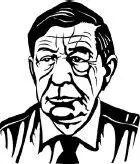
The Wystan in Bertie’s name was, of course, after Wystan Hugh Auden, or W. H. Auden as he was usually known. Irene admired Auden’s work and liked the name. Bertie did not. She had introduced him to Auden, of course, concentrating on the more accessible poems, but Bertie had not responded as warmly as she might have wished. She had read him ‘If I Could Tell You’, and he had listened intently, but then he had shown by his questions that he had clearly missed the point.
‘Why does Mr Auden,’ he asked, ‘say that all the brooks and soldiers will run away, Mummy? How can brooks run away if they haven’t got legs?’
‘Auden used something called personalisation, Bertie,’ Irene explained. ‘He makes inanimate things talk, or have attitudes. It’s very clever.’
Bertie thought about this. ‘And then he says that perhaps the roses really want to grow. How can roses want to do anything, Mummy? They haven’t got brains, have they?’
‘Mr Auden is very clever,’ said Irene patiently. ‘He makes us think about the world by making the world think. That’s frightfully clever, Bertie.’
Bertie looked thoughtful. ‘We learned some poems at school,’ he said. ‘There was one about some daffodils. It was when Miss Harmony was still there. She told us to close our eyes while she read it and try to think of daffodils. And then she taught us some Burns.’
Irene was silent for a moment. ‘Burns is a folk poet, Bertie. He really isn’t very deep.’
‘She read us a poem about two dogs,’ Bertie went on. ‘There was this very grand dog, you see, and this other dog …’
Irene looked pained. ‘I know all about that one, Bertie. It’s very sentimental, you know. A lot of Burns is.’
Bertie remembered something that his friend, Tofu, had said. ‘Tofu asked Miss Harmony whether she could read something from another of Mr Burns’s books. He said that there was a book called The Merry Muses of Caledonia and the poems were very rude. Miss Harmony said no and went very red.’
Irene glared at Bertie. ‘That boy, Tofu, is …’ She did not complete her sentence. She disapproved of Tofu and would have preferred it if Bertie had chosen some other friend: Olive, for example, to whom she had given every encouragement, and whose mother was a member of her Melanie Klein Reading Group. But Bertie seemed to have set his face against Olive, and even went so far as to say that he hated her. Children were always saying such things, of course, and then deciding the next moment that the hated person is their best friend.