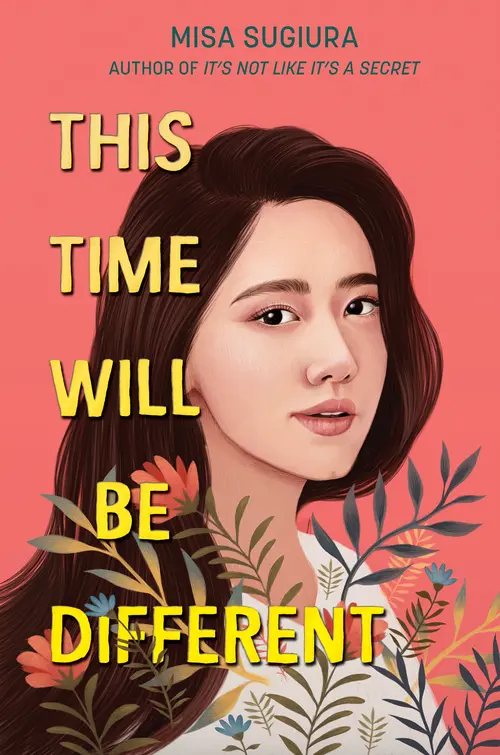
This Time Will Be Different
Chapters (77)
- Cover
- Dedication
- 1
- 2
- A Series of Screw-ups: The Chisaki Joan Katsuyama Story, Part I
- 3
- The History of My Beef with Brynn Foer-Preston
- 4
- 5
- 6
- 7
- The History of the Katsuyama Family, Part I
- 8
- 9
- A Brief History of Chisaki Joan Katsuyama’s Romantic Learning Opportunities, Part I
- 10
- 11
- 12
- A Brief History of Chisaki Joan Katsuyama’s Romantic Learning Opportunities, Part II
- 13
- The History of the Katsuyama Family, Part II
- 14
- 15
- 16
- 17
- 18
- 19
- The Complicated History of Chisaki Joan Katsuyama’s Imaginary Relationship with Her Nonexistent Dad
- 20
- 21
- 22
- A Brief History of Chisaki Joan Katsuyama’s Romantic Learning Opportunities, Part III
- 23
- 24
- 25
- A Brief, Backward History of the McAllister Family, as Paraphrased from the San Jose Mercury News
- 26
- 27
- 28
- A Quick and Eerily Relevant History of Asians in America
- 29
- 30
- 31
- 32
- 33
- 34
- 35
- 36
- A Brief History of Chisaki Joan Katsuyama’s Romantic Learning Opportunities, Part IV
- 37
- 38
- 39
- 40
- 41
- 42
- 43
- 44
- A Series of Screw-ups: The Chisaki Joan Katsuyama Story, Part II (Or Maybe It’s a Prequel)
- 45
- 46
- 47
- 48
- 49
- 50
- 51
- 52
- 53
- The History of the Katsuyama Family, Part III
- 54
- A Note from the Author
- Index of Flowers and their Meanings
- Acknowledgments
- About the Author
- Praise for This Time Will Be Different
- Books by Misa Sugiura
- Back Ad
- About the Publisher
Cover
Dedication
In loving memory of
My uncle,
Teruchi Mackenzie Ebata
Tashme Internment Camp, British Columbia, Canada
Yutaka and Haruko Kanemoto,
grandparents of my heart
Tule Lake Internment Camp, California
Minidoka Internment Camp, Idaho
Seiichi Robert Kanemoto
November 4, 1937–May 3, 1944
Minidoka Internment Camp, Idaho
1
HANNAH CALLS IT “A STATE OF BECOMING,” BUT most people would probably call it chaos. The floor and work spaces are littered with leaves, stems, and thorns that haven’t made it into the giant wastebins by the tables. Flowers and greenery explode out of buckets on every flat surface that isn’t covered in piles of more greens and more flowers, all stripped of their lower leaves and thorns. The room is a riot of scarlet, green, ivory, and dusty pink.
In front of me sit twenty-five empty vases, their open mouths crisscrossed with grids of thin tape. When we’re finished, the empty grids will be transformed into a lush carpet of red and cream-colored roses and white and gold Chinese lilies, accented with clusters of pink pepper berries, eucalyptus leaves, and ivy—perfect for tomorrow’s mid-December wedding. Perfect for the beginning of somebody’s happily ever after.
That is, if you believe in that kind of thing.
As I trim the thorns off a rose stem, Hannah quizzes me.
“Fate,” my aunt says.
“Flax,” I reply, and she nods.
“Self-worth,” she says.
“White roses.” Another nod.
“Reconciliation.”
“Um . . . star-of-Bethlehem?”
“Nice!” Hannah beams at me. “Great job, CJ!”
Most kids get quizzed on stuff like state capitals, or French vocabulary words, or the elements on the periodic table. I get quizzed on the language of flowers. Hannah claims that by using it in the arrangements she makes for her clients, she can help fulfill their hearts’ desires. I have serious doubts about the scientific validity of her claim, but she says that if I want to be her apprentice at the shop, I have to know my flowers, so here we are.
By here I mean the workroom of Heart’s Desire, the flower shop that we’ve had in our family since the 1930s. This guy named Robert McAllister pressured my great-grandfather into selling it for almost nothing when the government threw Japanese Americans into internment camps during World War II, but after years of struggle and hardship, my grandfather eventually bought it back because, as Mom and Hannah both like to say, Katsuyamas never quit.
Katsuyamas Never Quit. It’s practically our family motto.