Chapters (76)
- Title Page
- Copyright Notice
- Dedication
- Foreword: Who Is Simple?
- Feet Live Their Own Life
- Landladies
- Simple Prays A Prayer
- Conversation on the Corner
- Simple on Indian Blood
- A Toast to Harlem
- Simple and His Sins
- Temptation
- Wooing the Muse
- Vacation
- Letting off Steam
- Jealousy
- Banquet in Honor
- A Veteran Falls
- High Bed
- Final Fear
- There Ought to be a Law
- Income Tax
- No Alternative
- Springtime
- Last Whipping
- Seeing Double
- Simple on Military Integration
- Blue Evening
- A Letter from Baltimore
- Seven Rings
- What Can a Man Say?
- Empty Room
- Picture for Her Dresser
- Cocktail Sip
- Apple Strudel
- Bop
- Formals and Funerals
- Fancy Free
- Midsummer Madness
- Morals Is Her Middle Name
- They Come and They Go
- A Million—and One
- Two Loving Arms
- All in the Family
- Kick for Punt
- Subway to Jamaica
- No Tea for the Fever
- Boys, Birds, and Bees
- On the Warpath
- A Hearty Amen
- Must Have a Seal
- Shadow of the Blues
- Once in a Wife-time
- Present for Joyce
- Christmas Song
- Tied in a Bow
- Sometimes I Wonder
- Four Rings
- Simply Love
- Bang-up Big End
- Duty Is Not Snooty
- Bones, Bombs, Chicken Necks
- A Dog Named Trilby
- Enter Cousin Minnie
- Radioactive Red Caps
- Two Sides Not Enough
- Puerto Ricans
- Minnie Again
- Vicious Circle
- Again Cousin Minnie
- Name in Print
- Minnie One More Time
- An Auto-Obituary
- Jazz, Jive, and Jam
- About the Author
- Newsletter Sign-up
“Some women’s club that a big fat lady what goes to Joyce’s dancing class belongs to. Her name is Mrs. Sadie Maxwell-Reeves and she lives so high up on Sugar Hill that people in her neighborhood don’t even have roomers. They keep the whole house for themselves. Well, this Mrs. Maxwell-Reeves sold Joyce a deuce of Three-Dollar ducats to this banquet her club was throwing for an old gentleman who is famous around Harlem for being an intellect for years, also very smart as well as honest, and a kind of all-around artist-writer-speaker and what-not. His picture’s in the Amsterdam News this week. I cannot recall his name, but I never will forget his speech.”
“Tell me about it, man, and do not keep me in suspense,” I said.
“Well, Joyce says the reason that club gave the banquet is because the poor old soul is so old he is about on his last legs and, although he is great, nobody has paid him much mind in Harlem before. So this club thought instead of having a dance this year they would show some intelligence and honor him. They did. But he bit their hand, although he ate their chicken.”
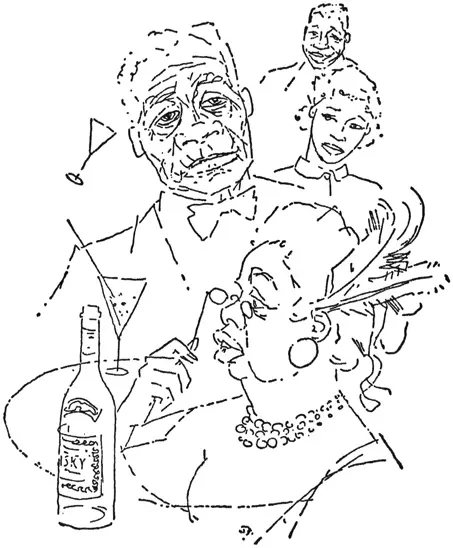
“I beg you, get to the point, please.”
“It seems like this old man has always played the race game straight and has never writ no Amos and Andy books nor no songs like ‘That’s Why Darkies Are Born’ nor painted no kinky-headed pictures as long as he has been an artist—for which I give him credit. But it also seems like he did not make any money because the white folks wouldn’t buy his stuff and the Negroes didn’t pay him no mind because he wasn’t already famous.
“Anyhow, they say he will be greater when he’s dead than he is alive—and he’s mighty near dead now. Poor old soul! The club give that banquet to catch some of his glory before he passes on. He gloried them, all right! In the first place, he ate like a horse. I was setting just the third table from him and I could see. Mrs. Maxwell-Reeves sort of likes Joyce because Joyce helps her with her high kicks, so she give us a good table up near the speaking. She knows Joyce is a fiend for culture, too. Facts, some womens—including Joyce—are about culture like I am about beer—they love it.
“Well, when we got almost through with the dessert, which was ice cream, the toastmistress hit on a cup with a spoon and the program was off. Some great big dame with a high voice and her hands clasped on her bosoms—which were fine—sung ‘O Carry Me Homey.’”
“‘O Caro Nome,’” I said.