When the World Was Ours
Chapters (79)
- Cover
- Dedication
- A NOTE FROM THE AUTHOR
- CONTENT WARNING
- 1936
- LEO
- ELSA
- MAX
- LEO
- ELSA
- MAX
- 1937
- ELSA
- MAX
- LEO
- EARLY 1938
- ELSA
- MAX
- LEO
- MAX
- LEO
- MAX
- LATE 1938
- ELSA
- MAX
- LEO
- ELSA
- MAX
- LEO
- 1939
- ELSA
- LEO
- MAX
- LEO
- ELSA
- LEO
- ELSA
- LEO
- ELSA
- LEO
- 1940
- MAX
- ELSA
- LEO
- 1941
- ELSA
- LEO
- ELSA
- MAX
- ELSA
- 1942
- MAX
- LEO
- ELSA
- 1943
- LEO
- MAX
- ELSA
- MAX
- ELSA
- 1944
- LEO
- ELSA
- MAX
- ELSA
- MAX
- ELSA
- MAX
- ELSA
- MAX
- LEO
- PAPA
- 1945
- LEO
- 2021
- LEO
- ACKNOWLEDGEMENTS
- A list of resources and further reading
- About the Author
Cover
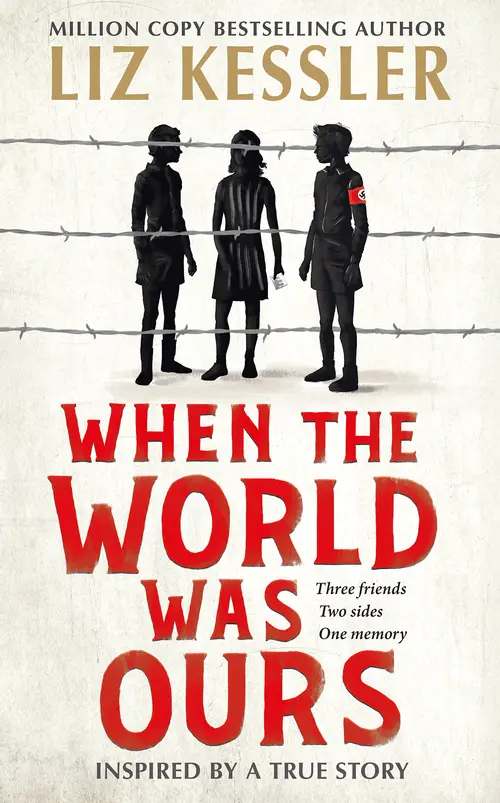
Dedication
For my dad, Harry Kessler, my guiding light and inspiration in so many ways.
Also for Mr and Mrs Jones (the original ‘Mr & Mrs Stewart’) whose extraordinary act of generosity saved my family’s lives and allowed me to be here today to tell this story.
And for my grandparents, Mama and Papa, because this was your story too.
A NOTE FROM THE AUTHOR
My father was eight years old when he left Nazi-occupied Czechoslovakia with his parents, Frank and Annie, in 1939. As a Jewish family their options were severely limited – almost non-existent – at that point. The thing that led to their escape was a letter from a British couple they had met five years earlier. The couple only met them because my father had nearly scuffed the woman’s dress and my grandfather had warned him to be careful. This moment led to a conversation, a day spent together and a thank-you letter that would later save their lives.
This story has been an influence and a guiding light throughout my life, and for many years I have wanted to write a book inspired by it. Leo’s narrative is the one that was inspired by my father’s story, but my family’s history has influenced other aspects of this novel too. My great-aunt, Elsa, was murdered at Auschwitz and my great-grandmother, Omama, spent four years at Theresienstadt.
Elsa’s story comes from the many times I’ve asked myself what might have happened to my family if they hadn’t had that extraordinary stroke of luck. And Max’s story is my attempt to explore how so many ordinary people could have become part of such a brutal, evil and horrific regime.
This book is not only a way for me to honour my past, my ancestors and my heritage. It is also about using my voice to contribute to the conversations about social justice taking place today, and hopefully help young readers make informed decisions about the part they want to play in the world of tomorrow.
Liz Kessler
CONTENT WARNING
This story contains mature themes and depictions of violence and cruelty related to the Holocaust and we advise readers to be aware of difficult content that may cause distress. A list of resources with more information on the Holocaust and this period in history can be found at the end of this book.
1936
LEO
I could see the whole world! Or at least the whole of Vienna, and that was my world.
My two best friends, Max and Elsa, stood beside me, their faces pressed to the glass next to mine.
‘Look at the tiny people!’ Max exclaimed, pointing down below us as we rose higher and higher into the sky.
‘The buildings look like a toy town!’ Elsa said.