Brother Number One
Chapters (28)
- Title Page
- Preface
- Acknowledgements
- CHAPTER ONE - Introduction
- Who Was Pol Pot?
- The First Year in Paris
- Joining the Viet Minh
- CHAPTER FIVE - “Red Khmer,” 1963—1970
- CHAPTER SIX - Coming to Power, 1970—1976
- CHAPTER SEVEN - Prairie Fire, 1976-1977
- Pol Pot in China and North Korea
- CHAPTER NINE - “Grandfather 87,” 1979—1998
- Chronology
- Appendix 1: - Non Suon’s Biography of Pol Pot
- Appendix 2: - Khmer Personnel at “Office 100,” 1963—1966
- Notes
- Chapter One
- Chapter Two
- Chapter Three
- Chapter Four
- Chapter Five
- Chapter Six
- Chapter Seven
- Chapter Eight
- Chapter Nine
- Interviews by Author
- Index
- Copyright Page
Title Page
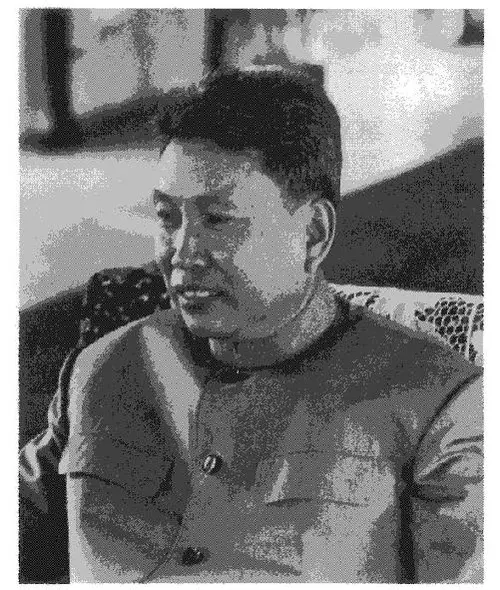
Pol Pot in Phnom Penh, December 1978. Photo by Richard Dudman. Courtesy of Sygma. Reprinted with permission. Copyright Sygma and Richard Dudman.
Chorus:
Who fights for communism must be able to fight and not to fight, to say the truth and not say the truth, to render and to deny service, to keep a promise and to break a promise, to go into danger and to avoid danger, to be known and to be unknown. Who fights for communism has of all the virtues only one: that he fights for communism.
Bertoldt Brecht, The Measures Taken
Preface

Preface to the Second Edition
I am grateful to my editors at Westview Press, Rob Williams and Kristin Milavec, the project editor, for encouraging me to prepare a second edition of this book. In bringing the narrative up to date, closing with Pol Pot’s death in April 1998, I have invaded the text and the end notes to insert new data and to correct minor errors pointed out by correspondents and reviewers. In addition, I have updated the bibliographical essay at the end of the book. The text has also benefited enormously from Jennifer Swearingen’s helpful copyediting.
In the time between the appearance of the first edition and Pol Pot’s death six years later, some interesting new biographical data have emerged, thanks in large part to enterprising research conducted by David Ashley, Chhang Youk, Stephen Heder, and Nate Thayer. I am grateful to these four people for providing me with transcripts or summaries of their interviews, and to Thayer for sending me a copy of Nuon Chea’s draft history of the “struggle movement,” which he composed in 1997. My own study of the S-21 archive in 1994—1998 revealed some new information about the Vietnamese military base known as “Office 100,” where Pol Pot and his colleagues sought refuge from Sihanouk’s police in the early 1960s; my interviews with Lim Keuky and a former Chinese diplomat speaking on condition of anonymity provided some insights, respectively, into Pol Pot’s early married life and into his friendship with the notorious Chinese official K‘ang Sheng. My revision of the final chapter benefited from conversations with Terry McCarthy, Seth Mydans, and Nate Thayer. The new data have altered the chronological outlines of Pol Pot’s life by making it four years longer, as I now prefer the birthdate of 1925 to the 1928 one I had supported in the first edition.
Pol Pot wanted to be judged by history, as his interview with Nate Thayer in October 1997 makes clear. Unfortunately from his point of view, perhaps, the material that has emerged about his life since 1992 has not made his personality any more accessible or his career any easier to admire.
David Chandler
Washington, D.C.
Acknowledgements

Acknowledgments