The Henna Wars
Chapters (43)
Cover
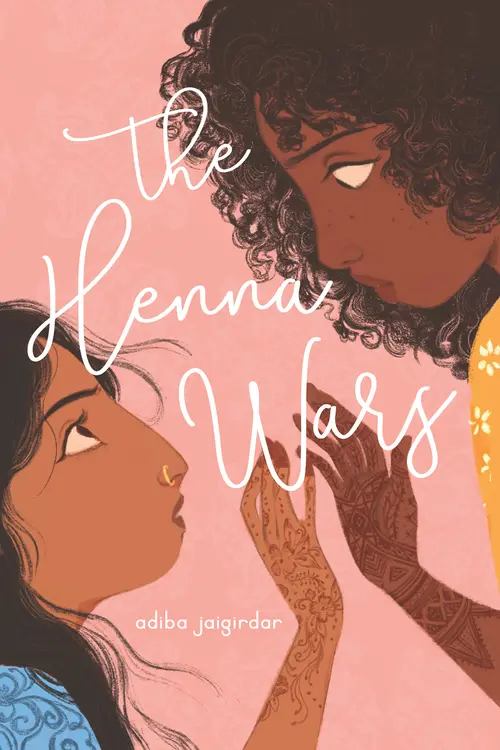
The
Henna
Wars
adiba jaigirdar

Copyright Notice
The author and publisher have provided this e-book to you for your personal use only. You may not make this e-book publicly available in any way. Copyright infringement is against the law. If you believe the copy of this e-book you are reading infringes on the author’s copyright, please notify the publisher at: http://us.macmillanusa.com/piracy.
Dedication

to queer brown girls,
this is for you

Content Warning
content warning
This book contains instances of racism, homophobia, bullying, and a character being outed.

“I donate my truth to you like I’m rich The truth is love ain’t got no off switch”
–Janelle Monáe, “Pynk”

1
I DECIDE TO COME OUT TO MY PARENTS AT SUNNY APU’S engagement party.
Not because of Sunny Apu and her groom, or the buzz of the wedding in the air. And not because everything about a Bengali wedding is so palpably heterosexual that it’s almost nauseating.
I decide to come out because of the way Ammu and Abbu look at Sunny Apu, with a mixture of pride and love and longing. It isn’t directed at Sunny Apu at all, really; it’s directed at the future. At our futures, mine and Priti’s. I can almost see Ammu and Abbu stitching it together in their heads: Castles in the air, made of deep red wedding saree dreams and lined with thick gold wedding jewelry aspirations.
I’ve never thought of my parents as traditionalists before this. I’d seen them as pioneers, people who made things happen even when those things might seem impossible. They’d broken rigid tradition, and have what Bengalis call a “love marriage.” Though they’ve never told us the story, I always imagine a movie-moment meeting, exactly like in a Bollywood movie. Their eyes meet across a crowded room, maybe at a wedding of distant relatives. Ammu’s in a saree, Abbu in a sherwani. Suddenly, a song starts in the background. Something romantic, but upbeat.
My parents’ “love marriage” is one of the reasons they work so well here, despite the lack of family and support. Without anything, really. They uprooted their lives one day to come to Ireland. To bring us here. To give us a better life, they said, even when in some ways they are stuck to the past. To Bangladesh. To everything Bengali custom tells them.
Unfortunately, one of those things is this: a wedding consisting of a bride and a groom.
But my Ammu and Abbu did make it past the customs that told them love before marriage was unacceptable, and that love after marriage was to be hidden in a locked bedroom like a shameful secret. So maybe—just maybe—they can accept this other form of love that blooms in my chest sometimes when I see Deepika Padukone in a Bollywood movie, and not when I see her male love interest.