Loudermilk
Chapters (60)
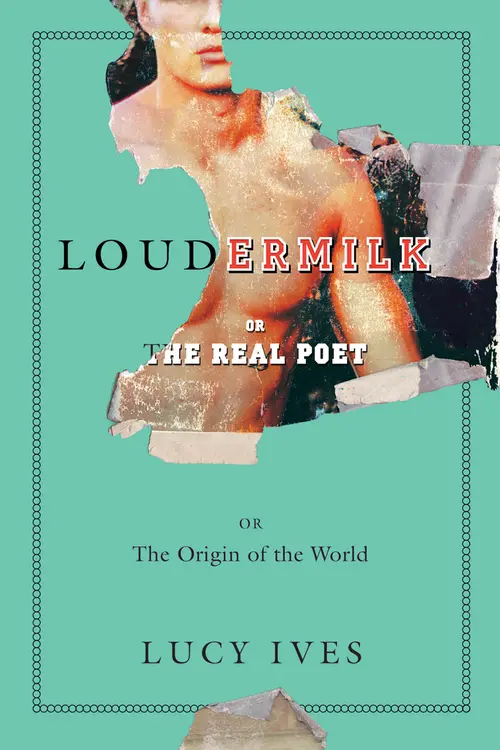
- Cover
- Title Page
- Personae
- I: Early Days
- One. Control
- Two. Doubt
- Three. Fate
- Four. Same
- Five. Fine Arts
- Six. In Loco Parentis
- Seven. Settling
- Eight. Neighbors
- Nine. Prospects
- Ten. The Lucky
- Eleven. Instruction
- Twelve. Same
- Thirteen. This Is a Pipe
- Fourteen. This Is Not a Pipe
- Fifteen. The Reason
- Sixteen. That Person
- Seventeen. Predictably
- II: Writing Teacher
- Eighteen. Early Poems
- Nineteen. Motivation
- Twenty. Allegory
- Twenty-One. Grief
- Twenty-Two. A Portrait
- Twenty-Three. Veils
- Twenty-Four. Soft Power
- Twenty-Five. Lists
- Twenty-Six. A Break
- Twenty-Seven. Elsewhere
- Twenty-Eight. Custom
- Twenty-Nine. Parity
- Thirty. Fortune
- III: Volta
- Thirty-One. Images
- Thirty-Two. A Very Interesting Young Man
- Thirty-Three. Letters
- Thirty-Four. We Prefer to See Ourselves Living
- Thirty-Five. Love
- Thirty-Six. The Iceberg
- IV: Your Best Reader
- Thirty-Seven. A Novelist
- Thirty-Eight. In Advance of the Broken Arm
- Thirty-Nine. Their Penultimate Encounter
- Forty. Détente
- Forty-One. Worlds
- Forty-Two. Recognition
- Forty-Three. Persistence
- Forty-Four. And Then
- Forty-Five. Mingling
- Forty-Six. You
- Forty-Seven. Persona
- Forty-Eight. Est et Non
- Forty-Nine. The Author
- Epilogue
- Afterword: The Libertine
- Acknowledgments
- About the Authors
Cover
Praise for
LOUDERMILK
“With Loudermilk, Lucy Ives weaves a wryly comic tale set in the insular, masturbatory world of a Midwest MFA program. Dissecting ideas around authenticity, status, and the chronic wish for fame or legacy that plagues or drives aspiring writers and established authors/professors alike, Ives tears down the curtain to unveil the wizard—and here all the characters are implicated in operating the clunky machinery that creates then lionizes the concept of merit or talent in the academic/literary world. The result is this wildly smart novel that hilariously exposes its characters as they try to vault or cement themselves into some literary canon and/or ivory tower, unaware that the canon/tower is an ever-vanishing mausoleum wherein living writers go to get stuck, or lost, or to scrawl their names and draw butts and boobs on the walls.”
—JEN GEORGE, author of The Babysitter at Rest
“Lucy Ives is as deeply funny and ferocious a writer as they come. She’s also humane and philosophical when it matters most. I love Loudermilk.”
—SAM LIPSYTE, author of Hark
“Wonder Boys meets Cyrano de Bergerac meets Jacques Lacan meets Animal House. Something for everyone.”
—Kirkus Reviews
Praise for
LUCY IVES
“Ives . . . infuses even mundane actions with startling imagery.”
—The New York Times Book Review
“An accomplished poet, Ives also knows how to delight sentence by sentence, with turns of phrase that cry to be underlined or Tweeted . . . a voice that is at turns deadpan and warm, shot through with a crisp irony that makes it tempting to declare it the literary equivalent of an Alex Katz painting.”
—Vogue
“I first knew Lucy Ives’s work as a poet, and to have her prose is a gift, too.”
—HILTON ALS, author of White Girls
“A deeply smart and painstakingly elegant writer.”
—WAYNE KOESTENBAUM, author of Camp Marmalade
“A rampaging, mirthful genius.”
—ELIZABETH McKENZIE, author of The Portable Veblen
“Like the paintings of Agnes Martin or the films of Nathaniel Dorsky, the most important character in Ives’s prose is its reader. In the white space underneath these notes my own mind’s wanderings take on what is not exactly an importance, but a space for reading and thinking. I move around in this writing, and become aware of my moving around within it, and consider not only the shape of the writing, but my own shape as its reader. In other words, Ives’s writing encourages its readers to consider their own power and form among the reality they encounter.”
—Make: magazine
“Lucy Ives is smart in that heartbreaking way that can make a spare, suspicious, elegant work of anti-poetry out of the silent treatment between ideas and those who have them.”
—ANNE BOYER, author of A Handbook of Disappointed Fate
“Ives’s exquisite take on ellipsis as realism is a dream, as both vision and something that fully satisfies a wish.”
—MÓNICA DE LA TORRE, author of The Happy End / All Welcome