Chapters (28)
- Title Page
- Preface
- Acknowledgements
- CHAPTER ONE - Introduction
- Who Was Pol Pot?
- The First Year in Paris
- Joining the Viet Minh
- CHAPTER FIVE - “Red Khmer,” 1963—1970
- CHAPTER SIX - Coming to Power, 1970—1976
- CHAPTER SEVEN - Prairie Fire, 1976-1977
- Pol Pot in China and North Korea
- CHAPTER NINE - “Grandfather 87,” 1979—1998
- Chronology
- Appendix 1: - Non Suon’s Biography of Pol Pot
- Appendix 2: - Khmer Personnel at “Office 100,” 1963—1966
- Notes
- Chapter One
- Chapter Two
- Chapter Three
- Chapter Four
- Chapter Five
- Chapter Six
- Chapter Seven
- Chapter Eight
- Chapter Nine
- Interviews by Author
- Index
- Copyright Page
To many Cambodians, the Democrats still offered a feasible alternative to Sihanouk on the one hand and the Vietnamese-dominated Communist resistance on the other. As the electoral campaign gathered momentum, Keng Vannsak and other Democrats spoke out against nepotism and corruption, warning voters of the dangers of an alliance with the United States. Vannsak also attacked Cambodia’s precolonial tradition of absolute kings. Large crowds applauded him. Pracheachon candidates were more prudent than the Democrats, but they emphasized similar issues and commanded widespread support in several provinces.
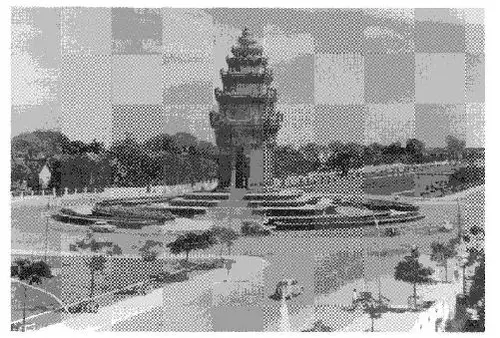
Independence Monument, Phnom Penh, 1971. Photo by the author.
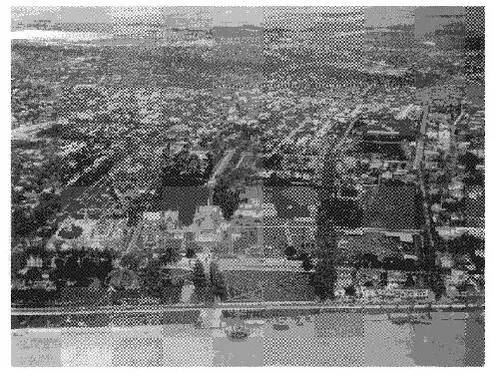
Aerial view of Phnom Penh, with the former Royal Palace in the foreground, 1970. Courtesy of the Khmer Republic Ministry of Information.
Since most of the Sangkum candidates were undistinguished, Sihanouk realized that the results he wanted were not guaranteed. Therefore he had his police arrest Keng Vannsak and several others on the eve of the elections. Vannsak was held without trial for several months. Elsewhere, Democratic rallies were broken up and candidates beaten; some campaign workers were killed. Thiounn Mumm, threatened with arrest, returned hurriedly to France. Saloth Sar came to nobody’s attention.15
Without these tactics, Sangkum candidates would probably have won only two-thirds of the seats in the National Assembly. Because of violence and fraud, however, the Sangkum claimed to have gained all ninety-one seats and 630,000 votes—over 80 percent of those cast. The Democrats officially gained 90,000 votes, and the Pracheachon 30,000. The numbers convinced Sihanouk that Cambodia could now be managed as his personal estate. The elections marked the end of pluralist politics in Cambodia and the beginning of fifteen years of one-man rule.16
In September 1977, in a speech tracing the history of Cambodia’s Communist movement, Pol Pot looked back on these elections from a different perspective, noting that “the people’s forces throughout the country supported the revolution and the progressive side against the reactionaries and U.S. imperialism. But the people were unable to vote for the progressives, because the ruling class resorted to its guns, courts, laws, prisons, and other repressive tools.”17
Over the next few years, the Sangkum movement and Sihanouk’s volatile personality, always on display, came to monopolize politics in Cambodia. Saloth Sar, like many others, shied away from Sihanouk’s style of rule. Indeed, Sar’s avoidance of the limelight, his neutral style, and his obedience to party discipline were partly in reaction to Sihanouk’s flamboyance.