Chapters (56)
- PROLOGUE: KERRICK
- Title Page
- CHAPTER ONE
- CHAPTER TWO
- CHAPTER THREE
- CHAPTER FOUR
- CHAPTER FIVE
- CHAPTER SIX
- CHAPTER SEVEN
- CHAPTER EIGHT
- CHAPTER NINE
- CHAPTER TEN
- CHAPTER ELEVEN
- CHAPTER TWELVE
- CHAPTER THIRTEEN
- CHAPTER FOURTEEN
- CHAPTER FIFTEEN
- CHAPTER SIXTEEN
- CHAPTER SEVENTEEN
- CHAPTER EIGHTEEN
- CHAPTER NINETEEN
- CHAPTER TWENTY
- CHAPTER TWENTY-ONE
- CHAPTER TWENTY-TWO
- CHAPTER TWENTY-THREE
- CHAPTER TWENTY-FOUR
- CHAPTER TWENTY-FIVE
- CHAPTER TWENTY-SIX
- CHAPTER TWENTY-SEVEN
- CHAPTER TWENTY-EIGHT
- CHAPTER TWENTY-NINE
- CHAPTER THIRTY
- CHAPTER THIRTY-ONE
- CHAPTER THIRTY-TWO
- CHAPTER THIRTY-THREE
- CHAPTER THIRTY-FOUR
- CHAPTER THIRTY-FIVE
- CHAPTER THIRTY-SIX
- CHAPTER THIRTY-SEVEN
- CHAPTER THIRTY-EIGHT
- CHAPTER THIRTY-NINE
- CHAPTER FORTY
- CHAPTER FORTY-ONE
- CHAPTER FORTY-TWO
- CHAPTER FORTY-THREE
- CHAPTER FORTY-FOUR
- CHAPTER FORTY-FIVE
- THE WORLDWEST OF EDEN
- THE YILANÈ
- THE TANU
- THE PARAMUTAN
- DICTIONARIES
- ZOOLOGY
- ACKNOWLEDGMENTS
- ABOUT THE AUTHOR
- About this Title
One of the largest of the ‘flat lizards,’ so called because of their solid bodies and strong skulls. Although these creatures normally walk on all fours they rear up on their hind legs to graze the tops of trees. Its flesh is considered particularly tasty and is much sought after.
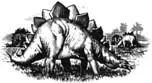
ONETSENSAST
(Ornithischia: Stegosaurus variatus)
The largest of the plated dinosaurs. These immense herbivorous creatures are protected from attack by two rows of plates down the neck and back, as well as heavy spikes on the tail. They first developed in the late Jurassic and only careful preservation by the Yilanè has prevented the destruction of this living fossil.
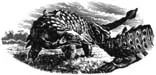
RUUTSA
(Ankylosauria: Euoplocephalus)
This giant creature is perhaps the most dramatic of the “living fossils” so carefully preserved by the Yilanè. Covered with great plates of armor, studded with spines, and protecting itself by the great ball at the end of its tail, it is hard to believe that it is a vegetarian and completely harmless, except in self-defense. This species has not changed in over one hundred million years.

SANDUU
(Anuva: Rana catesbiana mutatus)
Extensive gene manipulation has altered this animal in almost every way; only its outer skin reveals its origins. Magnification of up to 200 power is available by proper use of sunlight directed through the different organic lenses of its head.
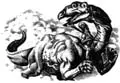
TARAKAST
(Ornithischia: Segnosaurus shiungisaurus mutatus)
A sharp-beaked carnivorous dinosaur, the largest examples being over 13 feet in length. They are difficult to train and require great strength to manage but when properly broken make a desirable Yilanè mount.
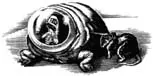
UGUNKSHAA
(Squamata: Phrynosoma fiernsyna mutatus)
Since the Yilanè language is dependent upon skin color and body movements, as well as sound, keeping written records is impossible; therefore writing has never developed. Historically knowledge was passed on verbally, and the recording of this information only became possible when an organic liquid crystal display was developed for visual accompaniment of the auditory memory records.
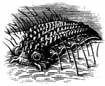
UNUTAKH
(Cephalopoda: Deroceras agreste mutatus)
One of the highly modified animals used in Yilanè technology. This cephalopod digests protein matter, especially hair and modified epidermal plates with ease.
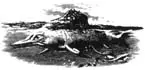
URUKETO
(Ichthyopterygia: Ichthyosaurus monstrosus mutatus)
This is the largest of the ‘fish-lizards’, a family of immense aquatic dinosaurs. Millennia of gene surgery and breeding have developed a strain of icthyosaurs very different from the parent stock. There is a large chamber situated above the spine and centered on the dorsal fin that is used for both crew and cargo.
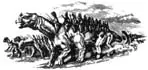
URUKTOP
(Chelonia: Psittacosaurus montanoceratops mutatus)
One of the most extensively modified of the Yilanè animals. Used for land transportation, it can carry heavy loads for great distances since after gene-doubling it has eight legs.