Chapters (56)
- PROLOGUE: KERRICK
- Title Page
- CHAPTER ONE
- CHAPTER TWO
- CHAPTER THREE
- CHAPTER FOUR
- CHAPTER FIVE
- CHAPTER SIX
- CHAPTER SEVEN
- CHAPTER EIGHT
- CHAPTER NINE
- CHAPTER TEN
- CHAPTER ELEVEN
- CHAPTER TWELVE
- CHAPTER THIRTEEN
- CHAPTER FOURTEEN
- CHAPTER FIFTEEN
- CHAPTER SIXTEEN
- CHAPTER SEVENTEEN
- CHAPTER EIGHTEEN
- CHAPTER NINETEEN
- CHAPTER TWENTY
- CHAPTER TWENTY-ONE
- CHAPTER TWENTY-TWO
- CHAPTER TWENTY-THREE
- CHAPTER TWENTY-FOUR
- CHAPTER TWENTY-FIVE
- CHAPTER TWENTY-SIX
- CHAPTER TWENTY-SEVEN
- CHAPTER TWENTY-EIGHT
- CHAPTER TWENTY-NINE
- CHAPTER THIRTY
- CHAPTER THIRTY-ONE
- CHAPTER THIRTY-TWO
- CHAPTER THIRTY-THREE
- CHAPTER THIRTY-FOUR
- CHAPTER THIRTY-FIVE
- CHAPTER THIRTY-SIX
- CHAPTER THIRTY-SEVEN
- CHAPTER THIRTY-EIGHT
- CHAPTER THIRTY-NINE
- CHAPTER FORTY
- CHAPTER FORTY-ONE
- CHAPTER FORTY-TWO
- CHAPTER FORTY-THREE
- CHAPTER FORTY-FOUR
- CHAPTER FORTY-FIVE
- THE WORLDWEST OF EDEN
- THE YILANÈ
- THE TANU
- THE PARAMUTAN
- DICTIONARIES
- ZOOLOGY
- ACKNOWLEDGMENTS
- ABOUT THE AUTHOR
- About this Title
The largest of all the deer. It is distinguished from other members of the Cervidae by the spread of the impressive antlers of the males. Hunted by the Tanu, not only for its meat, but for its hide which is preferred for use in covering their tents.

GULAWATSAN
(Ranidae: Dimorphognathus mutatus)
The application of gene-splitting for controlled mutation can be appreciated when the gulawatsan is examined closely. This was formerly a toothed frog, but the present form appears to have little resemblance to its forebears. Their powerful croaking, heard in tropical jungles during the mating season, has been enhanced and increased until the sound emitted is deafening in the close proximity.
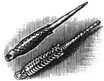
HÈSOTSAN
(Squamiata: Paravaranus comensualis mutatus)
This species of monitor lizard has been so modified that it now bears little resemblance to the original. Steam generating glands from Brachinus beetles violently project a dart which is poisoned when it passes over the sex organs of a commensal Tetradontid fish. This poison, the most deadly known, produces paralysis and death when as little as 500 molecules are present.
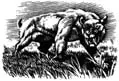
LONGTOOTH
(Metatheria: Machaerodus neogeus)
Long-tusked member of the marsupial tiger family. A large and ferocious carnivore that uses its greatly extended upper canine teeth to bring down its prey. Some Kargu hunters have a commensal relationship with these beasts to aid them in hunting.

ISEKUL*
(Columbae: Columba palumbus)
This gentle bird presents an ideal example of Yilanè science at its most practical. Like many other species, this one uses magnetized iron particles in its forebrain to detect the Earth’s magnetic field as an aid in navigation. Through selective breeding the Isekul* will now point its head in any selected direction for long periods of time, until distracted by thirst or hunger.
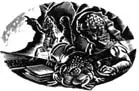
MASINDUU
(Anuva: Rana catesbiana mutatus mutatus)
The sanduu is an accepted laboratory creature for magnifying images up to 200 times. However it lacks versatility in that only one observer at a time can utilize it. The masinduu is a variation that permits the image to be projected onto any white surface to be viewed by two or more researchers.
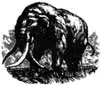
MASTODON
(Eutheria: Mastodon americanus)
A large mammal noted for its long upper tusks. It has a prehensile trunk reaching to the ground. Its domestication by the Tanu permits them to cover great distances when hunting and foraging, using the mastodons to pull large travois.
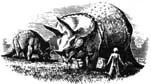
NENITESK
(Ornithischia: Triceratops elatus)
Herbivorous quadruped characterized by the possession of three horns set in a bony protective shield, unchanged since the Cretaceous period. They reproduce by laying eggs. Their brain capacity is small and their intelligence even smaller. Since they are slow growing they are of little use for meat supply, but are extremely decorative.
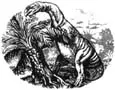
OKHALAKX
(Plateosauridia: Plateosaurus edibilus)