Chapters (60)
- Title Page
- Copyright Notice
- Dedication
- Part 1
- Chapter 1
- Chapter 2
- Chapter 3
- Chapter 4
- Chapter 5
- Chapter 6
- Chapter 7
- Chapter 8
- Chapter 9
- Chapter 10
- Chapter 11
- Chapter 12
- Chapter 13
- Chapter 14
- Chapter 15
- Chapter 16
- Chapter 17
- Chapter 18
- Chapter 19
- Chapter 20
- Chapter 21
- Chapter 22
- Part 2
- Chapter 23
- Chapter 24
- Chapter 25
- Chapter 26
- Chapter 27
- Chapter 28
- Chapter 29
- Chapter 30
- Chapter 31
- Chapter 32
- Chapter 33
- Chapter 34
- Chapter 35
- Chapter 36
- Chapter 37
- Chapter 38
- Chapter 39
- Chapter 40
- Part 3
- Chapter 41
- Chapter 42
- Chapter 43
- Chapter 44
- Part 4
- Chapter 45
- Chapter 46
- Chapter 47
- Note About Polish Surnames
- Translations
- Acknowledgments
- Author’s Note
- About the Author
- Newsletter Sign-up
Bill, Sophia, and Juliet: You lived through the writing and rewriting of every word in this book, and you never wavered in your encouragement. My love for you surpasses infinity, and I am thankful every day that you are my home.
Author’s Note
Several years ago, I was at a book event for If a Tree Falls, my memoir about raising our deaf daughters in a hearing, speaking world. A woman in the audience relayed her childhood experience during World War II: She was hidden with her mother in an attic, where she needed to stay silent nearly all of the time. I imagined the mother’s experience of trying to keep her young child hushed, an effort exactly opposite mine, which focused on encouraging my children to vocalize as much as possible.
Afterward I arranged to meet with the woman, a “hidden child,” as she called herself, and through her connections, I met several more. Soon I found myself immersed in a new project involving silence, separation, loss, and, above all, love.
Some of the hidden children I met were placed in hiding apart from their families. I was overwhelmed by their persisting hurt at this separation—despite knowing that it was for the sake of their survival. Some were given new names and placed in Christian settings; many had difficulty, after the war, recovering a sense of community and identity.
At the U.S. Holocaust Memorial Museum there are pamphlets with a child’s photo and the caption Remember me? The question is meant to be literal: If you remember me, if there is anyone out there who recognizes me and can tell me about my family, my name, then I might discover my history, my roots: my self. For refugees of current wars and violence, children displaced and torn from their families, this question echoes on.
My own childhood was marked, daily, by the sound of my father practicing the violin. During the writing of this book, I had the opportunity to meet an Israeli luthier who was asked to rebuild a violin recovered from a Nazi death camp, ashes still inside it. I listened to the sounds of other war-salvaged violins, and felt as if I were hearing the distinct voices of their lost players. I knew, then, that the girl in my story would be musical, that music would be something she shared with her family, together and apart.
The Yellow Bird Sings is a story about longing: the longing of a child and her mother to be connected, to be heard, to find their way home. I dedicate it to my parents.
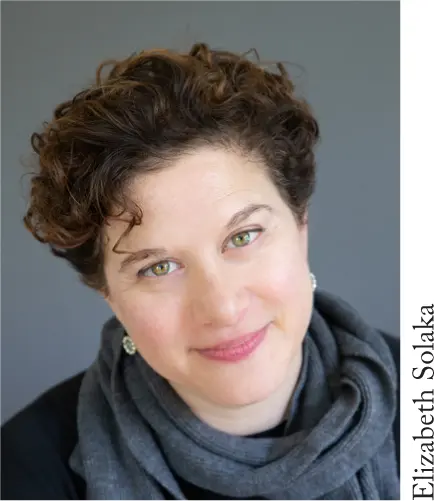
About the Author