Chapters (41)
- Cover
- Dedication
- 1. Highly Superior Autobiographical Memory (HSAM for Short)
- 2. The Brain
- 3. Temporal Lobe
- 4. Hippo Brain
- 5. Limbic System
- 6. Gone with the Cerebellum
- 7. Meninges
- 8. Give Me a C
- 9. Declarative Memory
- 10. Golden Gate Corpus Callosum
- 11. The Brain Stem Is a Spy
- 12. Frontal Lobe
- 13. Skull
- 14. Basal Ganglia
- 15. Snap, Crackle, Pop
- 16. Flashbulb Memory
- 17. Sensory Stage
- 18. Insula the Great
- 19. Amygdala
- 20. Dendrites
- 21. Engram Cells: The Brain Instagram
- 22. Medulla Oblongata
- 23. Cerebrum
- 24. Hypothalamus
- 25. Glial Cells: The Stars of the Show
- 26. Thalamus: The Inner Chamber
- 27. Neurotransmitters
- 28. The Outer Zone of the Cerebral Cortex
- 29. Axon
- 30. Occipital Lobe
- 31. Soma
- 32. Breaking Our DNA
- 33. Myelin
- 34. Nodes of Ranvier
- 35. Saltatory Conduction
- 36. Von Economo Neurons
- 37. Lulu’s Journal
- Acknowledgments
- About the Author
Gram seems steady enough. It feels weird, like I have to give her permission to drive, as if I’m now the adult. But the time talking about her past doesn’t seem to disorient her—it seems to do the opposite. Maybe the good memories help her and the bad ones upset her.
She pulls the van out on the road, and I stay quiet so she can concentrate. I don’t think she and her mother came here to spy after all. I think her mother came here because she was in love with Gram’s stepfather, Mark.
Relief hits me in waves. I didn’t realize how much it bothered me to think of Gram as a spy. As someone I never really knew. But now I can’t wait to get back to the photo albums and see what else I can find. If Gram isn’t a spy, then maybe I’ve been looking for the wrong memory this whole time.
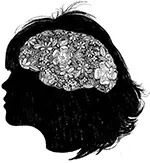
25. Glial Cells: The Stars of the Show
Glial cells make up more than 90 percent of all human brain cells, but because they don’t have the nerve impulses neuron cells have, they used to be ignored. It turns out they’re pretty important. Star-shaped glial cells, called astrocytes, actually influence how the brain processes information. They are thought to control which messages get sent and when. Without them we wouldn’t be able to learn anything new. Without them we couldn’t change our minds.
When we get home, Clay is a cranky beast. He is the worst when he wakes up from a nap. I leave him and Gram alone in the kitchen, where she plies him with snacks. She seems to be doing okay, so I have some time to look for clues.
I pull the boxes of albums into the middle of my bedroom. I put aside the ones I’ve already looked through and start on a new pile. A glossy pink one is filled with baby pictures of Dad. It’s like looking at Clay but with old-fashioned clothes and shoes. The next three albums are packed with photographs of trees and mountains. Finally, I hit the jackpot with a weathered brown leather album. Inside are pictures of Gram when she was in high school.
I study a family picture of her with her mother and my great-grandfather Mark. Her mother and Mark have their arms around each other and huge smiles on their faces. Gram looks like a movie star with her glamorous makeup and dark hair.
The next few pages show a vacation to the coast, but the last is of Gram and another pretty girl with blond hair pulled into a high ponytail. I trace a finger over her face, and I wonder if this is Margaret.