Chapters (41)
- Cover
- Dedication
- 1. Highly Superior Autobiographical Memory (HSAM for Short)
- 2. The Brain
- 3. Temporal Lobe
- 4. Hippo Brain
- 5. Limbic System
- 6. Gone with the Cerebellum
- 7. Meninges
- 8. Give Me a C
- 9. Declarative Memory
- 10. Golden Gate Corpus Callosum
- 11. The Brain Stem Is a Spy
- 12. Frontal Lobe
- 13. Skull
- 14. Basal Ganglia
- 15. Snap, Crackle, Pop
- 16. Flashbulb Memory
- 17. Sensory Stage
- 18. Insula the Great
- 19. Amygdala
- 20. Dendrites
- 21. Engram Cells: The Brain Instagram
- 22. Medulla Oblongata
- 23. Cerebrum
- 24. Hypothalamus
- 25. Glial Cells: The Stars of the Show
- 26. Thalamus: The Inner Chamber
- 27. Neurotransmitters
- 28. The Outer Zone of the Cerebral Cortex
- 29. Axon
- 30. Occipital Lobe
- 31. Soma
- 32. Breaking Our DNA
- 33. Myelin
- 34. Nodes of Ranvier
- 35. Saltatory Conduction
- 36. Von Economo Neurons
- 37. Lulu’s Journal
- Acknowledgments
- About the Author
Gram pats the top of my head before moving to wipe Clay’s hands with a washcloth. “You two are the best things in my life,” she says. “You do realize that, Lulu?”
“Yes, Gram.” My feet tap to the music still playing softly in the background.
Gram picks Clay up and kisses his bright red cheek. “Why don’t we start with my stories after I put him down for a nap? I have the best story about your dad at your age.”
It’s strange to think of Dad as a child. He’s such a grown-up, and there’s nothing that would hint he was once ever anything but a history professor.
“I think we should start with your childhood growing up in San Francisco,” I say. “Then work our way up.”
In all my reading, one article gave me hope that what Gram has might be curable. It said that sometimes someone becomes forgetful because of a traumatic memory. Something your brain wants to forget, so it forgets everything.
Maybe—just maybe—if I can find that memory, then I can help fix Gram’s forgetfulness.
I know it’s a long shot, but sometimes extraordinary things can happen. I was alone and invisible for years. Fed, clothed, but passed over like a forgotten sock behind the dryer. Gram swept in with her rules and practicality. She opened the blinds and let sunshine spill in to help find the part of me that was lost.
I can’t have this highly superior autobiographical memory for no reason. I must have it to solve this puzzle. If there’s the smallest chance a traumatic memory from Gram’s past is the reason she’s losing her memory, then I owe it to science and to Gram to rule it out.
“Gram,” I say, “what was your childhood like?”
Gram’s lips tremble, and her eyes glisten. “I’d rather not talk about that. Some things should stay in the past.”
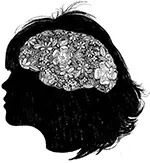
5. Limbic System
The part of the brain that creates memories is found in the limbic system. Sometimes something happens where a person can’t remember huge chunks of their life. In most cases, they’re diagnosed with dissociative amnesia. Usually it’s because something happens that’s so bad, the brain shuts off the memory to protect itself. Brain scans of patients with this kind of amnesia show they can’t remember emotional memories, no matter how hard they try. The traumatic memory changes the actual structure of the brain.
Gram doesn’t want to talk about her childhood, and just mentioning it upsets her. I knew it! Gram doesn’t have Alzheimer’s at all! There’s a memory in her past she’s buried so deep, it’s making her forgetful. If I can help her find the traumatic memory, then everything will be fine.