Chapters (42)
- The Final Argument
- Prologue:
- Part One
- Chapter I
- Four
- Chapter II
- Chapter III
- Chapter IV
- Nine
- Chapter V
- Chapter VI
- Chapter VII
- Six
- Part Two
- Chapter I
- Four
- Fourteen
- Chapter II
- Chapter III
- Chapter IV
- Three
- Chapter V
- Chapter VI
- Eight
- Chapter VII
- Chapter VIII
- Chapter IX
- Nineteen
- Part Three
- Chapter I
- Seven
- Chapter II
- Chapter III
- Chapter IV
- Four
- Chapter V
- Chapter VI
- Chapter VII
- Sixteen
- Epilogue
- Author’s Note
- Author’s Afterword
When Rudebacher pays him at the end of his first week— in Fort Lee— Grant is on the fifties, Jackson is on the twenties, and Alexander Hamilton is on the single ten in the envelope the boss hands him. At the end of the second week— in Leabrook— Abraham Lincoln is on the fifties and someone named Chadbourne is on the ten. It’s still Andrew Jackson on the twenties, which is something of a relief. In Callahan’s motel room, the bedcover is pink in Leabrook and orange in Fort Lee. This is handy. He always knows which version of New Jersey he’s in as soon as he wakes up.
Twice he gets drunk. The second time, after closing, Dicky Rudebacher joins him and matches him drink for drink. “This used to be a great country,” the Leabrook version of Rudebacher mourns, and Callahan thinks how great it is that some things don’t change; the fundamental bitch-and-moans apply as time goes by.
But his shadow starts getting longer earlier each day, he has seen his first Type Three vampire waiting in line to buy a ticket at the Leabrook Twin Cinema, and one day he gives notice.
Three
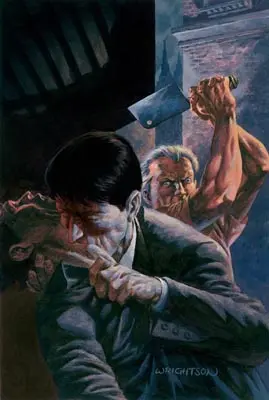
“Thought you told me you didn’t have anything,” Rudebacher says to Callahan.
“Beg your pardon?”
“You’ve got a bad case of itchy-foot, my friend. It often goes with the other thing.” Rudebacher makes a bottle-tipping gesture with one dish-water-reddened hand. “When a man catches itchy-foot late in life, it’s often incurable. Tell you what, if I didn’t have a wife that’s still a pretty good lay and two kids in college, I might just pack me a bindle and join you.”
“Yeah?” Callahan asks, fascinated.
“September and October are always the worst,” Rudebacher says dreamily. “You just hear it calling. The birds hear it, too, and go.”
“It?”
Rudebacher gives him a look that says don’t be stupid. “With them it’s the sky. Guys like us, it’s the road. Call of the open fuckin road. Guys like me, kids in school and a wife that still likes it more than just on Saturday night, they turn up the radio a little louder and drown it out. You’re not gonna do that.” He pauses, looks at Callahan shrewdly. “Stay another week? I’ll bump you twenty-five bucks. You make a gahdam fine Monte Cristo.”
Callahan considers, then shakes his head. If Rudebacher was right, if it was only one road, maybe he would stay another week…and another…and another. But it’s not just one. It’s all of them, all those highways in hiding, and he remembers the name of his third-grade reader and bursts out laughing. It was calledRoads to Everywhere.
“What’s so funny?” Rudebacher asks sourly.
“Nothing,” Callahan says. “Everything.” He claps his boss on the shoulder. “You’re a good man, Dicky. If I get back this way, I’ll stop in.”
“You won’t get back this way,” Dicky Rudebacher says, and of course he is right.