Chapters (33)
- Cover
- Elsha’s Fire
- Dedication
- Tribute to Elsha
- Foreword to 2019 edition
- Part One Firebrand
- 1 High Dreams
- 2 Dark Realities
- 3 My Calling
- 4 Fire on My Mind
- 5 My Strange Philosophy
- 6 The Firelord
- 7 A Friend
- 8 Divining
- 9 Earth-Force
- 10 Visions and Vows
- Part Two The Shining Star
- 11 Siranjaro Fire
- 12 Other Fires and Dreams
- 13 The Light in My Dark
- 14 Secret Powers
- 15 My Home, My Almost-Love
- 16 Gifts
- 17 Pain, Love and Destiny
- 18 High Road to Kasimarra
- 19 The Test
- 20 The Myth
- 21 Persuasions
- 22 The Battle
- 23 My Morning
- 24 Into the Light
- About the Author
- Publishing Details
I picked up my bag and began walking a different road, to a secret place and the man I loved. Happiness fell on me like light. In my heart I flew, embraced Teraj already, and the earth itself felt warm with our joy. Laughing, I began to run. Then I noticed, in the clearer ground between the rocks, that tiny green plants grew. I knelt and looked at them, astounded. They were newborn trees.
I began walking again, marvelling, and when I looked up I saw, in an opening between the clouds, a space of unbelievable blue – and at the edge of it, so bright it hurt my eyes, an ancient sun.
About the Author
From the Author
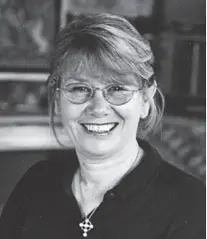
Since writing Winter of Fire in 1990 (it was my third published book) I have had sixteen books published. Most are novels for young adults, and many are set in medieval times. I love writing about ancient times because of the relative simplicity of life then. Days were divided by sunrise and sunset, church services, and daily chores; the year was marked by the seasons, by sowing and harvest, winter and spring, and religious festivals.
Another thing that fascinates me about ancient times is the way people thought. All they knew was what was in their own village or town, or what they heard from travelling minstrels or storytellers. If people got ill, they had only herbs to help, the butcher’s knife for surgery, or the prayers of the priests. There was a great deal of superstition, and intolerance of anyone who was different. It was this primitive kind of society that Elsha was born into – a world where people hunted with falcons or bows for meat, grew their own vegetables, and travelled on foot or by horse or donkey. Although Winter of Fire is set in a fantasy world, it is based largely on Medieval society, in which people also depended on diviners to find water or coal. When writing Elsha’s story, I loved thinking up the details of customs and costumes for her world, and the rules of the society that shaped her. This infinite imagining, enriched by a great deal of research, is one of the things I enjoy most about writing.
I also love the way characters are people in their own right, and they are the ones who control the story, not me. It’s as if they rush off on their own grand adventures, saying what they want to say, doing things that often have nothing to do with the plot I planned for them – and I am left to run along behind calling, “Wait for me! Wait for me!” It’s like being inside a wondrous movie, and recording what I see and hear and feel, in the best way I can.