When We Were Lost
Chapters (61)
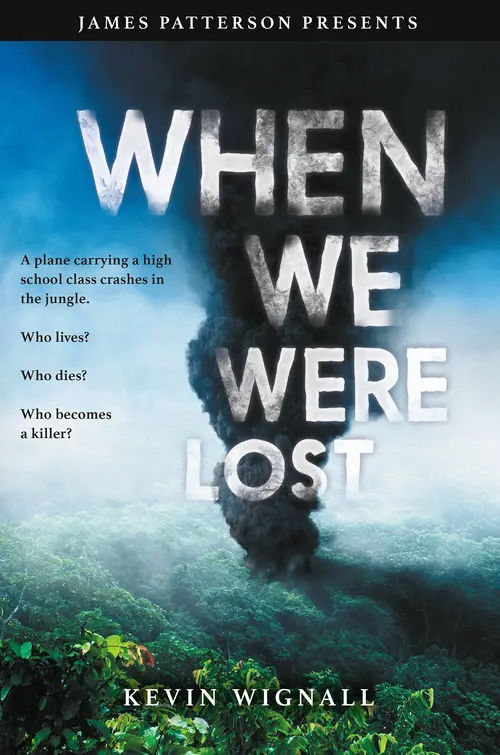
- COVER
- DEDICATION
- FOREWORD
- PROLOGUE
- CHAPTER 1
- CHAPTER 2
- CHAPTER 3
- CHAPTER 4
- CHAPTER 5
- CHAPTER 6
- CHAPTER 7
- CHAPTER 8
- CHAPTER 9
- CHAPTER 10
- CHAPTER 11
- CHAPTER 12
- CHAPTER 13
- CHAPTER 14
- CHAPTER 15
- CHAPTER 16
- CHAPTER 17
- CHAPTER 18
- CHAPTER 19
- CHAPTER 20
- CHAPTER 21
- CHAPTER 22
- CHAPTER 23
- CHAPTER 24
- CHAPTER 25
- CHAPTER 26
- CHAPTER 27
- CHAPTER 28
- CHAPTER 29
- CHAPTER 30
- CHAPTER 31
- CHAPTER 32
- CHAPTER 33
- CHAPTER 34
- CHAPTER 35
- CHAPTER 36
- CHAPTER 37
- CHAPTER 38
- CHAPTER 39
- CHAPTER 40
- CHAPTER 41
- CHAPTER 42
- CHAPTER 43
- CHAPTER 44
- CHAPTER 45
- CHAPTER 46
- CHAPTER 47
- CHAPTER 48
- CHAPTER 49
- CHAPTER 50
- CHAPTER 51
- CHAPTER 52
- EPILOGUE
- ACKNOWLEDGEMENTS
- ABOUT THE AUTHOR
- JIMMY Patterson Books for Young Adult Readers
- Thank you for buying this ebook, published by Hachette Digital.
COVER
DEDICATION
For George and Rafael
FOREWORD
As someone who loves to tell stories, I’ve found that the best ones take you in a direction you never expected to go. I started reading When We Were Lost thinking that it would be a straightforward survival tale of kids whose plane crashes in a remote jungle. Kevin Wignall certainly packed it with all the nail-biting suspense and wild thrills of a terrific disaster narrative, but I was delighted to find it ends up being much more than that.
We see the catastrophe unfold through the eyes of Tom—a friendless kid who just wants to be left alone. I think we all have a little bit of that in us, a part that makes us feel like we never quite belong. This story has Tom fighting to survive unexpected situations—the savage jungle and high school social hierarchies—and finding them both vicious to contend with in their own ways.
In the end, this story is about being lost in more ways than one, and what it really means to be found.
—James Patterson

PROLOGUE
It’s called the butterfly effect, and it’s the part of chaos theory that everyone loves. The idea is that a butterfly flapping its wings can cause a hurricane on the other side of the world. Not directly, of course. It’s not like the wings disturb some air and that disturbance disturbs more air and so on until it grows into a hurricane—that would just be stupid.
What it really means is that everything is incredibly complex, with millions of tiny factors built into almost every occurrence, and if you remove just one of them (the beat of the butterfly’s wings), then it might happen differently, or even not at all.
So, years ago, some jerk named Matt Nicholson thought it might be funny to spike a girl’s drinks by slipping in vodka shots without her noticing. Unlikely as it seems, Matt Nicholson is the butterfly, and the spiking of the drinks is the beat of his wings.
The girl was Sally Morgan and soon enough she was reeling. These were their first weeks at college, so when Sally went staggering out of the bar looking green, no one paid much attention—no one except Matt Nicholson, who thought it was hilarious.
Outside the bar, a girl named Julia Darby spotted Sally, and though she didn’t know her, she knew this girl was in trouble and needed help. Julia stepped in, and managed to get her to a bathroom stall just before the inevitable happened.
They were in different schools, studying different subjects, so if Matt Nicholson hadn’t spiked Sally’s drinks, Sally and Julia wouldn’t have met, not then, maybe not ever, and they wouldn’t have become best friends. And then Julia wouldn’t have introduced Sally to her friend from back home, Rob Calloway.