Theft
Chapters (29)
PRAISE FOR My Biggest Lie by Luke Brown
‘A real page-turner. Deeply sensual.’
Gary Shteyngart
‘I grabbed this for its mad adventure but came away with a gift for the heart.’
DBC Pierre
‘Smart, zingy and extremely funny, this is a real treat.’
Paul Murray
‘Its warmth and tenderness are hard to resist.’
Catherine O’Flynn
‘Brown’s deliciously tricksy novel encourages its reader to pay attention to correspondences between art and life… It captures the sun-soaked sexiness of the city… and the hazy drug that is desire better than anything I have read in years.’
The Guardian
‘Rewarding and ambitious.’
Times Literary Supplement
‘An unashamedly literary novel that nonetheless wears its learning lightly and is totally unpretentious: a ludic, drunk, dizzying jaunt.’
Dazed & Confused
‘A scintillating, intelligent and uproariously funny trip into the excesses of storytelling.’
Big Issue
First published in the UK by And Other Stories
Sheffield – London – New York
www.andotherstories.org
Copyright © 2020 Luke Brown
ISBN 9781911508588
eBook ISBN 9781911508595
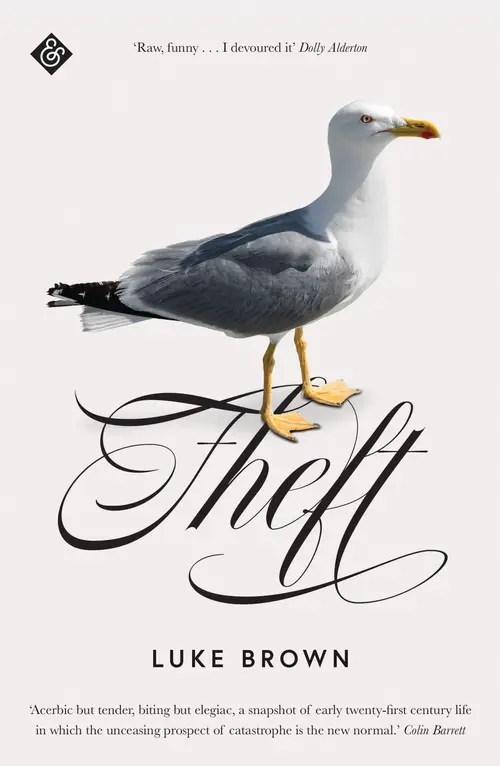
Editor: Stefan Tobler; Copy-editor: Gesche Ipsen; Proofreader: Sarah Terry; Typesetting and eBook: Tetragon, London; Cover Design: Luke Bird.
And Other Stories gratefully acknowledge that our work is supported using public funding by Arts Council England.

Contents
- Part One
- One
- Two
- Three
- Four
- Five
- Six
- Seven
- Eight
- Nine
- Ten
- Eleven
- Part Two
- Twelve
- Thirteen
- Fourteen
- Fifteen
- Sixteen
- Seventeen
- Eighteen
- Nineteen
- Twenty
- Twenty-One
- Twenty-Two
- Acknowledgements
For Jacquie, Naomi and Rachel
‘I never cared one bit about the property. I cared about herself – and always shall do.’
Branwell Brontë to J. B. Leyland, 1846
‘… theft’
What Is Property?, 1840
‘Verily, what with tainting, plundering and spoiling, Tom has his revenge.’
Bleak House, 1853
Part One
One
What I did to them was terrible, but you have to understand the context. This was London, 2016. My friends and I had lived our adult lives in flats with living rooms made into bedrooms, kitchens into pop-up cocktail bars and gallery spaces; we worked in pubs and shops and schools and clung on to our other lives as artists and musicians and professional skateboarders. For too long I’d suspected that I would have been more successful if I’d spent less time talking to my friends, if I had been more discerning about who they were, if I had put to another use the ten thousand hours in which I had discussed the meaning of love with the lunatics who wouldn’t leave my sofa. How much more organised and efficient I thought my mind might be if it had not had so much company. I worried that I had sabotaged myself, ruined myself for both distinction and the humdrum, and I wished I had become another man, a better man, a man who I suppose would feel no sympathy for me, a superior bastard, a loathsome know-it-all, who would replace me, and get away with it, and no one would mourn me. There is little point thinking about what might have been. Character means character.