Chapters (68)
- Cover
- Dedication
- Epigraph
- Prologue
- Part I
- Chapter One
- Chapter Two
- Chapter Three
- Chapter Four
- Chapter Five
- Chapter Six
- Chapter Seven
- Chapter Eight
- Chapter Nine
- Chapter Ten
- Chapter Eleven
- Chapter Twelve
- Chapter Thirteen
- Chapter Fourteen
- Chapter Fifteen
- Chapter Sixteen
- Chapter Seventeen
- Chapter Eighteen
- Chapter Nineteen
- Chapter Twenty
- Chapter Twenty-One
- Part II
- Chapter Twenty-Two
- Chapter Twenty-Three
- Chapter Twenty-Four
- Chapter Twenty-Five
- Chapter Twenty-Six
- Chapter Twenty-Seven
- Chapter Twenty-Eight
- Chapter Twenty-Nine
- Chapter Thirty
- Chapter Thirty-One
- Chapter Thirty-Two
- Chapter Thirty-Three
- Chapter Thirty-Four
- Part III
- Chapter Thirty-Five
- Chapter Thirty-Six
- Chapter Thirty-Seven
- Chapter Thirty-Eight
- Chapter Thirty-Nine
- Chapter Forty
- Chapter Forty-One
- Chapter Forty-Two
- Chapter Forty-Three
- Chapter Forty-Four
- Chapter Forty-Five
- Chapter Forty-Six
- Chapter Forty-Seven
- Chapter Forty-Eight
- Epilogue
- Author’s Note
- Acknowledgments
- Glossary
- P.S. Insights, Interviews & More . . .*
- About the Author
- Buenos Aires, 1996
- About the Book
- Ezrat Nashim Poster
- Reading Group Guide
- Praise
- Also by Talia Carner
- About the Publisher
shaygetz—Non-Jewish man. (Also derogatory for any brute or scoundrel.)
Shema—A liturgical twice-daily prayer that expresses the Jewish faith in God.
sheyn meydele—Pretty girl.
shiksa—Non-Jewish female.
shiva—Seven days of mourning.
shtiebel—Makeshift prayer and meeting room.
shtille chuppah—“Silent” wedding, with only one witness, no rabbi.
shver—Father-in-law.
sofer—Scribe of religious documents.
tahara—Religious purification of the body in preparation for burial.
talis—Fringed prayer shawl worn by Orthodox Jewish men.
tangele—Yiddish tango in Argentina.
tchotchkes—Trinkets, knickknacks.
tijera—(Spanish) In tango, feet or legs scissoring.
tkhines—Women’s prayers in Yiddish.
tme’ah—Contaminated; feminine (masculine plural tme’yim; feminine plural tme’ot).
tranvias—(Spanish) tram lines.
tsures—Problems, troubles.
tzaddik—A righteous man, a man of the highest virtues (plural tsaddikim).
verst—(Russian) A distance measure—about two-thirds of a mile.
yahrzeit—Anniversary of a death.
yapa—(Spanish) A bonus item for a purchase.
yerba maté, maté—(Spanish) A tea-like beverage drunk with a straw out of a hollowed gourd. Pronounced “MAH-teh.”
yichus—Lineage, social status.
P.S. Insights, Interviews & More . . .*
About the Author
Meet Talia Carner
Buenos Aires, 1996
About the Book
The Historical Background of The Third Daughter
Ezrat Nashim Poster
Reading Group Guide
About the Author
Meet Talia Carner
TALIA CARNER is the former publisher of Savvy Woman magazine and a consultant to Fortune 500 companies. She is a board member of the Hadassah-Brandeis Institute, the Jewish women’s research center at Brandeis University, as well as an honorary board member of several anti–domestic violence and child abuse intervention organizations. Her previous novels—Hotel Moscow, Jerusalem Maiden, China Doll, and Puppet Child—have been hailed for exposing society’s ills. Dozens of Carner’s award-winning essays, articles, and short stories have appeared in anthologies, literary reviews, and leading websites. She is a committed supporter of global human rights, having spearheaded projects centered on the subjects of female plight and participated as a panelist or delivered more than three hundred keynotes addresses at civic and cultural organizations. 
Discover great authors, exclusive offers, and more at hc.com.
Buenos Aires, 1996
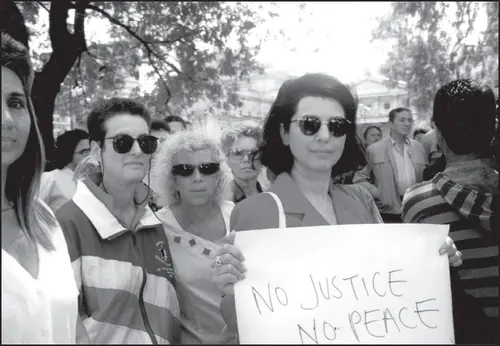
Ronald Carner
Following the 1994 bombing of the Asociación Mutual Israelita Argentina (AMIA) building, which housed all Jewish organizations in Buenos Aires—a bombing that left eighty-five dead and hundreds injured—author Talia Carner participated in a demonstration in front of the Argentine Department of Justice, which had been assigned the task of investigating those responsible for the attack.
For twenty-three years, all investigations met a brick wall, culminating in the murder of the key prosecutor, Alberto Nisman, in 2015, hours before he was to present his findings to the Argentine National Congress. Finally, in December 2017, a federal judge indicted former president Cristina Fernández de Kirchner for colluding with Iran in the cover-up of Tehran’s role in the bombing.