Chapters (24)
- Cover
- Title
- Copyright
- Dedication
- Contents
- Preface
- The Letter
- To the Reader
- Chapter One: A Death in the Family
- Chapter Two: Farewell and a Call to Duty
- Chapter Three: Listen and Learn
- Chapter Four: Planting the Seeds of War
- Chapter Five: A Call to Arms
- Chapter Six: Selecting the Best Riflemen
- Chapter Seven: The Long March to Boston
- Chapter Eight: 1775: The Continental Army—From Defense to Offense
- Chapter Nine: 1775: The Order Is Given
- Chapter Ten: 1775: A Sortie Delayed
- Chapter Eleven: 1775: River-Ready Batteaux?
- Chapter Twelve: 1775: Winter in the Forest Primeval
- Chapter Thirteen: 1775: Quebec—Setting the Stage for Battle
- Chapter Fourteen: 1775-1776: Quebec—The Forlorn Hope
- Postscript
- Acknowledgments
3. The “cocked hat,” became a favorite in the Continental Army because it was the kind of head covering most often seen on General George Washington in the field and during battles. By early in the 19th century, this style of headwear was often described as a “tricorn hat” since its most distinguishing characteristic was having all three sides of the brim turned up (cocked) and either pinned, laced, or buttoned in place to form a triangle around the crown.
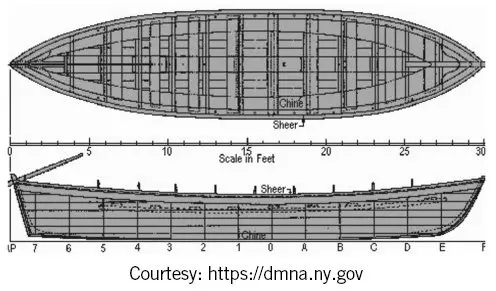
4. “Batteaux” [the plural of “batteau,” spellings extant in the late 18th century] of low freeboard, flat-bottomed, double-ended, shallow-draft boats used for ferrying freight and/or passengers on the interior waterways of North America. The size [length and beam] of the craft varied from 20 to 50 feet long and 3 to 6 feet wide depending on the nature of the water [calm or rapids] to be traversed.
5. “Courier Balls” were small, hollow, threaded silver balls, usually less than ½ inch in diameter, carefully crafted to be separated at the center and inside which, very brief messages could be enclosed.
During the American Revolution, both sides used these devices to transmit very sensitive intelligence, orders, and reports. If a courier, messenger, or spy was intercepted by the enemy, he was instructed to “swallow the ball.” By 1775, Express Messengers and Trusted Couriers could only pray their feces would not reveal a silver container if they were captured. The penalty was death by hanging.
6. Morgan was referring to Exodus 13:21. In the King James Bible of the day, the verse reads, “And the Lord went before them by day in a pillar of a cloud, to lead them the way; and by night in a pillar of fire, to give them light; to go by day and night.”
Chapter Nine: 1775: The Order Is Given
Chapter Nine
1775: THE ORDER IS GIVEN
Colonel Benedict Arnold’s Headquarters,
Cambridge, Massachusetts
Saturday, September 2nd, 1775
We have spent nearly every waking minute since the meetings on Wednesday, preparing for what everyone in the Patriot forces surrounding Boston now call “The Arnold Expedition to Canada.” So much for security. If the British don’t know about what we’re up to, they must all be blind, and most certainly, deaf.
Both our wagons are now packed with all the powder, shot, and lead sheets we brought from Virginia, plus locally acquired barrels of salted beef, pork, fish, corn, beans, salt, flour, coffee, several baskets of oranges, lemons and limes, a farrier forge, charcoal, medical equipment and supplies, cold weather clothing, canvas for tentage, candles, lanterns, fuel, heavy carpenter and engineer tools, my meticulously stocked field desk, and seventeen half-barrels of rum.
At 8:00 this morning we were informed Col. Arnold has called a “Commanders Meeting” for 11:00 a.m. at his headquarters. As usual, Captain Morgan, Lt. Humphrey, and I arrived a half hour early.