Chapters (69)
- Cover
- ALSO BY KIERSTEN WHITE
- Dedication
- Epigraph
- Part One: How Can I Live Without Thee?
- Chapter One: To Be Weak Is Miserable
- Chapter Two: What Hath Night to Do with Sleep?
- Chapter Three: In Wandering Mazes Lost
- Chapter Four: Half Lost, I Seek
- Chapter Five: With Purpose to Explore or to Disturb
- Chapter Six: Round He Throws His Baleful Eyes
- Chapter Seven: I Sung of Chaos and Eternal Night
- Chapter Eight: Horror and Doubt Distract His Troubled Thoughts
- Chapter Nine: This Horror Will Grow Mild, This Darkness Light
- Chapter Ten: To Lose Thee Were to Lose Myself
- Chapter Eleven: When from Sleep I First Awaked
- Part Two: What Is Dark Within Me, Illumine
- Chapter Twelve: At Once Indebted and Discharged
- Chapter Thirteen: That All This Good of Evil Shall Produce
- Chapter Fourteen: What Can We Suffer Worse?
- Chapter Fifteen: Love or Hate, to Me Alike
- Chapter Sixteen: So Farewell Hope
- Part Three: Long Is the Way and Hard, That Out of Hell Leads Up to Light
- Chapter Seventeen: Which Way Shall I Fly
- Chapter Eighteen: His Dark Materials to Create More Worlds
- Chapter Nineteen: Should God Create Another Eve
- Chapter Twenty: Flesh of Flesh, Bone of My Bone
- Chapter Twenty-one: Him Whom to Love Is to Obey
- Chapter Twenty-two: Hail Horrors, Hail Infernal World
- Chapter Twenty-three: So Shall the World Go on, to Good Malignant, to Bad Men Benign
- Chapter Twenty-four: And Study of Revenge, Immortal Hate
- Chapter Twenty-five: Did I Request Thee, Maker, from My Clay, to Mold Me Man?
- Chapter Twenty-six: Which Way Shall I Fly
- Chapter Twenty-seven: That Must Be Our Cure: To Be No More
- Epilogue: I Sung of Chaos and Eternal Night
- AUTHOR’S NOTE
- ACKNOWLEDGMENTS
- Excerpt from The Guinevere Deception
- About the Author
- TEACHER GUIDE, ARRANGED BY THEME
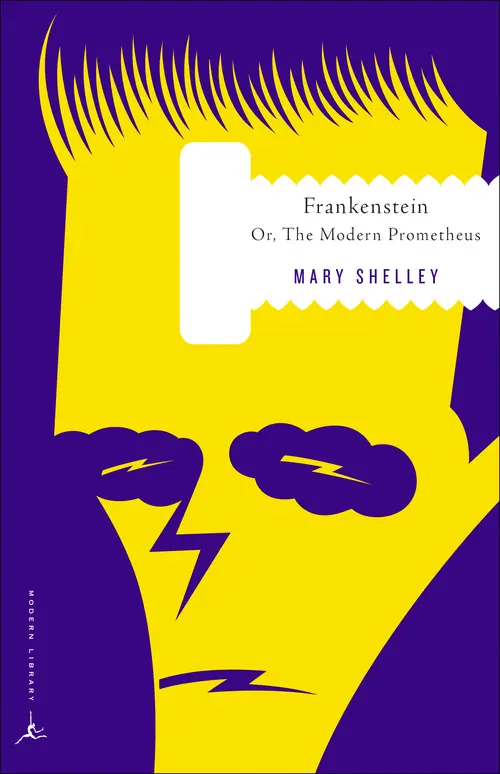
- Frankenstein
- Author’s Introduction
- Preface
- Chapter I
- Chapter II
- Chapter III
- Chapter IV
- Chapter V
- Chapter VI
- Chapter VII
- Chapter VIII
- Chapter IX
- Chapter X
- Chapter XI
- Chapter XII
- Chapter XIII
- Chapter XIV
- Chapter XV
- Chapter XVI
- Chapter XVII
- Chapter XVIII
- Chapter XIX
- Chapter XX
- Chapter XXI
- Chapter XXII
- Chapter XXIII
- Chapter XXIV
- About The Modern Library
- What’s next onyour reading list?
- How much of who we are is shaped by those around us?
- What happens when our identity depends on someone else??
- Where are the girls and the women in classic literature? Why might a retelling like this, where the perspective is shifted to the female’s voice, be important to study alongside the original story?
BIG ESSAY
What is the danger of a single story?
EXTENDED THINKING
- Two hundred years later, the story of Frankenstein still resonates in modern culture. In fact, Science magazine’s “The Horror Story That Haunts Science” notes that “Scientific literature, like the popular press, is rife with references to Frankenfood, Frankencells, Frankenlaws, Frankenswine, and Frankendrugs—most of them supposedly monstrous creations” (Cohen). What is it about Frankenstein that keeps it relevant?
- The original story of Frankenstein has the subtitle “Or, the Modern Prometheus,” which lends itself to “the idea that mad scientists playing God the creator will cause the entire human species to suffer eternal punishment for their trespasses and hubris” (Cohen). Given the experience of Elizabeth Lavenza in The Dark Descent of Elizabeth Frankenstein, is the same subtitle applicable to this story?
- Frankenstein is “a story of scientific hubris, a creator consumed by his creation, a male scientist trying to eliminate women’s role in reproduction” (Kupferschmidt, “The Long Shadow of Frankenstein”). What is the purpose, then, of retelling the story? How does it connect to and contrast with the original?
- Some argue that the real moral of the original Frankenstein is “not the danger of scientists violating the natural order, but the dire fate that awaits creators who fail to care for their creations” (Cohen). Is this the moral of The Dark Descent of Elizabeth Frankenstein as well? Explain your reasoning.
- There are many scientists “studying which technological advances pose ‘existential risks’ that could wipe out humanity or at least end civilization as we know it—and what can be done to stop them” (Kupferschmidt, “Taming the Monsters of Tomorrow”). Research “existential risks” and how scientists are trying to combat them. Present your findings; then make connections to the experiences of Elizabeth and Mary as individuals who are also combating “existential risks.”
- In Science magazine’s “The Next Generation’s Frankenstein Films,” “What modern research could serve as the basis for the next [Frankenstein-inspired science fiction] box-office hit?”
-
Some topics to think about:
- Gene-editing technology
- Xenotransplantation
- Artificial intelligence
- Microbes and viruses
- Works Cited:
- Cohen, Jon. “The Horror Story That Haunts Science.” sciencemag.org
- Kupferschmidt, Kai, “The Long Shadow of Frankenstein.” sciencemag.org
- Kupferschmidt, Kai, “Taming the Monsters of Tomorrow.” sciencemag.org
 Correlates to Common Core Standard Speaking and Listening: CCSS.ELA-LITERACY.SL.9-10.4, Writing: Text Types and Purposes CCSS.ELA-LITERACY.W.9-10.1, CCSS.ELA-LITERACY.W.9-10.2, Writing: Research to Build and Present Knowledge CCSS.ELALITERACY. W.9-10.7, CCSS.ELA-LITERACY.W.9-10.8, CCSS.ELA-LITERACY.W.9-10.9
This guide was prepared by Kimberly Herzog, English teacher at Staples High School in Westport, CT.
Frankenstein
Biographical note copyright © 1993 by Penguin Random House LLC.