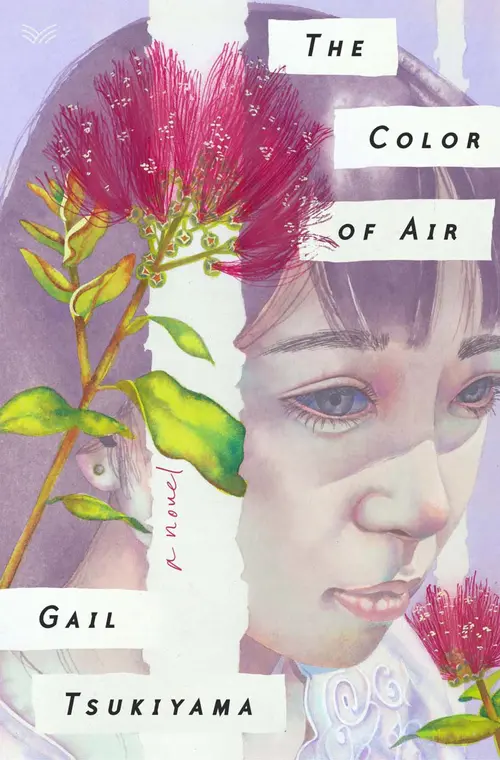
The Color of Air
Chapters (76)
- Cover
- Dedication
- Epigraph
- Mauna Loa: November 21, 1935
- 1. Mangoes
- 2. Watching Over Him
- 3. Rising Winds
- 4. The Okawa Fish Market
- 5. Beauty and the Beast
- 6. Homecoming
- 7. Waiting
- 8. In the Quiet
- Ghost Voices
- Carrying On: November 23–25, 1935
- 9. Sanctuary
- 10. Fire and Ice
- 11. The Sugar Train
- 12. The Green Bungalow
- 13. The House Call
- 14. The House on the Hill
- Island Voices
- The Past, the Present: November 25–26, 1935
- 15. Island Boys
- 16. Hide-and-Seek
- 17. The Bulletin Board
- Ghost Voices
- You Can’t Hide: November 27–December 4, 1935
- 18. A New Direction
- 19. One Step Forward
- 20. Awakening
- 21. Puli Plantation
- Island Voices
- Lost and Found: December 6–8, 1935
- 22. Ashes
- 23. The Surprise
- 24. The Scenic Express
- Ghost Voices
- And Then . . .: December 11–16, 1935
- 25. Restless
- 26. Collecting
- 27. Sugarcane
- 28. A Visitor
- 29. Run
- 30. Nightmares
- 31. Packing
- Ghost Voices
- Secrets: December 17–18, 1935
- 32. Town Boy
- 33. Nori
- 34. Naupaka
- Ghost Voices
- Answers: December 18–20, 1935
- 35. Lava
- 36. Uncle Koji
- 37. The Truth of It
- Ghost Voices
- Waiting: December 22–26, 1935
- 38. Revelations
- 39. Safe Places
- 40. Mele Kalikimaka
- Ghost Voices
- Shooting the Moon: December 27–31, 1935
- 41. Blackbirds
- 42. Mosquitoes
- 43. Faith
- 44. The River
- Ghost Voices
- A New Year: January 1–2, 1936
- 45. The Beating Heart
- 46. January 2, 1936
- 47. The Living
- Ghost Voices
- Hilo: July 28, 1936
- 48. The Mango Tree
- Acknowledgments
- About the Publisher
Cover
Dedication
Dedication
For all the Hilo Aunties who have graced my life
And in memory of Emily Lee
Epigraph
Epigraph
[T]he very color of the air in the place I was born was different, the smell of the earth was special, redolent with memories of my parents.
—NATSUME SŌSEKI
Mauna Loa: November 21, 1935
Mauna Loa
November 21, 1935
1. Mangoes
1
Mangoes
The sky threatened rain as Koji Sanada approached the green bungalow where the pungent scent of rotting mangoes mingled with a hint of smoke, the bitter remnants of the preharvest cane burning that drifted down from the surrounding plantations. He knew it all too well. Sugarcane had been his life since his family first arrived in Hilo, Hawai‵i, by way of Osaka, Japan, in 1895, along with all the other immigrant workers who had flocked to jobs on the island’s sugar and pineapple plantations. Koji had been ten years old, the older of two children and the only son. He had immediately embraced the wildness of the island as his own, so different from his traditional Japanese upbringing. Along the way, the three years his parents had been contracted to stay before returning to Japan had turned into a lifetime.
Koji walked up the dirt path to the house he knew so well. It was here on the Big Island near the growing community of Hilo that he found a new home at the Puli Plantation, along with years of backbreaking work, toiling under the hot sun, the wind and rain, the tremors and quakes, and it was here on this island of five volcanoes that he’d also found Mariko Abe.
He paused to look around Mariko’s yard now and felt a dull ache at having let her down. The garden, always her pride, was wild and overgrown without her. He meant to come pick the mangoes and take them to Nori at the Okawa Fish Market, but once again time had gotten away from him. He continued up the path to see her beloved mango tree, planted by her grandfather but now empty of fruit. It had been wet and muggy all week, and the moist ground was heavily blanketed with leaves and rotted fruit, only the dark seeds of a few fist-size mangoes still recognizable. It always amazed Koji how quickly the earth could reclaim its own.
Close your eyes. He thought he heard Mariko’s voice again. Now, what do you smell? When they were young, she’d taught him the mangoes were ready to pick when you could smell their fragrant melon pineapple aroma, while they were still firm to the touch. Her tree always yielded the sweetest mangoes in Hilo town. Koji smiled to think Mariko knew mangoes the way he knew sugarcane, and he felt a sudden sharp longing that was just another form of grief. She had died two years ago and it still felt like yesterday.