The Black Maybe
Chapters (13)
Cover
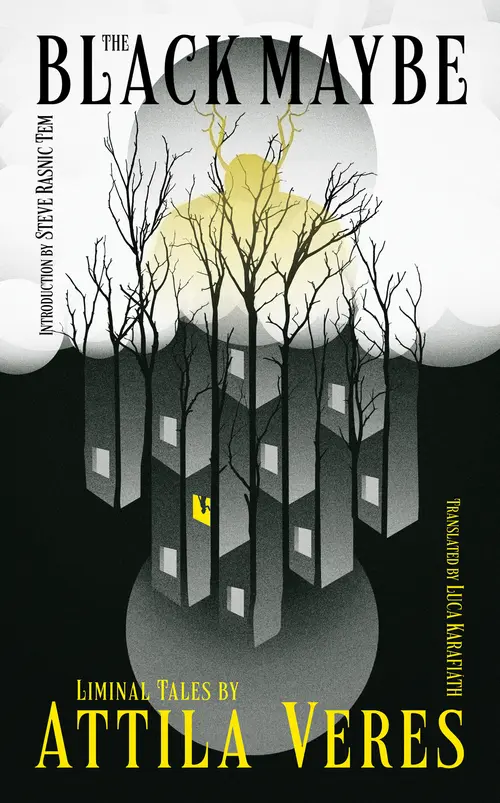
THE BLACK MAYBE
Liminal Tales
by
ATTILA VERES
Translated from the Hungarian by LUCA KARAFIÁTH
Introduction by STEVE RASNIC TEM
VALANCOURT BOOKS
Introduction by Steve Rasnic Tem
Introduction
The most enriching aspect of discovering new authors, especially those who toil in the same genre, is experiencing their unique perspectives on beloved themes.
I first read Attila Veres (b. 1985) in The Valancourt Book of World Horror Stories, volume 1. His tale, ‘The Time Remaining’ (included here), begins innocently enough. A grandmother gives her grandchild a plush toy, Vili. But the child never sees the grandmother again, and the mother lies about the reason. The mother lies again, thinking the child too dependent, saying that Vili is dying. Similar lies spread to other mothers and their children, and their plush toys fall ‘ill’. What follows is a cascade of extended rituals to keep these toys alive, with powerful visceral descriptions of the toys’ pain and the children’s involvement. It’s a riveting exploration of sympathetic magic and what happens when a fantasy goes on too long. The story was a fan favorite and led to this, Veres’ first English collection.
Attila Veres makes his living as an award-winning writer for film and television in his native Hungary. His first novel, Darker Outside, was a surprise success. An original blend of the personal and the weird, it falls into that rewarding gray area between genre and mainstream literature.
This was followed by the story collection Midnight Schools. Seven of the stories that appear here are taken from that volume. This book emerged at an opportune time, as other younger Hungarian writers began writing about their country and themselves through genre. A Year’s Best Hungarian SFF Short Stories series began in which Veres has been a regular contributor.
Attila Veres’ fiction is rooted in the Hungarian experience. His native readers recognize the seedy urban rock clubs, impoverished farms, and post-Soviet haunted landscapes and experiences as their own, yet Veres twists this reality in bizarre and original ways into unique weird mythologies appealing to an international audience. As someone who has read a great deal of horror fiction, I found myself consistently surprised by these liminal tales.
‘In the Snow, Sleeping’ is one of my favorites. A young woman travels to a distant spa with her oblivious boyfriend. She knows he carries an engagement ring, which fills her with unease. First they are given a foul, stinking room, and the cracks multiply in their ideal vacation: warnings the hot thermal waters will become harmful, the front door is left open letting wild animals in, the staff disappears. Through the walls she hears banging, crying, and screams. Some of the guests appear injured and bloody. Yet her boyfriend still insists on staying. Veres has a gift for contemporary settings and concerns. These feel like stories of the ‘now’, interrupted with intimations of the sinister and the strange.