Chapters (42)
- Cover
- Title Page
- Dedication
- Thursday, June 26
- Friday, June 27
- Saturday, June 28
- Sunday, June 29
- Monday, June 30
- Tuesday, July 1
- Tuesday, July 8
- Wednesday, July 9
- Saturday, July 12
- Sunday, July 13
- Monday, July 14
- Sunday, July 20
- Monday, July 21
- Friday, July 25
- Saturday, July 26
- Monday, July 28
- Tuesday, July 29
- Friday, August 1
- Saturday, August 2
- Sunday, August 3
- Monday, August 4
- Tuesday, August 5
- Wednesday, August 6
- Thursday, August 7
- Friday, August 8
- Saturday, August 9
- Sunday, August 10
- Wednesday, August 13
- Thursday, August 14
- Saturday, August 16
- Sunday, August 17
- Monday, August 18
- Thursday, August 21
- Saturday, August 23
- March 1970
- May 1970
- Author’s Note
- Acknowledgments
- Copyright
A few people have asked why I waited so long to tell this story. A big part of the reason was that I didn’t want this book to be published while my mother and father, and aunt and uncle, were able to read it. They’d all been through enough in their lives and didn’t need to be reminded.
While many of the episodes in the book are based on personal experience, there are some that came to me secondhand. The scene in the tunnel with the Pagan’s motorcycle gang after the Led Zeppelin concert (and what a concert it was!), the Molotov cocktail incident, and the run-in with the hoods on the beach are three such “borrowed” incidents.
The same is true of the characters. Some are conglomerations of people I knew at the time. For instance, the young woman who introduced me to the Planting Fields, and with whom I went to Woodstock on my motorcycle, was not the one I hitched home with after leaving my partly burned microbus in Canada. Likewise, the friend who bought the half a gram of pure acid was not the one who complained to the police when he thought he’d been ripped off by a fake dealer. From surfing I’ve learned that close to a storm, waves tend to be many and disorganized, but as they travel away from the storm center, they meld — thanks to the physical law of conservation of energy — into one another and become organized sets of fewer waves. A similar process happened as I wrote this book. Where two characters could be blended into one, they naturally did so, thus conserving the amount of energy it required to keep the character in the reader’s consciousness.
In addition, even those characters who maintained their singular identities have had some details of their lives changed to better fit the story and narrative. After Woodstock, my cousin died from a heroin overdose in Vancouver, not Monticello. The businesses my father was involved with were not the ones described in the book, although I did indeed work in a bulk-mail facility. Also, I graduated from high school in 1968, not 1969, and while the danger of being drafted loomed ever-present in my life, my own circumstances never became quite as dire as those of my alter ego, Lucas.
And as far as the Semi-Miraculous Transformation? As anyone who knows me can attest, it may have happened to Lucas, but it sure didn’t happen to me.
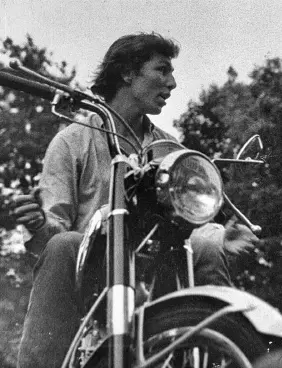
The author, early August 1969
Photo by Anita Green
Acknowledgments

My deepest gratitude and thanks to: