Chapters (19)
- Title Page
- Dedication
- Author’s Note
- Introduction
- 1. Elinor
- 2. Frederick
- 3. Fighting Hitler and Jim Crow
- 4. German POWs in the United States
- 5. Prisoners and Nurses
- 6. A Forbidden Romance
- 7. End of War
- 8. An Uncertain Future
- 9. Searching for Acceptance
- 10. Finally Home
- Postscript
- Acknowledgments
- Notes
- Index
- About the Author
Frederick and Chris, circa 1957 Frederick in the woods outside the family home in Fairfield County, Connecticut, circa 1957
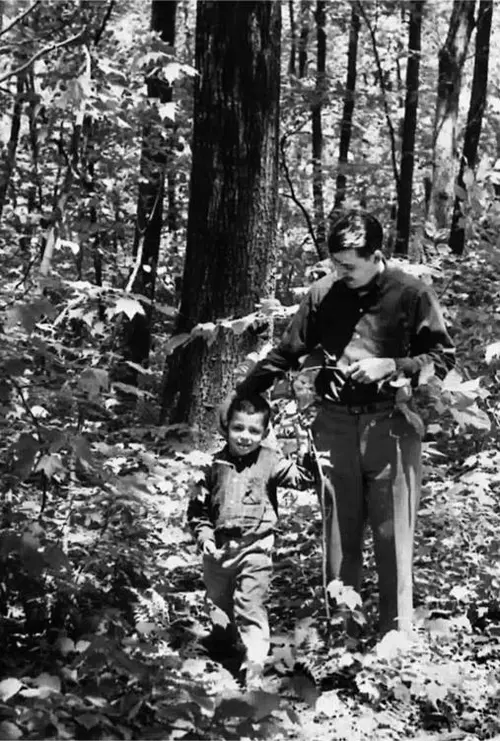
Frederick and Chris, circa 1957
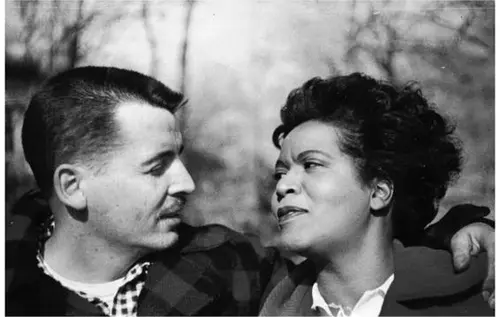
Frederick and Elinor in Village Creek, South Norwalk, Connecticut, circa 1960s
5. Prisoners and Nurses
5.
Prisoners and Nurses
FEELING LONELY AND ISOLATED WAS SOMETHING that black nurses and prisoners of war had in common in Florence. The POWs were confined to certain areas for security reasons, but the nurses’ restrictions were imposed because of the color of their skin.
Florence, like Fort Huachuca, wasn’t located near any major cities in Arizona. Both Phoenix and Tucson were more than an hour’s drive away. The same isolation that the black nurses felt in basic training was now magnified with the presence of Nazi soldiers and the absence of black men. To make matters worse, there was not an officers’ club for blacks at Camp Florence, as there had been at Fort Huachuca. For black nurses, enduring POW Camp Florence meant accepting complete segregation, socially and institutionally.
Depending on the location, both American GIs and POWs could be treated in the same hospital wards. Of course, that didn’t always work out so well. German POWs were attacked occasionally, as was the case at Fort Custer in Michigan. “There were wounded American soldiers in the camp hospital, and one of them hit a prisoner with his crutch and another drove his wheelchair into several of the POWs. It was a reaction and I could understand it. We were healthy looking, and these American boys were all shot up,” said Karl-Heinz Hackbarth.”1
Elinor was miserable. There were rarely any emergency surgeries at the Florence hospital, and the nurses had a great deal of free time on their hands, but Jim Crow limited their options.
Gwyneth Blessitt Moore and Elinor became friends at Camp Florence in 1944. Moore remembered how frustrated Elinor would become because of segregation. “We’d head to town and would have to turn right back around to base because no one would serve us,” Moore said. “One time some of the white physicians from New York accompanied us and were so horrified that Elinor and I couldn’t get served. They returned right back to base with us but they were embarrassed, and kept apologizing.”2 Elinor and Gwyneth appreciated the solidarity of some of the white doctors who were appalled by the discrimination, but it didn’t erase their feelings of humiliation. Some restaurants offered them the option of ordering their food in the back of the restaurant near the rear door, as if that were a reasonable alternative rather than another racist slight. Of course the ladies declined the offer.