Chapters (65)
- Title Page
- Dedication
- Prologue
- Day One
- 1. Crazy River, Here We Come
- 2. Why They Call It Crazy
- 3. The Luckiest Kid in the World
- Day Two
- 4. Gone, Gone, Gone
- 5. What About Us?
- 6. The Next Thing
- 7. Staying Alive
- 8. One Word
- 9. Freeze-Dried Maggots
- Day Three
- 10. Heigh-Ho for Elmer Fudd
- 11. Boys Get More
- 12. Two Red Eyes
- 13. Wild Yellow Eyes
- 14. No Reason to Starve
- 15. The War Begins
- 16. Three Choices
- Day Four
- 17. Die! Die! Die!
- 18. Making a Fire
- 19. Something Shining
- 20. A Sky Full of Stones
- 21. Run or Die
- 22. The Queen of Not Giving Up
- 23. The Viz
- Day Five
- 24. Hang On
- 25. Fear-of-Dying Scared
- 26. Hands from Heaven
- 27. Friends for Life
- 28. One for All and All for One
- 29. All the Way Down
- 30. Say Hello to Deacon Bailey
- 31. Make a Promise to Yourself
- 32. Can He Be Trusted?
- 33. What Should I Do?
- 34. The Gleam in Her Eyes
- 35. My Brave Friend
- 36. The Invisible Rope
- Day Six
- 37. Between a Scream and a Crying-Out
- 38. The Most Dangerous Thing
- 39. A Better Idea
- 40. Not a Good Sign
- 41. Never Play Dead
- 42. Look Up at the Stars
- Day Seven
- 43. Big Red
- 44. The Big Hush
- 45. The Most Beautiful Sound on Earth
- 46. Something We Need to Discuss
- 47. It’s So Good to Be Alive
- Thirty Days Later
- HOW TO SURVIVE IN THE WILDERNESS
- Wildfire Teaser
- Acknowledgments
- About the Author
- Also by Rodman Philbrick
You decide.

HOW TO SURVIVE IN THE WILDERNESS
FIRE
The ability to make and maintain a fire can be essential to survival. A fire keeps you warm, boils water, and cooks food. Any vehicle venturing anywhere near a wilderness should carry an emergency kit that includes fire starters. Fire-starter kits are available at most camping or outdoor stores. Most include waterproof matches, self-igniting fire-starter blocks, and ferro rods, which easily produce a shower of very hot sparks. Some ferro rods have a built-in compass, making them doubly useful.
WATER
Water from streams, rivers, or underground sources should be boiled first as a precaution against parasites and pollution.
KNIFE
A folding-blade knife is an indispensable tool. You can cut small branches for a shelter, whittle kindling for the fire, and dig for water with the blade.
SHELTER
If the decision is made to stay in one place and await rescue, building a shelter is a wise thing to do, even if the season is warm. If the weather is cold, a shelter is essential for survival. Shelters can be made from a variety of materials at hand—broken branches, moss, and piles of leaves sandwiched between sticks and branches. Type “how to build a wilderness survival shelter” into a search engine and study the results.
FOOD
Fish, if you can catch it. Crickets, grasshoppers, grubs. Anybody want a toasted worm? Yum! Dandelions and wild asparagus are safe to consume. Best to avoid wild mushrooms and unidentified berries, as some types can be poisonous.
ATTITUDE
Experts suggest that a good attitude—optimistic and energetic, with a can-do spirit—may be the most important key to survival.
INTERESTED IN FURTHER STUDY?
Ask your librarian to recommend books on the subject, or type “how to survive in the wilderness” into a search engine.
Note:
Readers of Wild River may have noticed that the kids who survived did not boil river water before drinking. Why? They had no idea it was a necessary precaution! The fact that the Crazy River water was safe to drink was just pure luck. Rainwater, which they mostly relied on, does not need to be boiled. On the subject of food, it’s too bad Deacon Bailey didn’t try to find natural food like crickets, grasshoppers, and grubs instead of stealing freeze-dried rations. But that would have been a different story …
Wildfire Teaser
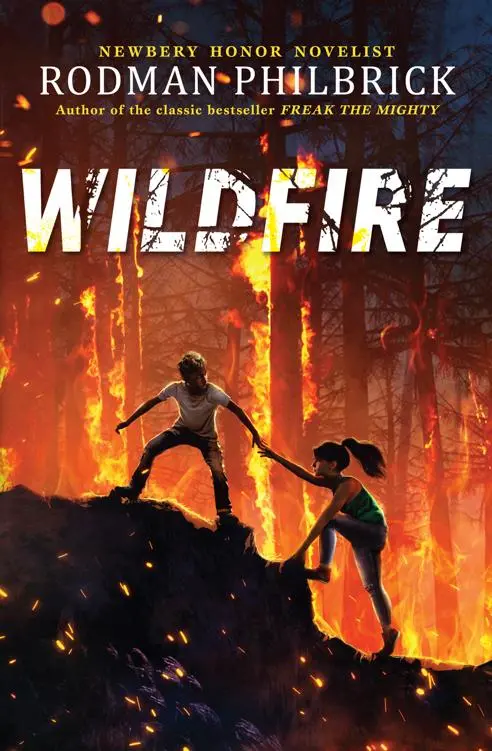
Looking for more action-packed, edge-of-your-seat survival? Keep reading for a teaser of Rodman Philbrick’s Wildfire!

7 a.m. broadcast from radio station WRPZ, 98.6 FM