Wild Harbour
Chapters (23)
Cover
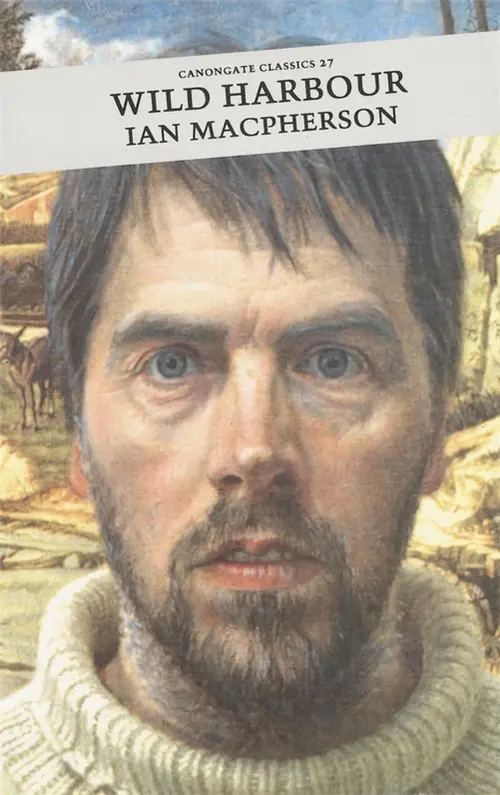
Ian Macpherson
WILD HARBOUR
Introduced by John Burns

Introduction
You will read very few other books like Ian Macpherson’s Wild Harbour. It is one of those rare books that truly haunts the mind long after it has been put back on the shelf. It is a uniquely personal response to the doubts and uncertainties which many people felt in the 1930s with the darkness of war looming ever nearer, but it is written with such intensity of vision and the narrative builds with such a cumulative urgency that the reader is still keenly aware of its relevance fifty years later.
Published in 1936 it tells of the outbreak of the Second World War, a war which did not actually begin until three years later, although Macpherson has it break out in 1944. This is just part of the book’s fascination; the urge to discover just how far the prophetic novelist ‘got it right’. Looking back with the advantage of hindsight there are clearly areas where he got it wrong, but as Donald Campbell has pointed out this does not really matter: the detail may be wrong, but the general feeling of hopelessness and horror at the spread of war is genuine and is powerfully present throughout. As Campbell points out, ‘there were many places in continental Europe … which must have borne a very close resemblance to the landscape of Wild Harbour in the summer of 1944’.1
Macpherson’s real focus, though, is not on the war as such, but on the relationship of a man and his wife who decide to have nothing to do with the fighting and who seek refuge in the hills to avoid being drawn into the violence. Hugh and Terry set up home in a cave they had discovered some years earlier in the area around Loch Ericht and Ben Alder, a deserted and desolate area right in the heart of Scotland. The book, written as a journal, describes the way in which Hugh and Terry plan and effect their escape from the destructive horror of the modern world: and in the urgency of its ending shows how that world catches up with them.
Living under the threat of war, ‘a prey to whispers, racked by fears’, Hugh and Terry had often discussed what they would do if it did actually happen and the subject provided material for at least one lengthy debate with their stalker friend Duncan as to whether modern man could survive in the wilds, or whether he has ‘gone soft’. For Duncan there seems little doubt that civilisation has weakened man in body and in spirit to such an extent that survival in the wilderness would no longer be a viable option.