Wild Harbour
Cover
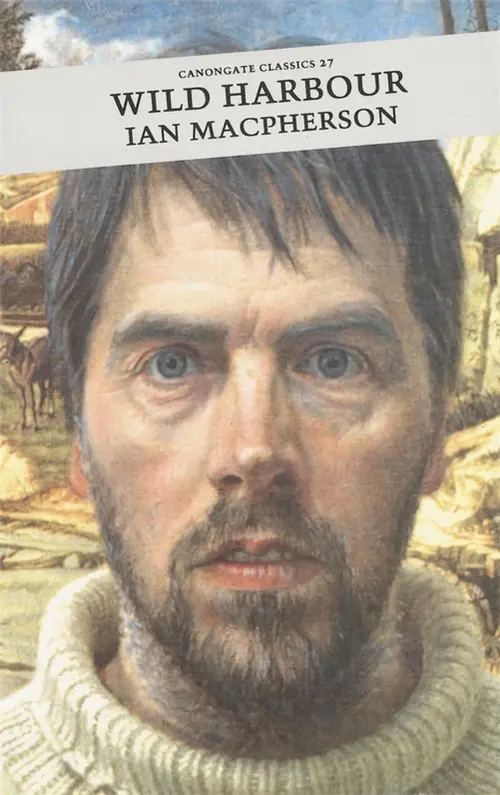
Ian Macpherson
WILD HARBOUR
Introduced by John Burns

Introduction
You will read very few other books like Ian Macpherson’s Wild Harbour. It is one of those rare books that truly haunts the mind long after it has been put back on the shelf. It is a uniquely personal response to the doubts and uncertainties which many people felt in the 1930s with the darkness of war looming ever nearer, but it is written with such intensity of vision and the narrative builds with such a cumulative urgency that the reader is still keenly aware of its relevance fifty years later.
Published in 1936 it tells of the outbreak of the Second World War, a war which did not actually begin until three years later, although Macpherson has it break out in 1944. This is just part of the book’s fascination; the urge to discover just how far the prophetic novelist ‘got it right’. Looking back with the advantage of hindsight there are clearly areas where he got it wrong, but as Donald Campbell has pointed out this does not really matter: the detail may be wrong, but the general feeling of hopelessness and horror at the spread of war is genuine and is powerfully present throughout. As Campbell points out, ‘there were many places in continental Europe … which must have borne a very close resemblance to the landscape of Wild Harbour in the summer of 1944’.1
Macpherson’s real focus, though, is not on the war as such, but on the relationship of a man and his wife who decide to have nothing to do with the fighting and who seek refuge in the hills to avoid being drawn into the violence. Hugh and Terry set up home in a cave they had discovered some years earlier in the area around Loch Ericht and Ben Alder, a deserted and desolate area right in the heart of Scotland. The book, written as a journal, describes the way in which Hugh and Terry plan and effect their escape from the destructive horror of the modern world: and in the urgency of its ending shows how that world catches up with them.
Living under the threat of war, ‘a prey to whispers, racked by fears’, Hugh and Terry had often discussed what they would do if it did actually happen and the subject provided material for at least one lengthy debate with their stalker friend Duncan as to whether modern man could survive in the wilds, or whether he has ‘gone soft’. For Duncan there seems little doubt that civilisation has weakened man in body and in spirit to such an extent that survival in the wilderness would no longer be a viable option.
‘If we were forced to live by our own efforts, how’d we thrive? It stands to reason we couldn’t do it. Our senses are blunted. We depend on a multitude of people to make our clothes and food and tools for us. We have noses that can’t smell, ears that are deaf …’
Hugh, on the other hand, sees man’s intelligence as the factor which would enable him to survive and feels sure that if driven to it man would find within himself qualities and potentialities he has long since forgotten. In taking himself and his wife into the wilderness he has to discover these qualities to keep them alive. Intelligence, he quickly realises, is not just the theorising intellect. It is not that kind of intelligence that sustains them so long, but a combination of mental and physical agility and resilience.
Macpherson himself makes no attempt in the book to argue a case for pacifism. He is much more concerned to involve his reader imaginatively in the plight of his two central characters through the device of the journal, and to highlight the futility of war by showing how valuable are the things it destroys. In the face of a war which threatens to engulf the world, Hugh and Terry desperately try to preserve their love for each other, and on that level their story must be emblematic of all those other human bonds and relationships broken apart by wars since the beginning of time. The reader is constantly made aware of their vulnerability. At times they are described clinging to each other like children lost in a threatening world they do not understand. At times they are seen as anxious, frightened figures against a background of disturbing apocalyptic imagery: ‘the future had no light; we lived on the edge of a world gone mad’. As their isolation from the rest of the world deepens and their nerves begin to crack under the strain of it all they begin to argue with each other. Whatever their faults, perhaps because of their faults, the reader is moved to care about these characters because in them is revealed much of our own human frailty and vulnerability.
We respond, too, to the desire to find a secret place where we can be safe from the pressures of the outside world which even in peacetime can sometimes threaten to overwhelm us. On a simple level the game of building a den where we can feel secure and in control is something we have all done as children. For Hugh and Terry it is no game: it is quite simply a matter of life or death.
Initially things go reasonably well for them and there is a great sense of achievement in making their escape and starting to build a home for themselves: domesticating part of the wilderness which sustains them. Gradually their new life begins to seem more real than the life they had left behind, which now seems ‘trivial’, and the otherwise desolate country becomes for them a place of sanctuary; a ‘sanctuary of the mind’ as Hugh puts it at one point. The hard work takes their minds off the fears and anxieties which lie always at the back of their minds.
[Terry] began to laugh like a happy child and dance amongst the peats, waving her bare peat-smeared arms over her head.
We bathed in Loch Coulter; we lay at the mouth of our cave to attend night’s summer shade; we saw the rough hills climb up against the sky and it grew dark enough for stars to shine. There are moments when misery departs that require no voice; we waited in silence until night reached its deepest, though it was only the twilight still.
Despite passages like this which celebrate a new-found awareness of the beauty and mystery of life, the guilt and anxiety caused by feeling they are safe at the expense of others lies just below the surface. It comes out in the care with which they try to keep their cave camouflaged against prying eyes by making sure that the stones used to block one entrance have their weathered side outward. It comes out, too, in the way Hugh stalks different areas for game so as not to frighten away the wildlife from their immediate vicinity. It is also there in the way Hugh and Terry constantly monitor the weather and the changing seasons. As the journal goes on it becomes clear that the approach of winter is a powerful metaphor for the end; the coldness and darkness of death.
Perhaps most tellingly their anxieties have a destructive effect on their feelings for each other, so that the relationship they are so desperate to protect becomes strained almost to breaking point. Hugh in particular seems unable to live up to his early idealism, and often treats Terry with a ‘defensive roughness’ that he cannot control, though it is obviously hurtful to her. In a sense this was bound to happen for all along Hugh has had doubts about their position. Time and again Terry has had to coax him out of depression or out of rages about the hopelessness of it all. All along Terry has had a simple but unshakeable faith that they are doing the right thing.
Finally anxiety forces itself upon them in the shape of desperate bands of armed men who break into the closed world around their cave. From this point on their isolation is ended and the anxiety is no longer just in their minds: it is stalking them just as surely as Hugh had earlier stalked the deer. This time there can be no escape: they must face it. Again it is Terry who does so most fully, even though she knows it is the beginning of the end for them. As they are drawn in to the fighting they respond differently. Hugh finds a ‘fierce exultation’ in it, while Terry finds comfort in helping one of the wounded men even though he dies.
Having lived for so long on the edges of the human world this renewed involvement releases them both from the inner anxieties that had begun to destroy them. They decide to leave the cave and go back to the world of men, whatever might await them, a decision which liberates them from doubt and fear because once more they feel in control of their own lives. This does not negate their experience because it is only through living as they have done that they have been able to break through to this new sense of being, the unselfish acceptance of a responsibility to others, an acknowledgement that however misguided the rest of humanity might be they are still a part of it.
[The cave] sheltered us and brought us to know ourselves and chose the only way of peace …. I am grateful for that harsh instruction because it taught us wisdom and gave us happiness beyond fear and thought of our own safety.
With this sense of renewed involvement and hope the novel could have ended, but Macpherson’s austere vision takes the story further, and the book ends with the deaths of Terry and Hugh. The ending is harrowing but inevitable. They had known from the start that they would probably not survive: ‘we’ll never escape, we’ll starve and rot in this den, this hole in the rock’. The tragedy of it is that death is the price they must pay for their new self-awareness. As Terry dies first it is particularly harrowing for Hugh. Losing Terry tests him to the limits of his being because she has comforted and supported him from the start. Terry’s faith was always stronger than Hugh’s and with her death Hugh’s faith in their new awareness, his belief in the value of their life together, is given the ultimate test.
When he stalks and kills the men who had killed Terry, Hugh is acting in a very human way but he is also going against everything she had tried to teach him. In ‘savouring’ this revenge he seems simply to be continuing the violence which Terry had so wanted to end. Aiming at the last man, Hugh is stopped by a vision of Terry which appears in front of him: ‘Her eyes gazed at me, her outstretched arms pleaded’. He cannot shoot and, as he throws down his rifle, he is shot and fatally wounded. It seems that at the end he passes the test and affirms his love for Terry by dying for her and what she believes in. His faith was harder-won but perhaps because of that it is even stronger. The book thus ends with an affirmation of the human spirit and a refusal to demean it by the use of violence against others. It is a lesson mankind still has to learn.
Wild Harbour is very different from Macpherson’s other novels, 2 but with its marvellous and moving evocation of light and landscape, its detailed descriptions of the process of stalking, and the accuracy and realism of its picture of a life lived out of doors and in direct contact with the elements, it is still a very Scottish novel. Writers like Stevenson in Kidnapped, and Crockett in The Raiders had explored similar territory before Macpherson and it is a territory in which the Scottish novelist seems particularly at home, with novels like Buchan’s Sick Heart River and Neil Gunn’s Bloodhunt being part of the same tradition. That alone, of course, does not make Wild Harbour a classic. That comes from the way Macpherson has created, out of an essentially very simple central situation, a novel imbued with a deep and haunting apprehension of man’s precarious position in the universe. Sadly that insight was underlined by Macpherson’s own early death in a motorcycle accident in 1944 which surely robbed Scottish literature of a writer of great promise and originality of vision.
John Burns
NOTES TO INTRODUCTION
1. Donald Campbell, introduction to 1981 reprint of Wild Harbour, p. vi.
2. For short accounts of Macpherson’s other works see John R. Allan, The North-East Lowlands of Scotland (1952), pp. 180–182, and Cuthbert Graham, ‘Ian Macpherson: a neglected pastoral novelist’, The Weekend Scotsman, January 19, 1980, p. 4.
15 MAY 1944
THIS MORNING I said to Terry, ‘I thought I heard guns through the night.’
‘Were you awake too?’ she asked.
Even before she spoke, as soon as the words were out of my mouth I was sorry I spoke, and hastened to say:
‘That was funny, both of us lying quiet not to disturb the other.’ I knew by the way she looked at me that she was not deceived.
They sounded very near, ‘she said;’ in the direction of Inverness.’
‘Oh, I don’t know,’ I returned. ‘With this east wind it’s very hard to tell how far away sounds are. I remember in nineteen-eighteen we used to hear the guns in France, often on a Sunday morning, if the wind was right, so near and clear you’d think they were close by. We knew when a battle was coming on by the noise, swelling out of the east like a heavy sea. Lord, what an age ago that seems! We didn’t know each other then, Terry. How old were you? Seven? I was eight when the War finished, Gone eight, I used to say, bigsy, you know, making a grown-up of myself. But I can remember the guns and when there was fighting in the North Sea—’
‘I heard that too,’ she broke in. ‘It was always a rumbling noise then, not distinct and separate like last night. Last night’s noise resembled the Fleet at gun-practice in the Moray Firth. You know how we used to see the glare and flash in the sky before we heard the sound of the guns. I saw fire in the sky last night, on the horizon over there.’
‘Wildfire,’ I suggested. ‘If it was, I hope we get this place properly tight and snug before the weather breaks. You always see wildfire when a storm’s brewing in the hills.’
‘I hope it was wildfire,’ she said after a brief silence, and then: ‘I’m going to start spring-cleaning.’
I began to laugh and say something about Nero, but she interrupted me angrily.
‘You know how important it is for us to keep a grip on ourselves,’ she cried; ‘even if we are fugitives in a cave—all the more because of that. We daren’t let ourselves grow careless. It might be all right to lounge and laze just now while the weather’s good, but if we get into a slovenly way we’ll never get out of it, and by winter we’ll be savages, dirty and cold and demoralized. It wasn’t to degenerate into savages that we came here.’
‘No,’ I said moodily; ‘we had a lot of good reasons, but they don’t look so good now. Och, Terry, don’t heed me. I’m sorry, I shouldn’t have said that. I don’t mean it really. Only when I see ourselves making ourselves at home here, and settling down as if for ever, I feel it’s going to be for ever. That sets me wondering what’s happening, if anything’s happening, or if we ran away from nothing at all but our own imaginations.’
‘The noise wasn’t wildfire,’ she answered. ‘I wish I could find an occupation to keep your mind busy, boy. I’ve got my job thinking out meals and how to economize our stores—why don’t you write?’
‘Write!’ I exclaimed. ‘Good God, is that what you’d like me to do? Didn’t you hear the guns last night, don’t you know the whole world’s in a flame? What’ll I write, now; fairy-tales maybe for cities drowned in gas, or shall I scribe moralities on the rock with a nail for future generations to wonder at my wisdom?’
‘You needn’t be so hasty to take me up wrongly,’ she protested. ‘What I was going to say was that you could write an account of the things that happen to us, about our coming here and living here. If we get out of hiding other folk might be glad to know how we lived, and if no one cares except ourselves, we shall be glad of something to keep us in mind of the past.’
‘Shall we need written mementoes for that?’ I asked bitterly. ‘Oh, I think you could find a better occupation than that for me, Terry, something useful, like counting the clouds, if I’m too idle. Or I could take a hammer and break down rocks to dust—or go to the succour of my king and country—’
‘Hush! hush!’ she entreated. ‘We came here because we thought it was right, because we would not be bullied into doing wrong or assisting at wickedness. If we commence to doubt that—’
‘What cures doubt?’ I demanded.
‘Faith,’ she replied simply, ‘and my work in this place. Do you think, Hugh, it’s easy for me to plan spring-cleaning when I know the world’s in agony?’
She turned to carry stuff from the back of the cave to the entrance, now sunlit and warm, for the clouds had passed from the morning sky.
‘That will soon dry out any damp,’ she said with satisfaction. ‘Look, Hugh, do you remember when we made up these?’
She showed me some notebooks and scraps of paper.
‘What is it?’ I asked. ‘The lists we made! listen to this, Terry, “syrup, treacle, lard”; how much of that have we? What a hope we had to imagine we’d fetch everything we needed to make life comfortable into this place. It’s a wonder we didn’t mark down a kitchen range.’
‘We didn’t quite bring everything we hoped to bring,’ she agreed.
‘It seems years ago, in another world. It was in another world. We were children playing at desert islands.’
‘Oh fine Crusoes! We didn’t rightly believe that war would come. Catch! they’ll be useful for lighting the fire some morning when we forget to dry heather. As if we were plotting a picnic! Lovely picnic!’
‘Has it been so very dreadful, Hugh? I’d never dream of burning them. The excitement we had when we made them! and you’d come running every now and then to tell me something we’d forgotten—opening the kitchen door and spoiling my baking.’
‘Aren’t you going to burn them?’ I asked. ‘I thought you were spring-cleaning and getting rid of rubbish.’
‘Must you go on hurting me?’ she asked suddenly.
‘I didn’t mean to hurt you,’ I said miserably. ‘Oh, Terry, I’m sorry.’
‘It’s all right, now,’ she replied. ‘I felt low for a minute. I thought I might be a bother to you, or getting on your nerves. You’re not angry because I want to do spring-cleaning, are you, Hugh?
‘I knew this was bound to happen,’ she said a little later. ‘We were too exalted these past weeks.’
‘It was such fine weather,’ I said, ‘and now there’s an east wind.’
‘It was lovely weather; but Hugh, we must keep a note of what happens.’
‘For the foxes to read when they’ve their den to themselves again?’ I asked with renewed bitterness.
‘For ourselves to read, and other people, when this is all over.’
‘What if it’s never all over and we crouch here till we die, and the world goes back to savagery—have you thought of how it’ll be when we grow too old to skulk and hide and make shifts and stalk deer for to-morrow’s dinner? Shall we come to thrive on grass and heather, or simply starve—what heart can I have for writing?’
‘If you were crouching in a trench, Hugh, in wet and mud, and I was crouching in a cellar waiting for the sound of aeroplanes, and bad news—you’d have a certainty that we’d both crouch there for ever—and help the world back to savagery. If you’re unhappy here and hankering to go, you hurt me more by staying. I’m not going with you. I can’t chop and change my mind every time there’s water in the wind. I came here and here I stay until the world changes its mind, for I’ll not change mine.’
‘What is there to write,’ I asked, ‘except the days of the week, and you mark that? Nothing happens; I haven’t a pencil—’
‘I have pencil and paper too,’ she began in a matter-of-fact voice. But her voice trembled and she exclaimed, ‘I hope nothing ever happens!’ and then she commenced to laugh and cry alternately, saying, ‘Hugh, I couldn’t bear to lose you, I couldn’t live without you, I’d sooner be dead. You won’t leave me ever, will you? I don’t care what happens to the world if I have you.’
The Story Continues on BooksBarbecue!
Enjoyed this preview? ❤️ Do not stop here!
Read the complete book free online → 🔗
Continue reading now on BooksBarbecue and discover every page!
Love reading? Bookmark BooksBarbecue.com for more amazing books!
Happy Reading!