Unbearable Splendor
Chapters (25)
- Cover
- Title Page
- Valley, Uncanny
- The Hospitality of Strangers
- One Hundred Days in the Cave
- The Other Asterion, or, The Minotaur’s Sacrifice (A Story)
- Exactly Like You
- Harness
- Orphan: The Plural Form
- The Error of Blood Relation
- I Will Make an Example
- The Limit Case
- In the Other Future
- Like a Second Person inside Us
- Autoclonography
- Unalloyed
- Paradise
- Replication
- My Singularity
- Notes
- References
- Illustration Credits
- Acknowledgments
- Funder Acknowledgments
- About the Author
Cover

Also by Sun Yung Shin
Rough, and Savage
Skirt Full of Black
Title Page

The cyborg is resolutely committed to partiality, irony, intimacy, and perversity. It is oppositional, utopian, and completely without innocence. . . . Unlike the hopes of Frankenstein’s monster, the cyborg does not expect its father to save it through a restoration of the garden. . . . The cyborg would not recognize the Garden of Eden; it is not made of mud and cannot dream of returning to dust. . . . The main trouble with cyborgs, of course, is that they are the illegitimate offspring.
—Donna Haraway, “A Cyborg Manifesto”
I’ve seen things you people wouldn’t believe.
—Roy Batty, Nexus-6 Replicant, Blade Runner
Valley, Uncanny
Valley, Uncanny
Don’t let the name fool you: a black hole is anything but empty space.
—NASA’S website, Astrophysics page, Focus Areas, Black Holes
Where’s the hole’s end?
—  Kim Hyesoon, “A Hole”
A valley makes a kind of hole. A hole open on two sides. Korea—an island on three sides. South Korea—an island: water, water, water, DMZ, North Korea—water, water, DMZ, the People’s Republic of China.
I was a hole and I brought it, myself, to  mi guk “beautiful country,” America, the United States. I carried a train of holes—holes of smoke, holes of sky. Holes of water, holes of rice milk. I was an uncanny guest. Two years old. A week after arrival from Korea, a brother, born in America, asked, “When is she going back?” Like the heavenly maiden with too many children to carry, too many holes to go back t(w)here.
There is a limit to canniness, but not to being uncanny—it is infinite,  mu hand.
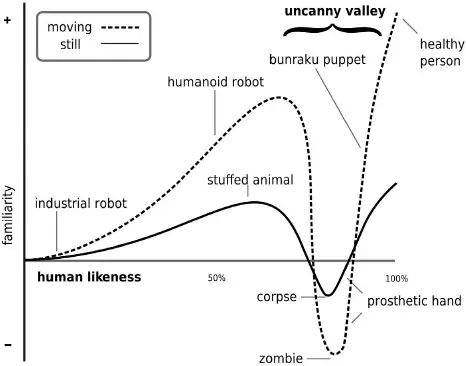
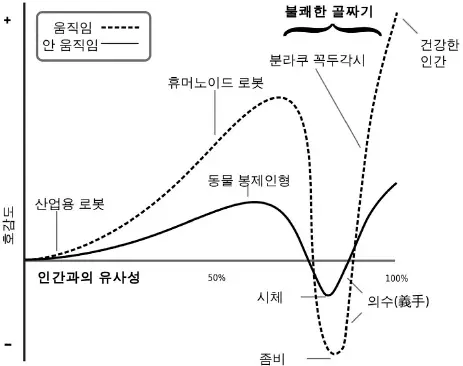
To many immigrants, exiles, and pseudo-exiles, back becomes a manifold; space and time—an asymmetrical nonevent. A hole surrounded by light that pours in and down like Niagara Falls. In my boat is my nameless two-year-old self and my nameless adult self. We approach the water; the air around us glitters. When my past self reaches out to touch the rushing white wall, like a dress she is wearing, I mimic her gesture. . .
Maybe I am a kind of star. Burning—sending you light to read by. A valley you might come upon gradually, not a hole to fall into.
When are we all going back? There is no back, there is no there there. Like the travel of light, upon arrival, the star may be dead. Time can be fragile. It can be a blossom, and when you peel away the petals, that hard, dark face remains.
“Most famously, black holes were predicted by Einstein’s theory of general relativity, which showed that when a massive star dies, it leaves behind a small, dense remnant core.”1
This quotation and those that follow in this section are from NASA Science, “Black Holes/” accessed February 19, 2016, http://science.nasa.gov/astrophysics/focus-areas/black-holes.