Chapters (39)
The ferry drew up to the ship, whose bold banners fluttered above the curved wooden hull and ornate lacquer-and-gilt cabin. Sailors dropped a ladder for Sano to climb; Hirata helped him onto the deck. At the captain’s orders, the crew raised anchor. The sail billowed, and the ship moved down the harbor channel toward the open sea. Sano and Hirata stood in the stern, watching Nagasaki’s docks, houses, and hills recede.
“I’ve never been so glad to leave a place,” Hirata said fervently. He waved to the cheering crowd on shore. “I’d rather be seasick all the way home than stay here another moment.”
“I agree,” Sano said, though not only because of their bad experiences. Nagasaki, the trouble zone where Japan met the outside world, also represented the junction between his past and future. In leaving the city, he also left behind his political innocence, his mistakes, and his isolation for new allegiances and myriad new opportunities for success.
“What do you suppose has happened in Edo while we’ve been gone?” Hirata mused.
Sano smiled. “Your guess is as good as mine. But I do know that things will be different when I—” his eyes met Hirata’s “—I mean, when we get back.”
Author
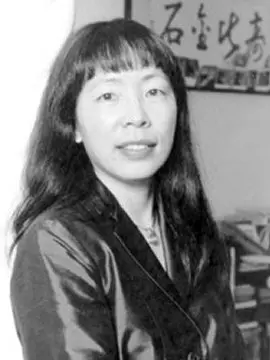
LAURA JOH ROWLAND (USA, 1954) is the daughter of Chinese and Korean immigrants. She grew up in Michigan and was educated at the University of Michigan, where she graduated with a B.S. in Microbiology and a Masters in Public Health. She worked as a chemist, microbiologist, sanitary inspector and as a quality engineer. She lived through a natural disaster in 2005 when Hurricane Katrina nearly destroyed her house in New Orleans, and now lives in New York City with her husband, Marty, and their three cats.
With her richly detailed style, Rowland has developed her notorious main character, 17th century samurai-warrior-turned-detective Sano Ichirō who may carry a sword and wear a kimono, but you’ll immediately recognize him as an ancestor of Philip Marlowe or Sam Spade. The series had received unanimous praises from specialized critics.