The Way of the Traitor
Chapters (39)
Cover
The year is 1690, and the place is Nagasaki—a city where superstition, politics, and greed reign supreme, and a corrupt government which fears foreign invasion like a plague rules with an iron fist. It is here that the mutilated body of Jan Spaen, a prominent Dutch trader and one of the few Westerners in Japan, washes ashore. Sano Ichirō, the shōgun’s Most Honorable Investigator, finds himself exiled to Nagasaki and immersed in a dangerous search for an elusive killer. Every clue lures him deeper into an investigation that could implicate powerful individuals and plunge Japan into war. Nothing is as it seems, and no one can be trusted. Spies lurk in every corner, waiting to accuse Sano of following the way of the traitor—a crime punishable by death. As East meets West with catastrophic consequences, Sano must find the murderer, for at stake is not only his samurai honor, but his very life.

Laura Joh Rowland
The Way of the Traitor
Sano Ichiro - 3
ePub r1.0
Titivillus 15.06.16
The Way of the Traitor
Laura Joh Rowland, 1997
Cover design: Joe Roberts
Digital editor: Titivillus
ePub base r1.2

To Marty Rowland
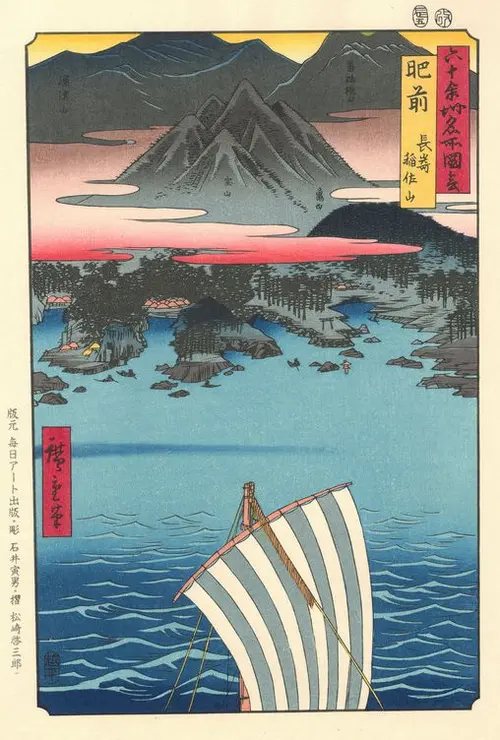
Inasa Mountain at Nagasaki in Hizen
Japan
Genroku Period,
year 3, month 5
(June 1690)
Prologue
零
Like a pale moon, the sun’s white globe rose in a mesh of drifting clouds above the eastern hills beyond Nagasaki, the international port city on Kyūshū, the westernmost of Japan’s four major islands. Mist clung to the forested slopes and shrouded the city clustered around the harbor. Bells echoed from hillside temples, over the governor’s stately mansion, the townspeople’s thatched houses, and the foreign settlements. In the harbor, a salt-laden summer breeze stirred the sails of Japanese fishing boats, Chinese junks, and myriad vessels from the exotic, faraway lands of Arabia, Korea, Tonkin. A patrol barge glided down the corridor formed by the harbor’s high, wooded cliffs, past the watchtowers, toward a calm sea. On the western horizon, the silhouettes of distant ships appeared as dawn gradually pushed back night’s curtain.
On a steep road leading away from town, a low, anguished moaning heralded a solemn procession. First came Nagasaki’s highest officials—mounted samurai dressed in black ceremonial robes and caps—then four hundred lesser dignitaries, attendants, servants, and merchants, all on foot. Last marched a small army of soldiers armed with swords and spears, guarding the terrified prisoner in their midst.
“No,” whispered the samurai between his moans, which grew louder as the procession climbed higher into the hills. He had been stripped of his swords, and all clothing except a loincloth. He tried to break free, but heavy shackles hobbled his ankles; ropes bound his wrists behind his back. Spears prodded him up the path. “This can’t be happening!”