Chapters (12)
On the morning of July fifth, at U.P. Transfer, Iowa, I took a train over the C.P. & St. L., which carried me to a certain town on the Missouri in South Dakota. I did not go to Oristown to register as I had intended but went to the town referred to, which had been designated as a registration point also. I was told by people who were "hitting" in the same direction and for the same purpose, that Oristown was crowded and lawless, with no place to sleep, and was overrun with tin-horn gamblers. It would be much better to go to the larger town on the Missouri, where better hotel accommodation and other conveniences could be had. So I bought a ticket to Johnstown, where I arrived late in the afternoon of the same day. There was a large crowd, which soon found its way to the main street, where numerous booths and offices were set up, with a notary in each to accept applications for the drawing. This consisted of taking oath that one was a citizen of the United States, twenty-one years of age or over. The head of a family, a widow, or any woman upon whom fell the support of a family, was also accepted. No person, however, owning over one hundred and sixty acres of land, or who had ever had a homestead before, could apply. The application was then enclosed in an envelope and directed to the Superintendent of the opening.
After all the applications had been taken, they were thoroughly mixed and shuffled together. Then a blindfolded child was directed to draw one from the pile, which became number one in the opening. The lucky person whose oath was contained in such envelope was given the choice of all the land thrown open for settlement. Then another envelope was drawn and that person was given the second choice, and so on until they were all drawn.
This system was an out and out lottery, but gave each and every applicant an equal chance to draw a claim, but guaranteed none. Years before, land openings were conducted in a different manner. The applicants were held back of a line until a signal was given and then a general rush was made for the locations and settlement rights on the land. This worked fairly well at first but there grew to be more applicants than land, and two or more persons often located on the same piece of land and this brought about expensive litigation and annoying disputes and sometimes even murder, over the settlement. This was finally abolished in favor of the lottery system, which was at least safer and more profitable to the railroads that were fortunate enough to have a line to one or more of the registration points.
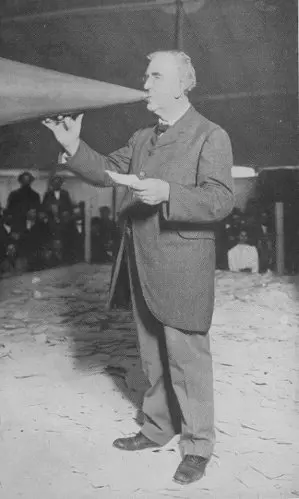
Became number one in the opening. (page 56)