Chapters (11)
“As he did with The Christians, Hnath raises hugely important questions about our society and the occasionally perverse behavior it encourages.”
—Zachary Stewart, TheatreMania.com
“Hnath lightly suggests—he’s too subtle to use the big hammer—that the immoral imbalance of our current economy is stripping us down to our animal skins.”
—Jesse Green, Variety
About the Author
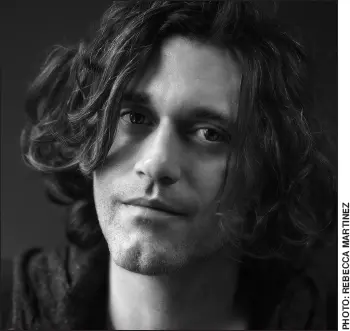
LUCAS HNATH’s plays include The Christians, Red Speedo, A Public Reading of an Unproduced Screenplay About the Death of Walt Disney, nightnight, Isaac’s Eye, Death Tax, and The Courtship of Anna Nicole Smith. He has been a resident playwright at New Dramatists since 2011 and is a proud member of Ensemble Studio Theatre. Awards include the 2012 Whitfield Cook Award for Isaac’s Eye and a 2013 Steinberg/ATCA New Play Award Citation for Death Tax. He is also a recipient of commissions from the EST/Sloan Project, Actors Theatre of Louisville, South Coast Repertory, Playwrights Horizons, New York University’s Graduate Acting Program, and the Royal Court Theatre.
Dedication
This play is dedicated to
Pat C. Hoy, II,
Sarah Lunnie,
and Les Waters
PREFACE
When I was younger, I was supposed to be a preacher, but I decided it would be too much responsibility. I didn’t want to worry about other peoples’ souls. I switched to pre-med, but I didn’t want to worry about other peoples’ bodies. And so, I switched to playwriting.
The expectation that I become a preacher did not come out of nowhere. I grew up in churches. My mother went to seminary when I was in middle school. During the summer months I’d sit next to her during her classes. I learned some Greek, some Hebrew. I read books on hermeneutics and epistemology. Some of it I understood. Some of it I pretended to understand.
In seminary you learn a lot about translation. You learn about how there can be more than one way to translate a word. You come to realize just how many words the Bible has that could be translated this way or that way. The act of interpreting the Bible carries with it a lot of responsibility. A friend from high school who ended up becoming a pastor recently said to me that pastors have to be very careful not to remake the gospel into their own image.
But my question was, “Isn’t that unavoidable?”
For a few years, I taught expository writing at NYU. I’d have students read challenging texts by folks like Barthes, Berger, or Sontag. I’d ask them simply to read and understand what these writers are saying.
Often the students would project themselves into the meaning of the essays we were studying. The students were eager to find ways to make the texts “relatable,” and in doing so, they would bend the words of the author to say something the author isn’t actually saying.