The Christians
Cover
PRAISE FOR THE PLAYS OF LUCAS HNATH
A PUBLIC READING OF AN UNPRODUCED SCREENPLAY ABOUT THE DEATH OF WALT DISNEY
“A blackly comic inversion of the public Disney persona, in the form of a stylized screenplay being read in an anonymous-looking corporate conference room … Walt would be doing cartoonish gyrations in his grave if he were to see how thoroughly Mr. Hnath (pronounced nayth) has subverted the popular image of Disney.”
—Charles Isherwood, The New York Times
“Minutes into the darkly humorous play it’s clear that for the famous man who made Mickey Mouse, movies and the Magic Kingdom, everything was about him. Always. Especially during his last days on earth.”
—Joe Dziemianowicz, New York Daily News
“A devastating portrait of a man for whom make-believe was more real than reality itself.”
—Elisabeth Vincentelli, The New York Post
“A blood-pumping and often hilarious evening of theater.”
—Zachary Stewart, TheaterMania.com
“Enjoyably weird and hermetic … Nothing that ever came out of the Magic Kingdom was ever this animated.”
—David Cote, Time Out New York
THE CHRISTIANS
“Mr. Hnath is quickly emerging as one of the brightest new voices of his generation. What’s fresh about his work is how it consistently combines formal invention with intellectual inquiry—both of which are often in short supply in contemporary American theatre.”
—Charles Isherwood, The New York Times
“The Christians is a white-knuckled drama about … a theological battle. But there are no clear winners or losers in Lucas Hnath’s deeply affecting new play.”
—Elisabeth Vincentelli, The New York Post
“For all its control on the page, The Christians is about the uncontrollable, which is to say, how we imagine what life will look like once we enter the everlasting.”
—Hilton Als, The New Yorker
“It’s so rare to see religious beliefs depicted onstage without condescension that Lucas Hnath’s new play becomes all the more intriguing.”
—Frank Scheck, The Hollywood Reporter
“Lucas Hnath’s soul-searching drama, The Christians, grabbed the eyeballs at the 2014 Humana Festival … the play’s religious dialectic offers enough substance to satisfy true believers.”
—Marilyn Stasio, Variety
RED SPEEDO
“A bright slip of a swimsuit seems a small garment on which to hang a knotty morality play, but the ingenious Lucas Hnath engineers this remarkable feat with Red Speedo, a taut, incisive drama.”
—Charles Isherwood, The New York Times
“Hnath’s swift, slippery play moves in Mametian lunges of rapid dialogue and desperate gambits.”
—Adam Feldman, Time Out New York
“Red Speedo is the latest addition to the increasingly substantial body of work by playwright Lucas Hnath. If you’re serious about the theater, you have to see his shows and read his plays and look forward to whatever is next with anticipation.
—Michael Giltz, The Huffington Post
“This latest effort similarly reflects the playwright’s keen aptitude for exploring hot-button themes.”
—Frank Scheck, The Hollywood Reporter
“As he did with The Christians, Hnath raises hugely important questions about our society and the occasionally perverse behavior it encourages.”
—Zachary Stewart, TheatreMania.com
“Hnath lightly suggests—he’s too subtle to use the big hammer—that the immoral imbalance of our current economy is stripping us down to our animal skins.”
—Jesse Green, Variety
About the Author
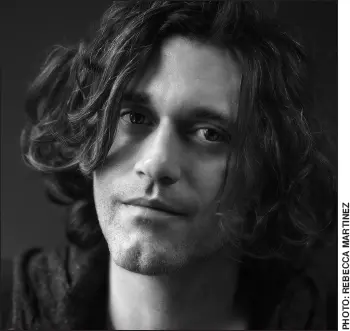
LUCAS HNATH’s plays include The Christians, Red Speedo, A Public Reading of an Unproduced Screenplay About the Death of Walt Disney, nightnight, Isaac’s Eye, Death Tax, and The Courtship of Anna Nicole Smith. He has been a resident playwright at New Dramatists since 2011 and is a proud member of Ensemble Studio Theatre. Awards include the 2012 Whitfield Cook Award for Isaac’s Eye and a 2013 Steinberg/ATCA New Play Award Citation for Death Tax. He is also a recipient of commissions from the EST/Sloan Project, Actors Theatre of Louisville, South Coast Repertory, Playwrights Horizons, New York University’s Graduate Acting Program, and the Royal Court Theatre.
Dedication
This play is dedicated to
Pat C. Hoy, II,
Sarah Lunnie,
and Les Waters
PREFACE
When I was younger, I was supposed to be a preacher, but I decided it would be too much responsibility. I didn’t want to worry about other peoples’ souls. I switched to pre-med, but I didn’t want to worry about other peoples’ bodies. And so, I switched to playwriting.
The expectation that I become a preacher did not come out of nowhere. I grew up in churches. My mother went to seminary when I was in middle school. During the summer months I’d sit next to her during her classes. I learned some Greek, some Hebrew. I read books on hermeneutics and epistemology. Some of it I understood. Some of it I pretended to understand.
In seminary you learn a lot about translation. You learn about how there can be more than one way to translate a word. You come to realize just how many words the Bible has that could be translated this way or that way. The act of interpreting the Bible carries with it a lot of responsibility. A friend from high school who ended up becoming a pastor recently said to me that pastors have to be very careful not to remake the gospel into their own image.
But my question was, “Isn’t that unavoidable?”
For a few years, I taught expository writing at NYU. I’d have students read challenging texts by folks like Barthes, Berger, or Sontag. I’d ask them simply to read and understand what these writers are saying.
Often the students would project themselves into the meaning of the essays we were studying. The students were eager to find ways to make the texts “relatable,” and in doing so, they would bend the words of the author to say something the author isn’t actually saying.
That word “relatable” troubles me. It implies that because I think something is like “me” it is therefore generally understandable and also especially good. But what about the things that are nothing like “me”? Our imaginations seem to be so limited by our personal experiences, you have to wonder if it’s even possible to understand something that sits outside of those experiences.
That expository writing class became, in large part, about the task of encouraging students to be okay with not immediately understanding the texts. In the rush to understand, we get in the way of our ability to see something as it is.
I can feel that rush to understand when people ask me, with respect to The Christians, what I personally believe. I refuse to answer the question. I’m not necessarily cagey about my beliefs (although I do tend to think that the attempt to put those beliefs into words will always result in a misrepresentation of said beliefs; I am very mistrustful of words), but I suspect that answering the question will somehow diminish the effect of the play.
I can also feel it when I’m asked if the play is based on this preacher or that preacher. (Invariably, the answer is no. It’s inspired by many different preachers and many people who are not preachers, all thrown into a blender.)
In these kinds of questions, I detect the desire to explain away something. I detect the desire to locate a single, visible “point.” And while the plot of The Christians is far from ambiguous, the play is a series of contradictory arguments. No single argument “wins.” There’s no resolution.
That lack of obvious resolution can be uncomfortable, agitating. But we can also take pleasure in the agitation.
And maybe something more complex and true becomes visible within the agitation, amidst the collision of disparate perspectives.
I think back to my very brief pre-med days. I think back to a physics class I took and to a diagram from the course textbook. I think of this diagram often: it depicted a method of seeing a very tiny particle. The particle is too tiny to see with a microscope, but a scientist could detect its presence by colliding it with lots of other particles and studying how those particles scatter.
Here’s what I’m getting at—something I believe very much:
A church is a place where people go to see something that is very difficult to see. A place where the invisible is—at least for a moment—made visible.
The theatre can be that too.
Production History
PRODUCTION HISTORY
The Christians was commissioned by and premiered in the 2014 Humana Festival of New American Plays at Actors Theatre of Louisville.
The Christians had its Off-Broadway premiere in 2015 at Playwrights Horizons, Tim Sanford, Artistic Director.
WHO
Paul, a PASTOR,
and his WIFE, Elizabeth,
the ASSOCIATE Pastor Joshua,
a church ELDER named Jay,
and a CONGREGANT named Jenny.
WHEN
The 21st century.
WHERE
America.
HOW
In church, a really big church.
And what we see is the stage, raised and carpeted;
in the center, a podium;
and further upstage, hanging, a cross;
surrounding, potted plants;
above, a screen for projections;
off to the side, two or three chairs in a row, chairs for the associate pastors;
and off to the other side, an electric church organ and organist.
Also, a full choir—the bigger the better.
And there are microphones and stands, enough for everyone in the play,
because everyone will always speak on mics, just the way pastors do,
or just the way congregants do when they testify.
The whole play is a kind of sermon.
Sometimes it’s a literal sermon.
Sometimes it’s made up of scenes that use the formal elements of a sermon.
Occasionally the Pastor narrates to the audience,
which is slightly different from addressing his congregation.
A Note On Songs
A NOTE ON SONGS
During the play, the Choir will sing four songs. Below are suggestions for what those songs could be. Even if you do not use the suggested song, the song you use should have that general tone. Additionally, the songs you use should not in any way conflict with Pastor Paul’s theological stance. It is the responsibility of the producing theatre to obtain the rights to any songs that are not in the public domain.
Song #1—Gospel, steady, comforting, e.g., “God’s Unchanging Hand.”
Song #2—Faster, rousing, revival music, e.g., “Catch on Fire.”
Song #3—A bit anthemic, deliberate, e.g., “I Feel Like Going On.”
Song #4—Bright, not-too-fast-and-not-too-slow, e.g. “Farther Along.”
Acknowledgments
ACKNOWLEDGMENTS
Thank you to Sarah Lunnie, Les Waters and Amy Wegener for guiding the play; to Marc Bovino, Phillip James Brannon, Katya Campbell, Rick Foucheux, Marianna McClellan, Dominique Morisseau, Gordon O’Connell, Randy Rand, Thomas Jay Ryan, Kim Schraf, P.J. Sosko for performing in various incarnations of this play; to Emily Donahoe, Andrew Garman, Linda Powell, Larry Powell, Richard Henzel for premiering the play; to Darius Smith and Scott Anthony for musical guidance; to New Dramatists and the Kennedy Center for helping develop the play; to David Collins, Dana Higginbotham, and Mark Schultz for being my theological advisors; to Darlene Forrest and Denice Martone for their support and encouragement; and a very special thank you to Pat C. Hoy, II for the stories.
Production Notes
PRODUCTION NOTES
The Christians was commissioned by and premiered in the 2014 Humana Festival of New American Plays at Actors Theatre of Louisville.
The Christians had its off-Broadway premiere in 2015 at Playwrights Horizons. Artistic Director, Tim Sanford. Directed by Les Waters.
Billing: I am a pagan and proud of it. Believe me,
before long, we will all be pagans.
Morten: And then will we be allowed to do anything we like?
Billing: Well, you’ll see.
—Henrik Ibsen, An Enemy of the People
I feel an uncontrollable urge to communicate with you,
but I find the distance barrier
insurmountable.
—Pat C. Hoy, II
The Christians
(The music plays.)
(The Choir sings Song #1.)
(As this song goes on, enter PASTOR and WIFE.)
(They join ASSOCIATE and ELDER, already on stage.)
(The Choir sings Song #2.)
(Singing ends.)
(PASTOR approaches the pulpit.)
(Takes a microphone in hand.)
PASTOR
Brothers and sisters …
Let’s pray.
Dear Lord,
bring us together today,
bring us together
in our hearts
and souls
and minds,
make us one,
makes us a body,
because when we are one body,
we see something
we cannot see
by ourselves.
Make us whole.
Take away our fear.
Give us strength,
and give us courage.
Give us the kind of courage that helps us press on
even though we know death is standing there,
watching,
waiting,
give us the courage to know,
to feel,
to understand,
that if we pass through that death, we will find
life
ever
lasting.
In the name
and in the blood
of Jesus.
Amen.
(Pause.)
Today’s sermon
has four titles.
If you’re taking notes, I suggest you write them down.
They are:
(Titles appear on the screen above.)
Where Are We Today?
A Powerful Urge
The Fires of Hell
and
A Radical Change.
Part 1:
Where are we today?
Well
We are
here.
Where is here?
“Here” is this
church,
this big,
enormous
building.
1000s of seats, classrooms for Sunday school,
a baptismal big as a swimming pool. In the lobby
there’s a coffee shop and a bookstore,
and out back, a parking lot so vast
you could get yourself lost in it
if you’re not careful.
Where are we?
We are here, today,
a day of celebration,
a day of freedom …
… because 20 years ago this church was
nothing more than a storefront church,
10, 15 people.
Then for the next year, every Sunday,
20, 30 people
and then 50,
and then 100, and 100 that seemed big—
then 500.
We had to move ourselves into a bigger
space, a local gymnasium. But when 500
turned to three times that, then we started
holding three services every Sunday: one at
nine, one at ten-thirty, and one at noon,
and then we grew to twice that,
and then we just couldn’t fit.
So,
we built this,
this sanctuary,
built it from the ground up.
And however much we thought it was going to cost,
it cost that and many times over.
And we were in
way over our heads.
That
was ten years ago,
ten years from today.
And you stayed,
and you paid,
and together we prayed
that someday we would finally free ourselves of debt.
And that someday
is today.
And today is the day
that debt is paid.
And ya know, today should be a happy day:
We have, it seems, reason to celebrate.
We have, it seems, reason to think that we are
free.
Sorta reminds me of the one about the man who turned 102,
and at his birthday party,
his friend asked him, “Do you think you’ll make it to 103?”
and he said, “Of course I will,
because statistically speaking,
there are very few people who die
between 102 and 103.”
But we all know, a lot of people die before that.
And we all know, a lot of churches die
before they make it to where we are,
but that doesn’t mean
we are as free as we think we are.
There is a different kind of debt
that we have not yet paid
There is—there is a crack
in the foundation of this church,
and I’m not talking about the building.
I’m talking about something like Isaiah talks about,
Isaiah 30, verses 12 and 13:
(The verses appear on the screen.)
“Because you have rejected this Word”—
“this Word,” that’s God’s word he’s talking about—
“and relied on oppression
and depended on deceit,
this sin will become for you
like a high wall,
cracked
and bulging,
whose collapse comes suddenly
in an instant.”
There is a crack,
and if we don’t fix that crack,
it doesn’t matter how solid this building is,
we
will
crumble,
and we will
fall in on ourselves.
So today we’re going to talk a little about that crack,
and we’re going to talk about what we have to do
to save ourselves from collapse
(Title appears on the screen: “Part 2: A Powerful Urge”)
Twenty-two years ago, I was a young man on an airplane flight from L.A. to Florida. I’m sitting in my seat, and I see a woman pass me by. I see this woman, and I think to myself: Lord, that is the most beautiful woman I have ever seen.
And the Lord said: that’s right.
And I said to myself:
Paul,
that is the most beautiful woman you have
ever seen. And my self said to its self: well
you better do something about it.
And I looked back down the length of the plane and I saw her sitting on the aisle. She was far away, at the other end of the airplane. Had to lean to see her, could barely catch her eye. I took out a little scrap of paper, and took out a pen. And I wrote down,
“I have a powerful urge to communicate with you,
but I find the distance between us insurmountable.”
I folded the paper, gave the note to the stewardess. I said, “You see that woman in the pink pantsuit. Will you give this to her.” And the stewardess said yes. And I waited. I watched and I waited and I saw,
I saw her lean,
into the aisle.
And she looked at me,
and she said:
(He waves.)
and I said:
(He waves.)
And that’s all we needed to say, that was it, so easy, so easy you might call it
grace.
“I have a powerful urge to communicate with you, but I find the distance between us insurmountable.”
(Pause.)
(Another title appears on the screen: “Part 3: The Fires of Hell”)
so now —
I was —
oh about
two weeks ago, I was
at a conference for pastors of churches like this church,
it was a uh conference where you go and hear missionaries speak,
to hear about the “good”
work our church is doing in other places.
Now I go to these conferences because
I am told to go to these conferences—
I get a little letter in the mail from the powers that be saying
you should go to this, and I go, I don’t
think about it much—I just go.
And here I am at this conference at the Orlando Marriott,
and I’m eating my free continental breakfast,
and I’m listening to a missionary speak.
This missionary that’s talking,
he works overseas in one of those countries
that we hear about on the news,
but if you were asked where it was
or what that country was all about, you probably
wouldn’t be able to point to it on a map.
And this missionary, he’s trying to start a church there
like the church we have here
in a place—a country—where there’s
a lot of fighting, a lot of violence, a lot of chaos,
gun fights and bombs and
and
and
he talks
about one day,
he’s in a market,
people going about their business,
shopping, buying food,
and a bomb goes off—I think it was a car bomb.
A grocery store lights on fire.
And people run, they scatter off into—
there’s a boy, sixteen, seventeen years old, a young man,
and instead of running away from the burning grocery store,
he runs into it.
He runs into the fire.
And some time passes,
the store is still on fire,
and eventually the boy comes out of the store,
and his whole body is shielding a girl,
maybe seven years old, this girl—
he’s helped her to safety, saved her from the burning building,
but
his own body, is on fire. His clothes are burning,
his arms are burning, his face is
burning, his skin is melting.
He helps the girl to safety,
and she’s okay. But
he,
the boy,
is dying.
And there’s no one to put out his fire.
And he lies down on the street,
body gone into shock,
and he burns until he’s dead.
The missionary tells us that the boy—
that that was his sister that he ran into the store to save.
And the missionary tells us that this boy—he
didn’t know him personally,
but talked to the boy’s family enough to know
that the boy was not a Christian.
He did not believe in the God we believe in.
He did not believe in Jesus,
or the Holy Spirit.
He believed in a different set of beliefs,
and attended a church that did not talk about the cross,
and prayed a different set of prayers than the prayers we pray.
And the missionary said, “Isn’t it a shame
that we lost that boy, what a man of Christ he might have been.”
And and and I thought—
I thought that he meant
“What a shame the boy died,” and I thought,
“Yes, what a shame that boy died,”
but the missionary, he meant,
“What a shame, I didn’t save this boy for Christ,
what a shame I didn’t convert him into a Christian,
what a shame he went to Hell.”
The missionary said, “We need help.”
He said, “We need money
to save these souls,
we need people,
an’ we need your prayers
to save these souls,
because without that,
they all go to Hell.”
This boy, by all accounts,
was a good boy.
And yet, he went to Hell.
And what do we say, we say,
“Amen.”
And all the pastors at the conference say—they said,
“Amen.”
And here I am, thinking about this image,
that boy,
the body on fire,
and the thought of him
going from one fire
into another.
I went back to my hotel room that night.
I sat on the toilet, and I cried.
Convulsively.
I cried.
I said,
“God, I don’t understand.”
And he said, “That’s not your problem.”
And I said,
“Well it kinda is.”
And he said, “Why?”
And I said, “Because I’m a pastor.”
And he said, “Oh you’re a pastor, what does that mean?”
And he said,
“No,
no, it’s not your problem because
you haven’t made it your problem,
you haven’t gone over there and done anything,
you’re just sittin’ on the toilet.”
And I said, “You’re right. I am. Just sittin’ on the toilet.”
And he said, “What are you gonna do?”
And I said, “Well after I’m done here on the toilet,
I’m gonna brush my teeth,
and then I’ll go to bed.”
And he said, “Why.”
And I said—I said …
And he said,
“Why.”
And I said, “Because you have already done so much.”
And he said,
“Exactly.”
And he said that he’s saved us, he’s taken care of us,
he said, “Why don’t you listen when I tell you that?”
And he said, “You think the Devil is a little man with horns.”
He said, “You think that?”
An’ I said, “I don’t know.”
An’ he said, “You really think that?
Do you really really really think that?”
And I said, “No,
not really.”
And he said,
“There is no little man.
There is only you
and your fellow man.
You wanna see Satan—?
there’s your Satan.
You wanna see Hell,
you look around.”
And he said, “There is no Hell.
And there is no reason to tell people
that they’re going to Hell.
Because they are in Hell.
They are already there.
You gotta take them out of the Hell they’re already in.
That boy,” the Lord tells me—he says,
“That boy, he is standing next to me right now.
And anyone who tells you otherwise
lies.”
I know
The Story Continues on BooksBarbecue!
Enjoyed this preview? ❤️ Do not stop here!
Read the complete book free online → 🔗
Continue reading now on BooksBarbecue and discover every page!
Love reading? Bookmark BooksBarbecue.com for more amazing books!
Happy Reading!