Silent Disco
Chapters (7)

Playwright’s Biography
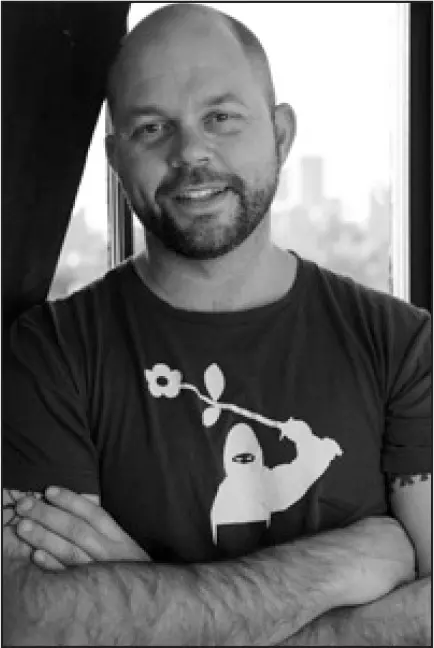
LACHLAN PHILPOTT is a theatre writer, director and teacher. He graduated from UNSW (BA Hons Theatre and Film), The Victorian College of the Arts (Post-Grad Dip, Directing Theatre) and NIDA Playwrights’ Studio. He was Artistic Director of Tantrum Theatre in Newcastle, writer-in-residence at Red Stitch in Melbourne and the Literary Associate at ATYP.
His plays have been performed across Australia as well as Ireland, the UK and USA. His plays include Air Torture, Bustown, Bison, Catapult, Colder, Due Monday, Running Under the Sprinkler and Truck Stop.
Lachlan’s play, Silent Disco, won the 2009 Griffin Award and the Stage Award at the 45th annual AWGIE Awards in 2012.
For Penny
who read to me
INTRODUCTION
The first draft I read of Lachlan Philpott’s Silent Disco was back in October 2008. At that time I was working as Producer, Young Audiences at Sydney Opera House. On first reading, the characters and the suburban landscape leapt from the page with immediacy and authenticity, and although at that time the House was not in a position to commission a subsequent draft, Lachlan and I spent the next year in dialogue—working together on the play at Playwriting Australia’s National Playwriting Workshop and quickly putting together a rehearsed reading with actors for an audience of school students at Sydney Girls’ High School. The young audience gave the play a resounding thumbs-up and afterwards we engaged in a lively discussion interrogating the moral compass of the play’s protagonists. Over time the text changed—Lachlan is never one to do massive rewrites after hearing the play read once or even multiple times over one week. Hearing the play read with the right voices is always crucial—never more so than here, with such demanding, rapid narration.
From the beginning Lachlan’s writing style was prominent. As Alyson Campbell observes in the introduction to Bison and Colder, Lachlan doesn’t rely on dialogue as the main element of his dramaturgy but more interestingly adopts ‘a range of linguistic devices to create a world that is both external and internal to its characters… particularly, a “scene-setting” narrative voice that often does not belong to a character, or voice their internal thoughts, but creates the atmosphere around characters’. Although this latter device is shared between characters in Silent Disco, it is the central voice of schoolgirl Tamara Brewster that frequently comments on, and in turn brings alive, the classroom atmosphere, as in this wonderful response to teacher Helen Petchall’s question on the importance of having an opinion and being able to express it:
Yawn/
…
Mexican yawn/
…
Mexican yawn flying round the shit box. (p.7)