Jealousy
Chapters (6)
Cover

About the Book
Can we truly know the one we love? In this painfully candid book Marcel Proust looks straight into the green eye of every lover’s jealous struggle. He broods on why we are driven to try and possess one another, how jealousy can outlive death, and whether we can ever reclaim those careless days of first love. There is no greater chronicler of jealousy’s darkest fears and destructive suspicions than Proust.
Selected from the book In Search of Lost Time by Marcel Proust
About the Author
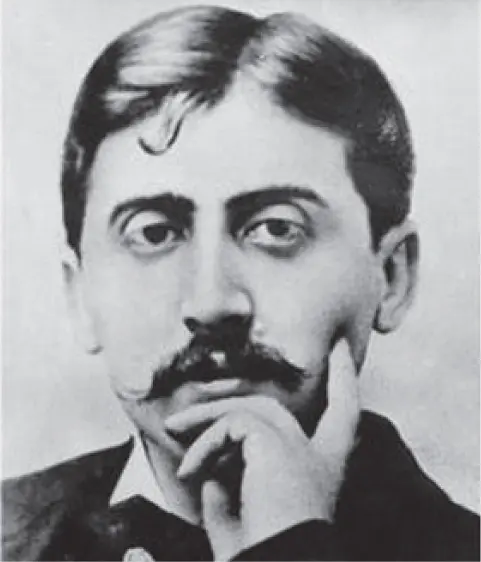
MARCEL PROUST was a French novelist and critic who is frequently named as the most important writer of the twentieth century. A socialite amongst France’s fading aristocracy, he published essays on art and literary criticism before embarking on one of modern literature’s most ambitious and influential projects, his multi-volume novel, In Search of Lost Time.
Although Proust’s work is best known for madeleines and its exploration of memory, jealousy is an ever-present force throughout. Volume V of In Search of Lost Time (from which this book is taken) has at its heart the ill-fated love affair between the novel’s narrator and his childhood sweetheart, Albertine. The depiction of jealousy that eventually consumes them is said to be closely modelled on Proust’s own failed romances.
Plagued by ill health, Proust retreated from Parisian society for the last years of his life. He died in 1922.
Recommended Books by Marcel Proust
In Search of Lost Time, Volumes I–VI

Jealousy
NO DOUBT, IN the first days at Balbec, Albertine seemed to exist on a parallel plane to that on which I was living, but one that had converged on it (after my visit to Elstir) and had finally joined it, as my relations with her, at Balbec, in Paris, then at Balbec again, grew more intimate. Moreover, what a difference there was between the two pictures of Balbec, on my first visit and on my second, pictures composed of the same villas from which the same girls emerged by the same sea! In Albertine’s friends at the time of my second visit, whom I knew so well, whose good and bad qualities were so clearly engraved on their features, how could I recapture those fresh, mysterious strangers who once could not thrust open the doors of their chalets with a screech over the sand or brush past the quivering tamarisks without making my heart beat? Their huge eyes had sunk into their faces since then, doubtless because they had ceased to be children, but also because those ravishing strangers, those actresses of that first romantic year, about whom I had gone ceaselessly in quest of information, no longer held any mystery for me. They had become for me, obedient to my whims, a mere grove of budding girls, from among whom I was not a little proud of having plucked, and hidden away from the rest of the world, the fairest rose.