Jealousy
Cover


About the Book
Can we truly know the one we love? In this painfully candid book Marcel Proust looks straight into the green eye of every lover’s jealous struggle. He broods on why we are driven to try and possess one another, how jealousy can outlive death, and whether we can ever reclaim those careless days of first love. There is no greater chronicler of jealousy’s darkest fears and destructive suspicions than Proust.
Selected from the book In Search of Lost Time by Marcel Proust
About the Author
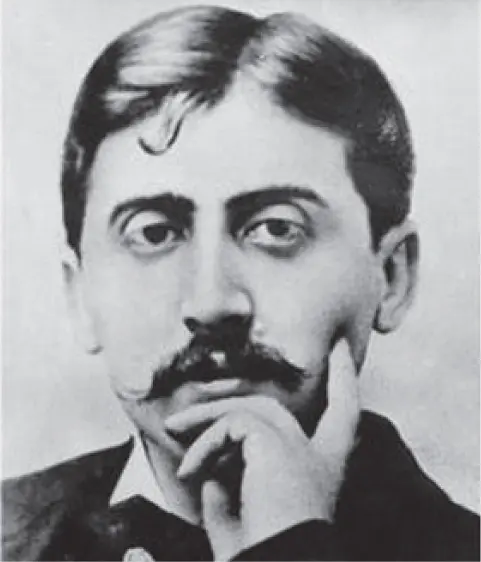
MARCEL PROUST was a French novelist and critic who is frequently named as the most important writer of the twentieth century. A socialite amongst France’s fading aristocracy, he published essays on art and literary criticism before embarking on one of modern literature’s most ambitious and influential projects, his multi-volume novel, In Search of Lost Time.
Although Proust’s work is best known for madeleines and its exploration of memory, jealousy is an ever-present force throughout. Volume V of In Search of Lost Time (from which this book is taken) has at its heart the ill-fated love affair between the novel’s narrator and his childhood sweetheart, Albertine. The depiction of jealousy that eventually consumes them is said to be closely modelled on Proust’s own failed romances.
Plagued by ill health, Proust retreated from Parisian society for the last years of his life. He died in 1922.
Recommended Books by Marcel Proust
In Search of Lost Time, Volumes I–VI

Jealousy
NO DOUBT, IN the first days at Balbec, Albertine seemed to exist on a parallel plane to that on which I was living, but one that had converged on it (after my visit to Elstir) and had finally joined it, as my relations with her, at Balbec, in Paris, then at Balbec again, grew more intimate. Moreover, what a difference there was between the two pictures of Balbec, on my first visit and on my second, pictures composed of the same villas from which the same girls emerged by the same sea! In Albertine’s friends at the time of my second visit, whom I knew so well, whose good and bad qualities were so clearly engraved on their features, how could I recapture those fresh, mysterious strangers who once could not thrust open the doors of their chalets with a screech over the sand or brush past the quivering tamarisks without making my heart beat? Their huge eyes had sunk into their faces since then, doubtless because they had ceased to be children, but also because those ravishing strangers, those actresses of that first romantic year, about whom I had gone ceaselessly in quest of information, no longer held any mystery for me. They had become for me, obedient to my whims, a mere grove of budding girls, from among whom I was not a little proud of having plucked, and hidden away from the rest of the world, the fairest rose.
Between the two Balbec settings, so different one from the other, there was the interval of several years in Paris, the long expanse of which was dotted with all the visits that Albertine had paid me. I saw her in the different years of my life occupying, in relation to myself, different positions which made me feel the beauty of the intervening spaces, that long lapse of time during which I had remained without seeing her and in the diaphanous depths of which the roseate figure that I saw before me was carved with mysterious shadows and in bold relief. This was due also to the superimposition not merely of the successive images which Albertine had been for me, but also of the great qualities of intelligence and heart, and of the defects of character, all alike unsuspected by me, which Albertine, in a germination, a multiplication of herself, a fleshy efflorescence in sombre colours, had added to a nature that formerly could scarcely have been said to exist, but was now difficult to plumb. For other people, even those of whom we have dreamed so much that they have come to seem no more than pictures, figures by Benozzo Gozzoli against a greenish background, of whom we were inclined to believe that they varied only according to the point of vantage from which we looked at them, their distance from us, the effect of light and shade, such people, while they change in relation to ourselves, change also in themselves, and there had been an enrichment, a solidification and an increase of volume in the figure once simply outlined against the sea.
Moreover, it was not only the sea at the close of day that existed for me in Albertine, but at times the drowsy murmur of the sea upon the shore on moonlit nights. For sometimes, when I got up to fetch a book from my father’s study, my mistress, having asked my permission to lie down while I was out of the room, was so tired after her long outing in the morning and afternoon in the open air that, even if I had been away for a moment only, when I returned I found her asleep and did not wake her. Stretched out at full length on my bed, in an attitude so natural that no art could have devised it, she reminded me of a long blossoming stem that had been laid there; and so in a sense she was: the faculty of dreaming, which I possessed only in her absence, I recovered at such moments in her presence, as though by falling asleep she had become a plant. In this way, her sleep realised to a certain extent the possibility of love: alone, I could think of her, but I missed her, I did not possess her; when she was present, I spoke to her, but was too absent from myself to be able to think of her; when she was asleep, I no longer had to talk, I knew that I was no longer observed by her, I no longer needed to live on the surface of myself.
By shutting her eyes, by losing consciousness, Albertine had stripped off, one after another, the different human personalities with which she had deceived me ever since the day when I had first made her acquaintance. She was animated now only by the unconscious life of plants, of trees, a life more different from my own, more alien, and yet one that belonged more to me. Her personality was not constantly escaping, as when we talked, by the outlets of her unacknowledged thoughts and of her eyes. She had called back into herself everything of her that lay outside, had withdrawn, enclosed, reabsorbed herself into her body. In keeping her in front of my eyes, in my hands, I had an impression of possessing her entirely which I never had when she was awake. Her life was submitted to me, exhaled towards me its gentle breath.
I listened to this murmuring, mysterious emanation, soft as a sea breeze, magical as a gleam of moonlight, that was her sleep. So long as it lasted, I was free to dream about her and yet at the same time to look at her, and, when that sleep grew deeper, to touch, to kiss her. What I felt then was a love as pure, as immaterial, as mysterious, as if I had been in the presence of those inanimate creatures which are the beauties of nature. And indeed, as soon as her sleep became at all deep, she ceased to be merely the plant that she had been; her sleep, on the margin of which I remained musing, with a fresh delight of which I never tired, which I could have gone on enjoying indefinitely, was to me a whole landscape. Her sleep brought within my reach something as serene, as sensually delicious as those nights of full moon on the bay of Balbec, calm as a lake over which the branches barely stir, where, stretched out upon the sand, one could listen for hours on end to the surf breaking and receding.
On entering the room, I would remain standing in the doorway, not venturing to make a sound, and hearing none but that of her breath rising to expire upon her lips at regular intervals, like the reflux of the sea, but drowsier and softer. And at the moment when my ear absorbed that divine sound, I felt that there was condensed in it the whole person, the whole life of the charming captive outstretched there before my eyes. Carriages went rattling past in the street, but her brow remained as smooth and untroubled, her breath as light, reduced to the simple expulsion of the necessary quantity of air. Then, seeing that her sleep would not be disturbed, I would advance cautiously, sit down on the chair that stood by the bedside, then on the bed itself.
I spent many a charming evening talking and playing with Albertine, but none so sweet as when I was watching her sleep. Granted that she had, as she chatted with me, or played cards, a naturalness that no actress could have imitated; it was a more profound naturalness, as it were at one remove, that was offered me by her sleep. Her hair, falling along her pink cheek, was spread out beside her on the bed, and here and there an isolated straight tress gave the same effect of perspective as those moonlit trees, lank and pale, which one sees standing erect and stiff in the backgrounds of Elstir’s Raphaelesque pictures. If Albertine’s lips were closed, her eyelids, on the other hand, seen from where I was placed, seemed so loosely joined that I might almost have questioned whether she really was asleep. At the same time those lowered lids gave her face that perfect continuity which is unbroken by the eyes. There are people whose faces assume an unaccustomed beauty and majesty the moment they cease to look out of their eyes.
I would run my eyes over her, stretched out below me. From time to time a slight, unaccountable tremor ran through her, as the leaves of a tree are shaken for a few moments by a sudden breath of wind. She would touch her hair and then, not having arranged it to her liking, would raise her hand to it again with motions so consecutive, so deliberate, that I was convinced that she was about to wake. Not at all; she grew calm again in the sleep from which she had not emerged. Thereafter she lay motionless. She had laid her hand on her breast, the limpness of the arm so artlessly childlike that I was obliged, as I gazed at her, to suppress the smile that is provoked in us by the solemnity, the innocence and the grace of little children.
I, who was acquainted with many Albertines in one person, seemed now to see many more again reposing by my side. Her eyebrows, arched as I had never noticed them, encircled the globes of her eyelids like a halcyon’s downy nest. Races, atavisms, vices reposed upon her face. Whenever she moved her head, she created a different woman, often one whose existence I had never suspected. I seemed to possess not one but countless girls. Her breathing, as it became gradually deeper, made her breast rise and fall in a regular rhythm, and above it her folded hands and her pearls, displaced in a different way by the same movement, like boats and mooring chains set swaying by the movement of the tide. Then, feeling that the tide of her sleep was full, that I should not run aground on reefs of consciousness covered now by the high water of profound slumber, I would climb deliberately and noiselessly on to the bed, lie down by her side, clasp her waist in one arm, and place my lips upon her cheek and my free hand on her heart and then on every part of her body in turn, so that it too was raised, like the pearls, by her breathing; I myself was gently rocked by its regular motion: I had embarked upon the tide of Albertine’s sleep.
Sometimes it afforded me a pleasure that was less pure. For this I had no need to make any movement, but allowed my leg to dangle against hers, like an oar which one trails in the water, imparting to it now and again a gentle oscillation like the intermittent wing-beat of a bird asleep in the air. I chose, in gazing at her, the aspect of her face which one never saw and which was so beautiful. It is I suppose comprehensible that the letters which we receive from a person should be more or less similar to one another and combine to trace an image of the writer sufficiently different from the person we know to constitute a second personality. But how much stranger is it that a woman should be conjoined, like Radica with Doodica, with another woman whose different beauty makes us infer another character, and that in order to see them we must look at one of them in profile and the other in full face. The sound of her breathing, which had grown louder, might have given the illusion of the panting of sexual pleasure, and when mine was at its climax, I could kiss her without having interrupted her sleep. I felt at such moments that I had possessed her more completely, like an unconscious and unresisting object of dumb nature. I was not troubled by the words that she murmured from time to time in her sleep; their meaning was closed to me, and besides, whoever the unknown person to whom they referred, it was upon my hand, upon my cheek that her hand, stirred by an occasional faint tremor, tightened for an instant. I savoured her sleep with a disinterested, soothing love, just as I would remain for hours listening to the unfurling of the waves.
Perhaps people must be capable of making us suffer intensely before they can procure for us, in the hours of remission, the same soothing calm as nature does. I did not have to answer her as when we were engaged in conversation, and even if I could have remained silent, as for that matter I did when it was she who was talking, still while listening to her I did not penetrate so far into the depths of her being. As I continued to hear, to capture from moment to moment, the murmur, soothing as a barely perceptible breeze, of her pure breath, it was a whole physiological existence that was spread out before me, at my disposal; just as I used to remain for hours lying on the beach, in the moonlight, so long could I have remained there gazing at her, listening to her. Sometimes it was as though the sea was beginning to swell, as though the storm was making itself felt even inside the bay, and I would press myself against her and listen to the gathering roar of her breath.
Sometimes, when she was too warm, she would take off her kimono while she was already almost asleep and fling it over an armchair. As she slept I would tell myself that all her letters were in the inner pocket of this kimono, into which she always thrust them. A signature, an assignation, would have sufficed to prove a lie or to dispel a suspicion. When I could see that Albertine was sound asleep, leaving the foot of the bed where I had been standing motionless in contemplation of her, I would take a step forward, seized by a burning curiosity, feeling that the secret of this other life lay offering itself to me, flaccid and defenceless, in that armchair. Perhaps I took this step forward also because to stand perfectly still and watch her sleeping became tiring after a while. And so, on tiptoe, constantly turning round to make sure that Albertine was not waking, I would advance towards the armchair. There I would stop short, and stand for a long time gazing at the kimono, as I had stood for a long time gazing at Albertine. But (and here perhaps I was wrong) never once did I touch the kimono, put my hand in the pocket, examine the letters. In the end, realising that I would never make up my mind, I would creep back to the bedside and begin again to watch the sleeping Albertine, who would tell me nothing, whereas I could see lying across an arm of the chair that kimono which would perhaps have told me much.
And just as people pay a hundred francs a day for a room at the Grand Hotel at Balbec in order to breathe the sea air, I felt it to be quite natural that I should spend more than that on her, since I had her breath upon my cheek, between my lips which I laid half-open upon hers, through which her life flowed against my tongue.
The Story Continues on BooksBarbecue!
Enjoyed this preview? ❤️ Do not stop here!
Read the complete book free online → 🔗
Continue reading now on BooksBarbecue and discover every page!
Love reading? Bookmark BooksBarbecue.com for more amazing books!
Happy Reading!