Enemies in Love
Chapters (19)
- Title Page
- Dedication
- Author’s Note
- Introduction
- 1. Elinor
- 2. Frederick
- 3. Fighting Hitler and Jim Crow
- 4. German POWs in the United States
- 5. Prisoners and Nurses
- 6. A Forbidden Romance
- 7. End of War
- 8. An Uncertain Future
- 9. Searching for Acceptance
- 10. Finally Home
- Postscript
- Acknowledgments
- Notes
- Index
- About the Author

Title Page

Dedication
To my parents,
Ben and Jennifer Clark
Author’s Note
Author’s Note
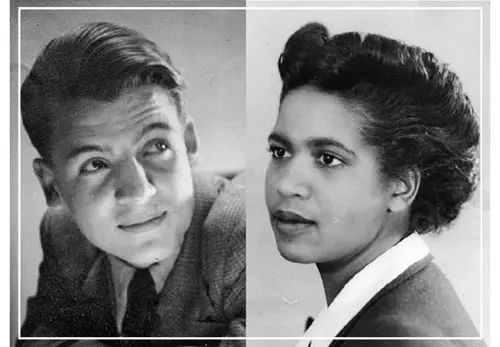
THIS IS THE NONFICTION LOVE STORY OF ELINOR Powell, an African American army nurse, and Frederick Albert, a German prisoner of war. The two met when black army nurses were put in regular contact with German POWs who were detained in the United States during World War II, an unlikely and little-discussed circumstance during one of the most documented periods in history.
I learned about Elinor Powell Albert in 2008. I became interested in black military history around that time after discovering I was a distant relative of Charles Young, the U.S. Army’s first black colonel, the leader of the Buffalo Soldiers, and the highest-ranking black officer in the U.S. Army until his death in 1922.
I stumbled across a brief mention of Elinor in a book by naval historian Barbara Brooks Tomblin called G.I. Nightingales: The Army Nurse Corps in World War II. In a chapter about the integration of black nurses, one line changed every thing I thought I knew about the war: “The Florence camp holds special memories for Albert, who met and later married one of the German prisoners interned there.” Black nurses in POW camps during World War II? Nazi soldiers in the United States? I was stunned. I contacted Tomblin, who had written the book almost fifteen years prior and had no idea if Elinor was still alive. She had never met her, having found Elinor’s name on a list of black nurses to whom she sent questionnaires about their war experience. I realized I would have to find out about Elinor some other way because I was definitely not ready to let go of her story.
I knew an abundance of research would be required to uncover the story of Elinor and Frederick Albert, who were both deceased. Fortunately, after describing my project and presenting a proposal to the Ford Foundation, I was awarded a series of grants. Soon after, I embarked on my research, tracking down relatives and friends in the United States and Germany, as well as sorting through historical documents. This book is the result. Every scene and conversation is drawn from the countless interviews I conducted with surviving family members and friends. Any conjecture is based on plausible scenarios supported by exhaustive archival research, including oral histories, letters, and military records. In 2013 I wrote an article about Elinor and Frederick for the New York Times, and the idea to expand their story into a book came shortly after.