Chapters (49)
- Cover
- BASMALAH
- OUT OF THE LAKE
- BUQJAH
- GECKOS AND JAM JARS
- AIRMAIL
- ‘UQBALAK
- MENTOR HEADLANDS
- “YOU ARE DIVORCED”
- WITNESSES
- DRAEGER’S
- GETAWAY
- SUITABLE GIRLS
- YA‘QUB’S BLINDNESS
- ROUTINE
- BENEATH THE MOTHERS’ FEET
- MADINAH WEDDING
- TOLEDO
- ASPIRATION
- HACIENDA ROAD
- EVERYTHING
- FOUND
- APPARITION
- TRESPASS
- LA SAMAH ALLAH
- WHERE DO WE GO
- “MY NAME ISN’T SALLY”
- DESERT SHIELD
- YOU DRIVE ME CRAZY
- FIRST IMPRESSIONS
- TAIF
- SOCIAL LIFE
- RESOLUTION 678
- GONE
- W
- CONVERT
- SANCTUARY
- FORGIVENESS
- DETAINED
- MEMOIR
- GONE SOUTH
- DREAMS
- LAST WISH
- RELICS
- PASSPORT
- RETURN
- ACKNOWLEDGMENTS
- About the Author
- READER’S GUIDE
Thank you to Sarah DeWeerdt for being my reader from way back. Sarah Schmelling, Sara Gama, Majda Gama, and Janelle Rucker kindly read an early version. Danzy Senna and Justin Torres’ workshop at Bread Loaf Writers’ Conference gave feedback on an even earlier chapter.
Thanks to the Maryland State Arts Council and the Arts and Humanities Council of Montgomery County.
Like most writers, I juggle novel writing with a day job. While working on Bride of the Sea, I was blessed to have two bosses—Jennifer Rich and John Siniff—who wholeheartedly supported my creativity and my need for time.
Thank you to Steven Chudney for being my tireless advocate. And to Laura Chasen for pushing me.
Finally, thank you to Masie Cochran for seeing straight through to the heart of my novel, and to the other members of the Tin House crew—Craig Popelars, Elizabeth DeMeo, Alyssa Ogi, Diane Chonette, Nanci McCloskey, Molly Templeton, and Yashwina Canter—whose enthusiastic work made my book dreams come true in the midst of a pandemic.
About the Author
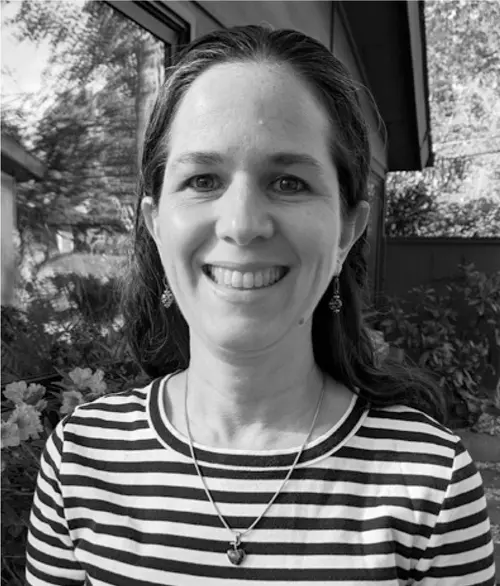
PHOTO: © ANDREW CHEN
EMAN QUOTAH grew up in Jidda, Saudi Arabia, and Cleveland, Ohio. Her writing has appeared in The Washington Post, USA Today, The Toast, The Establishment, Book Riot, and other publications. She lives with her family near Washington, DC.
READER’S GUIDE
1.The novel opens with Hanadi having a dream about Saeedah’s funeral. Why do you think the author begins the story with this imagined loss?
2.What do you think of the rotating points-of-view in the novel? How would this story be different if it were told entirely from Saeedah’s perspective? Or Muneer’s?
3.Describe the various portrayals of marriage in the novel. What are some similarities or differences you see across generations?
4.The plot hinges on Saeedah’s decision to take Hanadi without Muneer’s knowledge. What does Saeedah willingly give up by staying in the United States and disappearing, and what does she lose despite herself?
5.When she first arrives in Jidda, Hanadi thinks that “she could tell, being here for less than half an hour, that she was a different person than she might have been if she’d grown up here, with her family intact…. What other lost elements of herself would she find here?” Do you believe that your birthplace shaped your identity? Have you ever found “lost elements” of yourself in an unexpected place?
6.While exploring Jidda, Hanadi recognizes that “this place—this bride of the Red Sea, as her father calls the city—is the origin of her mother’s phonemes.” What do you think Quotah is saying about intimacy and alienation in parent-child relationships?
7.Which character makes the most egregious decision in this novel? Does your answer to this question change depending on where you are in the story?
8.Over the course of the novel, more than forty years pass. What character changes the most in that time, in your opinion?