Black Ambrosia
Chapters (46)
CoverImage
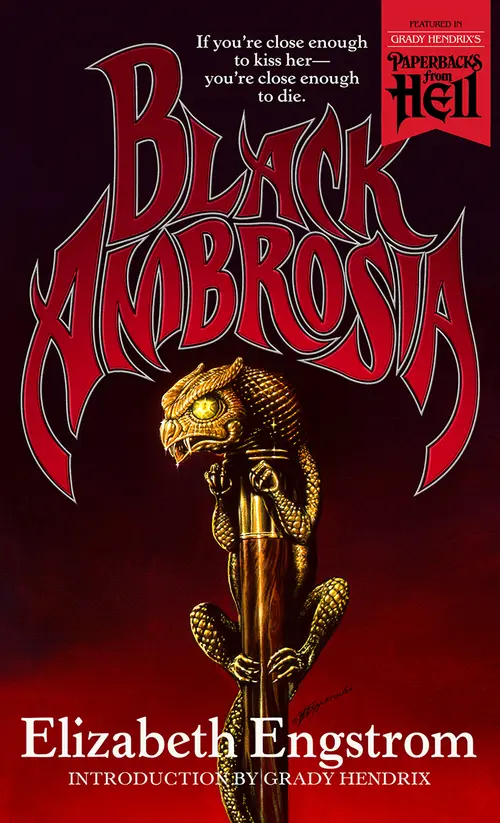
ELIZABETH ENGSTROM
BLACK AMBROSIA
With a new introduction by
GRADY HENDRIX
VALANCOURT BOOKS
Introduction by Grady Hendrix
INTRODUCTION
This is a book about a vampire.
Angelina, the main character, is assaulted by two men while hitchhiking around the country, which awakens her vampiric nature. She kills one of them and hits the road, sucking blood to survive, mesmerizing men with her eyes, sleeping in a coffin, and turning into fog when necessary.
This is not a book about a vampire.
Angelina’s vampirism isn’t the result of a curse, she wasn’t bitten by a master vampire, it’s not something lurking in her DNA. She becomes a vampire because she wills it. Throughout the novel’s pages, what’s really happening is that she’s going insane.
“Do you remember the Slenderman incident?” author Elizabeth Engstrom asks, referring to the 2014 case in which two 12-year-old girls lured their friend into the woods and stabbed her 19 times in an attempt to impress the non-existent urban legend known as Slenderman. “Teenage girls between 13 and 15 get caught up in stuff. They’re searching and they want to figure out what they are. Boys do it when they’re a little older—that’s how the military grabs them—but girls do it earlier. They’re not fully formed, they’re experimenting.
“It’s exactly like those girls who stabbed their classmate over Slenderman. They thought about it, they became excited by it, they decided to identify with it, and then they went and tried to murder their friend. Angelina decided she would be this thing, and she became this thing.”
Written in the first person, the more Angelina rejects reality and embraces the delusion that she’s a vampire, the more straightforward Black Ambrosia’s narrative becomes, and the more comfortable the book becomes for the reader. Which is the problem with writing a book from an insane person’s point of view.
“It’s the only first person book I’ve ever written,” Engstrom says. “And I’ll never write another.”
To solve the problem of how to tether the book to reality, each chapter ends with an italicized recap of its events told from another character’s point of view, keeping the reader at least a little bit aware of what’s happening in the real world as Angelina sinks deeper and deeper into her vampire fantasy.
So Black Ambrosia is a book like We Have Always Lived in the Castle about a strong-willed teenager trading the real world, with all its humiliations and discomforts, for a gothic fantasy, no matter how much damage that causes to herself and the people around her. But you wouldn’t be holding it in your hands right now if it wasn’t also a vampire book.