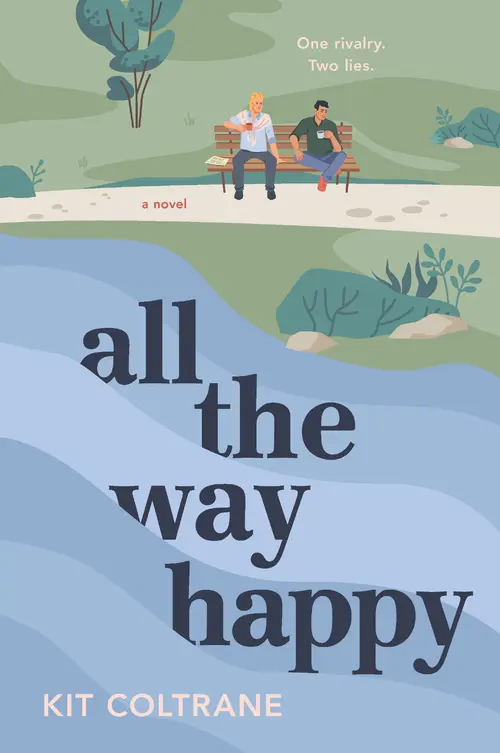
All the Way Happy
Chapters (34)
- Cover
- Content Warning
- Dedication
- Prologue
- Chapter One
- Chapter Two
- Chapter Three
- Chapter Four
- Chapter Five
- Chapter Six
- Chapter Seven
- Chapter Eight
- Chapter Nine
- Chapter Ten
- Chapter Eleven
- Chapter Twelve
- Chapter Thirteen
- Chapter Fourteen
- Chapter Fifteen
- Chapter Sixteen
- Chapter Seventeen
- Chapter Eighteen
- Chapter Nineteen
- Chapter Twenty
- Chapter Twenty-One
- Chapter Twenty-Two
- Chapter Twenty-Three
- Chapter Twenty-Four
- Chapter Twenty-Five
- Epilogue
- Acknowledgments
- About the Author
- Excerpt from Eight Weeks in Paris by S.R. Lane
- Carina Adores BPA
Cover
Content Warning
Content Warning
This novel includes some descriptions of neglect and abuse, and healing from childhood trauma is a crucial theme of the text. There are also mentions of drug use and suicidality. Jack and Theo are navigating love, loss, and adulthood as they cope with foundational trauma. If this is challenging to read, be gentle with yourself. The words will be here if and when you are ready.
Dedication
To that child in the cold bedroom,
the window stuck open,
the rain coming down—this is for you.
You made it out.
Prologue
He was thirty-seven. Fuck. He was thirty-seven.
When he ran away from everything—from Baltimore, from his family, from blue eyes and guilt and casual schoolboy violence—he ran far. He got his first shitty apartment in Cork, Ireland, and he tried to live on the razor edge of a knife, in the dangerous dance of his own self-destruction.
He had a dodgy upstairs neighbor, Cathal, and windows which didn’t shut all the way, and the water wasn’t ever quite warm enough, but it was—it was his.
He’d cashed out the small trust fund that hadn’t been impacted by what his father—what had happened, and the first thing he bought was an old record player and a stack of LPs. Music was what kept him going. The kind of music that his parents had never let him listen to, ugly and wailing and wild, soft and heartbreaking, stupid and silly and utterly perfect.
Led Zeppelin blared out when he smoked his first spliff (courtesy of that same upstairs neighbor, who was quite sketchy indeed, but with an apartment full of exotic birds and a too-kind heart). Tiffany sang about being alone, and he danced in front of the bathroom’s cracked mirror while he cut his own hair. Long locks shorn, revealing an angular, violent beauty.
He listened to the Clash and thought about his father, about imposing his own brand of anarchy on his stilted and tightfisted childhood, that man he had worshipped and the man who had hated him. He threw things and threw up at two in the morning, the fast food he’d grabbed after a night at the clubs coming up looking not all that dissimilar from the way it went down.
Stevie Wonder sang about falling in love and he tried, he really did, not to think about sky blue eyes and black hair.
And then there was David Bowie.