The Painted Queen
Chapters (28)
Cover
Dedication
To Barbara Mertz,
with love and respect
Foreword
Egyptologists Together: Amelia Peabody, Elizabeth Peters, and Barbara Mertz
Salima Ikram,
Distinguished Professor in Egyptology, American University in Cairo
One of the great delights of the Amelia Peabody books is that in each one, Amelia combines murder, mayhem, and mystery with solid doses of Egyptology and history. As a scholar, Barbara Mertz (Elizabeth Peters) meticulously researched every historical point in her Peabody novels, and these root the series and give it a life beyond its pages, illuminating the world of the ancient Egyptians, historic events of the nineteenth and twentieth centuries, and the lives and discoveries of Egyptologists. Through her books, Barbara managed to seduce readers into caring not only about Amelia, Emerson, and their circle, but also about Egyptology. She managed to educate without bludgeoning people with too many facts; she humanized archaeologists and explained what we do in the field, dull though it often is, with its endless sifting of sand in the quest for telling “odds and ends.”
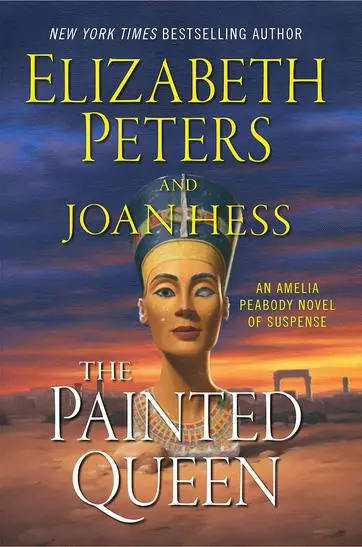
Barbara’s inspirations for each Amelia book varied. They were often triggered by a particular moment in the history of Egyptology that intrigued her, a site that she loved, or a single artifact that was iconic, both to her and to the world—particularly ones that had good stories attached to them, with a hint of intrigue, and which still today remain the subjects of Egyptological speculation (though some might rudely call it gossip). The inspiration for The Painted Queen falls into the latter categories: the famous Nefertiti bust (discovered in December 1912 by German archaeologist Ludwig Borchardt) is an iconic object with a muddy past and a contentious present, her discovery and departure from Egypt the subject of endless speculation by archaeologists and aficionados of ancient Egypt.