Chapters (11)
THAT SAME AFTERNOON Leibniz embarked on his return to Germany, first by foot, then by horse, and finally by carriage, wondering all the while if he had profited at all from lending his ear to a tale so mad or if he had merely squandered a part of his brief time on Earth. The incident must, however, have had some effect on him, for by the time he neared the gates of Leipzig he had resolved to abandon academia and to pursue his fortune as a man of letters, and he told the coachman not to stop there. Not long afterward he was appointed Privy Counselor of Justice in the court of the Archbishop-Elector of Mainz, where in autumn 1666 and winter 1667 he composed this account. He would not have written it, he informed the editor of the Philosophical Transactions, in my translation, were it not for the fact, which disquieted him at first but which he later found apt and even amusing, that in every town he passed through from Saxony to the Rhineland no one spoke of anything but the total eclipse that had occurred a few weeks earlier, at noon on the thirtieth of June, and which had plunged Germany for four seconds into darkness. “If we assume,” Leibniz writes, “that Central Europe is not all in cahoots,” then he himself, with his eye to a broken telescope, had been perhaps the only person on the continent not to see it.
Also by Adam Ehrlich Sachs
ALSO BY ADAM EHRLICH SACHS
Inherited Disorders: Stories, Parables & Problems
A NOTE ABOUT THE AUTHOR
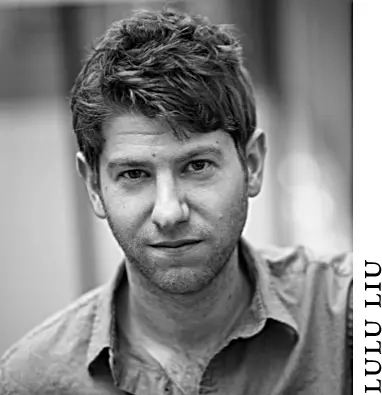
Adam Ehrlich Sachs is the author of the collection Inherited Disorders: Stories, Parables & Problems as well as stories in The New Yorker, Harper’s Magazine, and n+1, among other publications. He was a finalist for the Sami Rohr Prize for Jewish Literature and the Beliver Book Award, and has received a National Endowment for the Arts Literature Fellowship and the Berlin Prize from the American Academy in Berlin. He lives in Pittsburgh. You can sign up for email updates here.
Newsletter Sign-up