Chapters (58)
- Copyright Notice
- Dedication
- I Qualia
- Chapter 1
- Chapter 2
- Chapter 3
- Chapter 4
- Chapter 5
- Chapter 6
- Chapter 7
- Chapter 8
- Chapter 9
- Chapter 10
- Chapter 11
- Chapter 12
- II Umwelt
- Chapter 13
- Chapter 14
- Chapter 15
- Chapter 16
- Chapter 17
- Chapter 18
- Chapter 19
- Chapter 20
- Chapter 21
- Chapter 22
- Chapter 23
- Chapter 24
- III Semiosphere
- Chapter 25
- Chapter 26
- Chapter 27
- Chapter 28
- Chapter 29
- Chapter 30
- Chapter 31
- Chapter 32
- Chapter 33
- Chapter 34
- Chapter 35
- Chapter 36
- IV Autopoiesis
- Chapter 37
- Chapter 38
- Chapter 39
- Chapter 40
- Chapter 41
- Chapter 42
- Chapter 43
- Chapter 44
- Chapter 45
- Chapter 46
- Chapter 47
- Chapter 48
- Epilogue
- Acknowledgments
- A Note About the Author
- Newsletter Sign-up
By the time Ha went downstairs to the lobby, where Evrim and Altantsetseg were at the table in a glow of screens and diodes, she felt ready. She had sorted it all in her head: how exactly to explain it, where to start from. This was what talking to Kamran did for her: allowed her to sort her thoughts, prepare for her interactions with others. Without him, her thoughts were circular, insular. He helped her shape and control them, gave her new input, allowed her to modulate her output. To translate it, make it understandable to others.
IT WAS AFTER 3:00 IN THE MORNING. Evrim and Altantsetseg were at a single terminal, scrolling through image after image of the symbols. Evrim looked up as she approached.
“I’m still unable to understand what I’m looking at.”
Ha dragged one of the larger terminals to the edge of the table and sketched both symbols out—first the octopus’s, then her own:
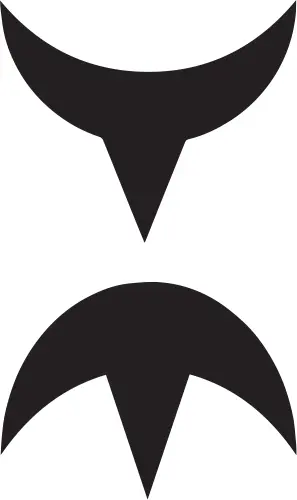
“Seen together, on the same screen, what do they look like?”
“They look related,” Evrim said. “Two parts of a set, or a question and a response? There’s a symmetry to them. Are they ‘yes’ and ‘no’?”
“I wish it were that simple. But it isn’t. The octopus’s symbol—the one we saw it repeat on its mantle in the videos over and over again—reminded me of something, and that was nagging me. Symbolic language is arbitrary, but not always. Sometimes, as in a number of Chinese characters, the iconic connection of at least some of them to something in the real world is visible. A house, a human figure—the abstraction starts from somewhere. The original connection to an icon can be glimpsed.
“And it was clear that the octopus was trying to communicate something negative. It wasn’t anything friendly. The submersible had invaded its home. The octopus was hostile. Or afraid. Probably both. So, what would it be trying to say? Maybe something like, Go away. Or, Get out. Simple, imperative. A command. A single … well, ‘word,’ if you could even talk about such a thing in its system. But how does that relate to the symbol we see: this half-circle or crescent shape, with the arrow leading downward?
“The last few days, all I have been doing is watching videos of them in their habitats. Like you. And it was in one of those videos that I saw it. The video was just a documentary, a piece of popular science. But the camera angle was right. They were filming an octopus entering its den to hide, darting into a hole it had found in a rocky area and then reinforced with stones, like they often do. And because the angle was from above, I saw it clearly.”
She swiped away the page she had already filled on the terminal and drew on a fresh one:
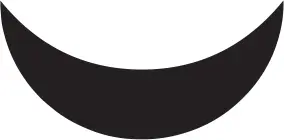
“It is smiley face,” Altantsetseg said. “Octopus make smiley face, because so happy seeing you.”