Chapters (58)
- Copyright Notice
- Dedication
- I Qualia
- Chapter 1
- Chapter 2
- Chapter 3
- Chapter 4
- Chapter 5
- Chapter 6
- Chapter 7
- Chapter 8
- Chapter 9
- Chapter 10
- Chapter 11
- Chapter 12
- II Umwelt
- Chapter 13
- Chapter 14
- Chapter 15
- Chapter 16
- Chapter 17
- Chapter 18
- Chapter 19
- Chapter 20
- Chapter 21
- Chapter 22
- Chapter 23
- Chapter 24
- III Semiosphere
- Chapter 25
- Chapter 26
- Chapter 27
- Chapter 28
- Chapter 29
- Chapter 30
- Chapter 31
- Chapter 32
- Chapter 33
- Chapter 34
- Chapter 35
- Chapter 36
- IV Autopoiesis
- Chapter 37
- Chapter 38
- Chapter 39
- Chapter 40
- Chapter 41
- Chapter 42
- Chapter 43
- Chapter 44
- Chapter 45
- Chapter 46
- Chapter 47
- Chapter 48
- Epilogue
- Acknowledgments
- A Note About the Author
- Newsletter Sign-up
In her tank, Altantsetseg brought her knees up to her chest, pushed them back down, and spread her arms wide. Like she’s casting spells. Then her body relaxed, but the surface of her skin twitched with neural impulses.
It was silent enough outside to hear the waves again, the cacophony of jungle sound at their backs.
“It is over. She’ll be shifting to cleanup mode now. Keeping the oil and pollutants out of the water. We should go back to bed. There is nothing more to see here.”
But both Evrim and Ha stood for a moment more in front of the tank. Ha was visually tracing Altantsetseg’s scars. So many: Himalayan whorls of scar tissue, the Hindu Kush along a collarbone, earthquakes of muscle underneath.
“She took my macaroon, you know.”
“Sorry, what?”
“She took my macaroon. Just like she said she would. She broke into my room and stole it,” Evrim said. “It couldn’t have been anyone else. She has a passkey. You know, it’s good you are here. For many reasons. For one thing, Altantsetseg and I were beginning to get on one another’s nerves.”
Chapter 11
Symbols do not come from nowhere. Not at first. Early hieroglyphic systems have connections to the world. Even in the highly sophisticated and abstracted hanzi characters of the modern Chinese logographic system, we see the traces of those relations—like the character for person, 人, which depicts a figure, however simplified, recognizably related to a standing human.
Language is abstract, yes—but it emerges from real relations with real things in the world and bears the traces of that ancient relationship. These traces will be the keys to deciphering the symbols of another species—if only we can recognize them.
—Dr. Ha Nguyen, How Oceans Think
11
IN THE EARLY DAWN, Ha walked down the road toward what had been the island’s port of Ben Dam. She had not slept all night. In her mind, ships burned. When she closed her eyes, she saw Altantsetseg in her tank: scars like mountain ranges on a topographic map, underwater ridges shuddering in connective liquid.
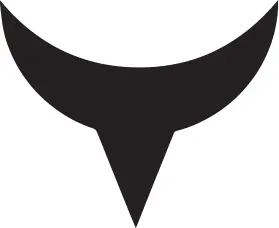
But this was not what had kept her awake. What kept her up was the puzzle of the shape the octopus had projected on its skin repeatedly. A sign—a symbol. It could mean anything at all—but it might, also, be connected to an original form, a real object in the world. And if it was, it could be a key. The shape appeared again and again in her mind: