The Killing Tide
Chapters (97)
- Cover
- TheKillingTide
- 1
- 2
- 3
- 4
- 5
- 6
- 7
- 8
- 9
- 10
- 11
- 12
- 13
- 14
- 15
- 16
- 17
- 18
- 19
- 20
- 21
- 22
- 23
- 24
- 25
- 26
- 27
- 28
- 29
- 30
- 31
- 32
- 33
- 34
- 35
- 36
- 37
- 38
- 39
- 40
- 41
- 42
- 43
- 44
- 45
- 46
- 47
- 48
- 49
- 50
- 51
- 52
- 53
- 54
- 55
- 56
- 57
- 58
- 59
- 60
- 61
- 62
- 63
- 64
- 65
- 66
- 67
- 68
- 69
- 70
- 71
- 72
- 73
- 74
- 75
- 76
- 77
- 78
- 79
- 80
- 81
- 82
- 83
- 84
- 85
- 86
- Six weeks later
- Acknowledgements
- OUT NOW
- OUT IN AUGUST 2022
- Ailsa
- Greg
- Praise for the Rhona MacLeod series
- The Killing Tide
- The Rhona MacLeod books in order
Cover
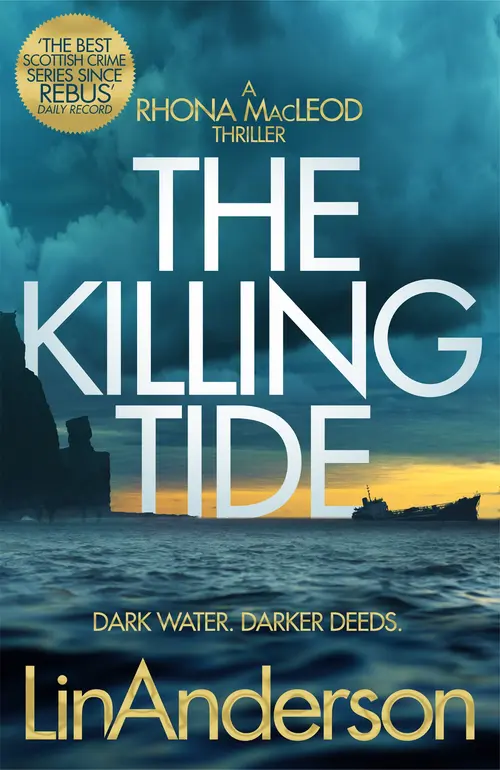
The
Killing
Tide
Dark water. Darker deeds.
LIN ANDERSON

1
The latest storm was female.
Birka had swept in from the Atlantic like the Viking shield maiden she was named after, sharpened sword at the ready to attack the northern isles of Scotland.
Orkney, used to high winds and seas, was weathering the late April storm, just as the archipelago had done over the centuries, its low houses and sheltered towns built to survive the worst that the weather might throw at it.
Towards daybreak, as the wind began to diminish in strength, a few folk ventured out to check that their barns, housing the wintering kye, still had their roofs, and the sheep in the fields hadn’t been blown away.
Geordie Findlater was one of them. His farm, being on the western side of the Orkney mainland, often took the brunt of the cross-Atlantic weather, with the fields closest to the Yesnaby cliffs soaked by salt spray.
Having satisfied himself that his barn and cattle were unharmed, Geordie now headed for a knot of sheep huddled in the shelter of a dyke. At that moment the clouds parted and the dawn light lit up the frothing sea beyond the cliffs . . . and something else.
Geordie, brushing the driving rain from his eyes, tried to focus on what he thought might be the outline of a ship.
As the moon peeked out again, he saw that he was right. What looked like an unlit cargo ship was being driven towards the cliff face. Geordie decided to try and get closer. Already on his knees, he dropped to a crawl and managed to get near enough to the cliff edge to see it properly.
Taking out his mobile, he did his best to capture some shots, thinking all the time that if anyone was still aboard that ship, they were in serious trouble.
Mission accomplished, he began his retreat only to be confronted by what all fishermen knew as the seventh wave. He noted the outsize wave as it came rushing towards him, felt the ground beneath him shudder as it crashed against the cliff face, deluging him in its spray, and knew what would happen next.
Grabbing at the nearest rock, Geordie hung grimly on as the sucking backflow threatened to drag him with it.
Eventually released, he got to his feet and, with the wind now thankfully at his back, headed for the lights of the farmhouse. Throwing open the door, he staggered into the warmth of the kitchen, where Bella, his wife, cried out in relief.
‘I was about to come and look for you, Geordie. What is it?’ she said, seeing his expression. ‘What’s wrong?’
Still choked by wind and water, Geordie handed her the mobile. ‘Look,’ he managed.
Bella stared at the fuzzy photograph unblinkingly for a moment before her face registered what she was seeing.