The Fortunate Ones
Chapters (43)
- Cover
- Title
- Dedication
- Prologue
- Part One
- one
- two
- three
- four
- five
- six
- seven
- eight
- nine
- ten
- eleven
- twelve
- Part two
- one
- two
- three
- four
- five
- six
- seven
- eight
- nine
- ten
- eleven
- twelve
- thirteen
- fourteen
- fifteen
- sixteen
- seventeen
- Epilogue
- Acknowledgments
- Reader's Guide
- The Perils of PrivilegeAn Essay by Ed Tarkington
- Questions for Discussion
- Also by Ed Tarkington
- About the Author
- Praise for The Fortunate Ones
Cover
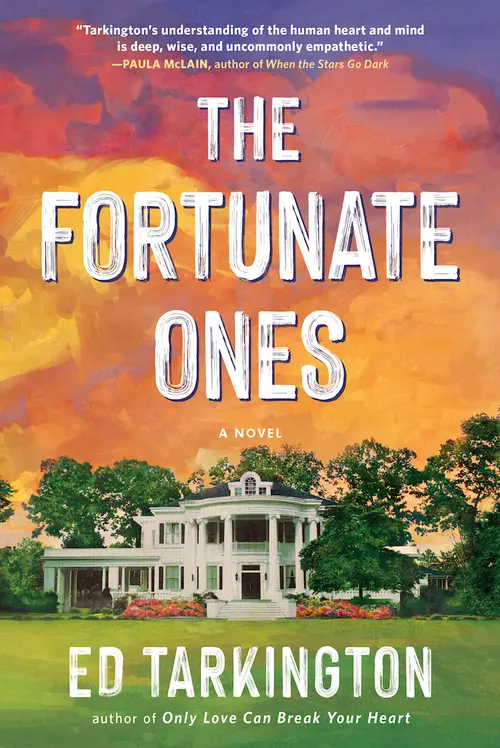
Title
The Fortunate Ones

a novel by
ed tarkington

ALGONQUIN BOOKS OF CHAPEL HILL 2021
Dedication
For Margaret Renkl and
Haywood Moxley
“And what we students of history always learn is that the human being is a very complicated contraption and that they are not good or bad but are good and bad and the good comes out of the bad and the bad out of the good, and the devil take the hindmost.”
—Robert Penn Warren, All the King’s Men
Prologue
Casualty Notification
The mother was standing behind the screen door when we stepped out of the car. She knew what we were there to do. This was my third such trip in a month. Fort Campbell had averaged about one a week since the surge. Casualty notification assignments were supposed to rotate, but Command kept giving them to me. Mike told me I was too well suited to the task.
“You’ve got a sweet face, Charlie,” he told me. “A sad face. They feel better when they think you’re sad.”
“I am sad,” I said.
“We’re all sad,” Mike said. “Some people just don’t know how to show it, that’s all.”
He was talking about himself.
Mike and I got on well, perhaps because he was always game for a few drinks afterward. The Protestant chaplains were all teetotalers. I hadn’t been out with the rabbi. Mike Bailey, however, liked his Irish whiskey. And he had no interest in counseling me. “Find us a nice, quiet spot, Charlie,” he would say when it was over, and before long, we were someplace dark where you could still smoke inside. Catholics understand the healing power of a stiff drink.
The dead boy’s parents lived in Bellevue, at the end of a quiet, shady street lined with red brick ’50s ranch houses and split-levels with well-kept yards. There were kids throwing balls and riding bicycles, elderly women sitting on front porch chairs and lawn furniture, a few men riding mowers. Manicured flower beds resting at the bases of mailboxes decorated with eagles and flags. Pickup trucks and minivans and motor homes and pontoon and bass boats on trailers parked at the ends of the driveways. America the beautiful, forever and ever, amen.
“Didn’t you grow up around here?” Mike asked. “You and this kid’s family might know some of the same people.”
“I doubt it.”
“Come on. You Southerners are all cousins, right?”
“And I assume you’re related to the Kennedys.”
A trio of old men congregating around an ancient Ford pickup turned from their conversation to watch our car roll past. They exchanged a few words and dispersed, heading toward their respective homes, no doubt to inform their wives of our arrival.
“There they go,” Mike said. “Tuna casserole, on the way. I’ll bet you a hundred bucks the first one shows up before we leave.”