Chapters (26)
- Cover
- Title
- Dedication
- FOREWORD
- INTRODUCTION
- CHAPTER ONE
- CHAPTER TWO
- CHAPTER THREE
- CHAPTER FOUR
- MEET YOUR . . .
- MEET YOUR . . .
- MEET YOUR . . .
- MEET YOUR . . .
- MEET YOUR . . .
- MEET YOUR . . .
- MEET YOUR . . .
- MEET YOUR . . .
- MEET YOUR . . .
- MEET YOUR . . .
- CHAPTER FIVE
- CONCLUSION
- SOURCES
- DOGS IN THIS BOOK
- ACKNOWLEDGMENTS
- ABOUT THE AUTHOR
- Chronicle Ebooks
Who isn’t a sucker for a little animal with oversized facial features and a tiny body that can be held in the crook of our arm like an infant? There is something very real about the chemical reaction that we have to these dogs, an almost helpless urge to nurture and pamper them. When they whimper, our heart strings are pulled. When they stare up at us with needy adoration, we melt. When they follow our every step, and lick our faces, roll over for a belly tickle, and gleefully chase their favorite toy down the hall, we are rendered fools. So we spend more money on their dental plan, more hours preparing their meals, and more energy meeting their needs than our own. How did we become such pushovers?
Oxytocin. This warm and fuzzy feel-good love hormone floods our system when we nurture somebody (or something), and boy do these little dogs flip the switch for us and make good on our care-taking instincts. Our ancestors were likely unaware that they were being rendered helpless by their own hormones, duped into babying these adorable dependent little creatures by their own parenting instincts. But, alas, it worked out pretty well for everyone. These days, we might see we have taken it all just a little too far. When we breed them ever smaller, when we have them believe their own legs don’t work as we carry them constantly, when we refuse to cut the symbolic umbilical cord and put them down—we over-baby the baby.
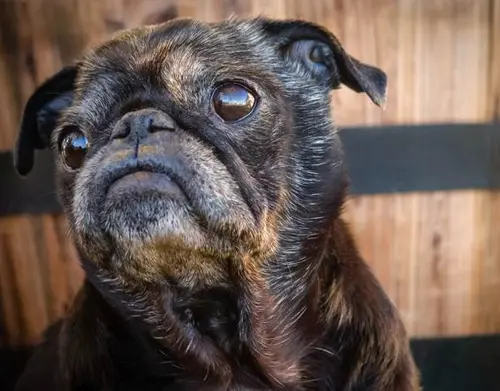
Pug
True, he will never need to really grow up and move out. But if you accidentally foster the idea that he is a helpless infant incapable of surviving even a moment on his own, you might set both him and yourself up for disaster. The tip here is very simple, but the urge you have to fight is potentially very hard to resist. Do not coddle, pamper, and constantly attend to your toy dog’s (or any dog’s, for that matter) every need as you fall prey to your own “love hormones.” Remember that he is not a human child, and that you do him a disservice when you let your maternal or paternal instincts go too far.