Chapters (26)
- Cover
- Title
- Dedication
- FOREWORD
- INTRODUCTION
- CHAPTER ONE
- CHAPTER TWO
- CHAPTER THREE
- CHAPTER FOUR
- MEET YOUR . . .
- MEET YOUR . . .
- MEET YOUR . . .
- MEET YOUR . . .
- MEET YOUR . . .
- MEET YOUR . . .
- MEET YOUR . . .
- MEET YOUR . . .
- MEET YOUR . . .
- MEET YOUR . . .
- CHAPTER FIVE
- CONCLUSION
- SOURCES
- DOGS IN THIS BOOK
- ACKNOWLEDGMENTS
- ABOUT THE AUTHOR
- Chronicle Ebooks
 Destructive behavior, especially when left alone or unsupervised
- Incredible power and unmanageability/excitability on leash, especially around other animals
- Overenthusiastic behavior toward people—jumping, mouthing, roughhousing
- Protectiveness of one or more family members toward other people and animals
- Inflicting severe injuries on other animals in altercations due to strength (though not necessarily starting such altercations)
- General over-arousal in any number of high stimulation circumstances
Family History
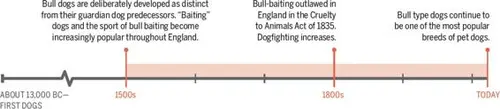
The bull dog type of dog is a genetic subgroup developed from the broad-mouthed mastiffs and the old British “pugnaces” (“attackers”) guardian dogs.(49)(50)(51)(52) Types of guardian dogs were used for thousands of years as courageous and impressive fighters in combat dating back to ancient Rome. They were prized as formidable gladiators. The popular blood-sport entertainment of the time would draw spectators by the thousands to witness contests between men and between beasts.(54) Bears and other wild animals were often “baited”—chained and enraged—in an arena and then released to fight these powerful Molosser-type dogs in a contest of strength and skill.(53) The practice of animal baiting for entertainment and gambling shamefully continued as a common pastime for thousands of years, especially among the noble class and among royalty, with famous queens even breeding fighting dogs of their own for such events.(55)

By the sixteenth century, bears had become increasingly difficult to acquire, so bulls became the opponent of choice to compete against these dogs. So this group of dogs were developed specifically for the job of bringing down massive bulls. These “bull dogs” were largely developed from the smaller variety of their guardian ancestors—the “butcher’s dog”—which had been used for herding, protecting the livestock, and for catching loose cattle.(56)(57)
Predatory “gameness” and other distinct behavioral traits (such as having the ability to clench a bull by the nose and twist until the bull was brought down) were carefully bred into these dogs. Breeders wanted all of the dog’s energy to be concentrated into a quick, full engagement of this grab-bite behavior, exaggerating this component of the dog’s predatory sequence (orient-eye-stalk-chase-grab bite-kill bite-dissect/consume). They did not want a dog who was going to waste precious time and energy warning or hesitating to face his opponent. For the bull breeders, it was all about breeding a dog who could get the job done.
Remarkably, increasing the bull dog’s ability to engage so formidably in altercations with other large target animals did not increase any tendencies for aggression toward people. In fact, bull dogs were deliberately bred for the ability to be easily handled. Contrary to popular opinion, these dogs were not bred to be more aggressive than other dogs but rather bred to be less aggressive and more docile in general nature (while perfecting their ability to unemotionally execute in a very specific set of circumstances).